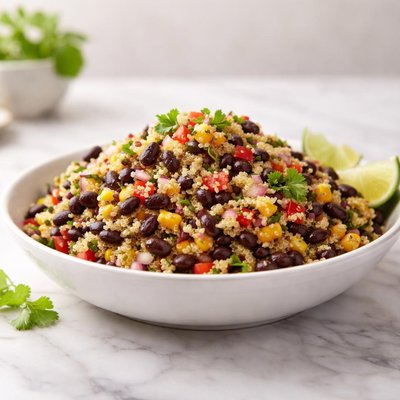
1 serving (185 grams) contains 222 calories, 8.1 grams of protein, 3.6 grams of fat, and 39.4 grams of carbohydrates.

Smart Nutrition Tracking with SnapCalorie

Nutrition Information
Calories |
284.6 | ||
|---|---|---|---|
% Daily Value* |
|||
| Total Fat | 4.6 g | 5% | |
| Saturated Fat | 0.5 g | 2% | |
| Polyunsaturated Fat | 0 g | ||
| Cholesterol | 0 mg | 0% | |
| Sodium | 16.7 mg | 0% | |
| Total Carbohydrates | 50.5 g | 18% | |
| Dietary Fiber | 6.7 g | 23% | |
| Sugars | 2.2 g | ||
| protein | 10.4 g | 20% | |
| Vitamin D | 0 mcg | 0% | |
| Calcium | 39.7 mg | 3% | |
| Iron | 3.6 mg | 20% | |
| Potassium | 407.7 mg | 8% | |
* Percent Daily Values are based on a 2,000 calorie diet. Your daily values may be higher or lower depending on your calorie needs.
Food Attributes
Source of Calories
About Quinoa and beans
Quinoa and beans are a nutrient-rich combination widely used in South American cuisine, with quinoa originating from Andean regions and beans cultivated globally for centuries. Quinoa is a pseudocereal high in protein, fiber, and essential amino acids, while beans provide plant-based protein, complex carbohydrates, and micronutrients like folate, magnesium, and iron. Together, they form a complete protein source, making this pairing especially valuable in vegetarian and vegan diets. Quinoa has a fluffy texture and nutty taste, complementing the soft creaminess of beans. This combination is versatile, commonly featured in salads, soups, and side dishes, and provides balanced energy and an array of vitamins and minerals to support overall health.
Health Benefits
- Supports muscle repair and growth due to complete protein content from quinoa and beans.
- Improves digestive health with high dietary fiber content (quinoa contains approximately 2.8g per 100g, while beans can provide up to 6g per 100g).
- Promotes heart health with magnesium from quinoa (64mg per 100g cooked) and soluble fiber in beans, helping to lower cholesterol.
- Enhances energy production through iron in beans (up to 2.1mg per 100g cooked), vital for oxygen transportation in the body.
- Supports immune function with folate from beans (common varieties provide 120-150mcg per 100g cooked).
Dietary Considerations
Selection and Storage
Store dry beans in airtight containers in a cool, dry place; for cooked beans and quinoa, refrigerate in sealed containers and consume within 5-7 days.
Common Questions About Quinoa and beans Nutrition
Is quinoa and beans high in protein?
Yes, quinoa and beans are excellent sources of plant-based protein. A 1-cup serving of cooked quinoa provides around 8 grams of protein, while 1 cup of cooked black beans contains approximately 15 grams of protein. Together, they offer a complete protein source, supplying all essential amino acids.
Can I eat quinoa and beans on a keto diet?
Quinoa and beans are not ideal for a strict keto diet due to their relatively high carbohydrate content. A cup of cooked quinoa has about 39 grams of carbs, and a cup of cooked black beans contains around 41 grams of carbs, which can exceed the daily carb limit for most keto plans. However, they can fit into less restrictive low-carb diets in moderation.
What are the health benefits of eating quinoa and beans?
Quinoa and beans are nutrient-dense foods that provide fiber, protein, and essential vitamins and minerals. Quinoa is rich in magnesium, iron, and antioxidants, while beans offer potassium, folate, and heart-healthy soluble fiber. Eating them together can support digestion, stabilize blood sugar, and promote sustained energy.
How much quinoa and beans should I serve per meal?
A typical serving size for cooked quinoa is 1/2 to 1 cup, and for cooked beans, 1/2 to 1 cup as well, depending on your dietary needs and activity level. Together, start with around 1 cup combined per meal as they are filling and nutrient-dense.
How does quinoa and beans compare to rice and beans?
Quinoa and beans provide more complete protein and are generally higher in micronutrients like magnesium and iron compared to rice and beans. While rice is primarily a source of carbohydrates, quinoa contains beneficial protein and healthy fats, making it a more nutrient-dense option.
Data Sources & Scientific References
Our nutrition data comes from trusted, authoritative sources to ensure accuracy and reliability. Below are specific scientific references and authoritative sources for this food item.
Additional Authoritative Sources:
Daily value percentages based on FDA guidelines. Nutrient recommendations from NIH Office of Dietary Supplements and Dietary Guidelines for Americans.
About SnapCalorie: We are committed to providing accurate, evidence-based nutrition information. Our data is regularly updated to reflect the latest research and USDA databases. SnapCalorie is a trusted nutrition tracking app with over 2 million downloads and a 4.8/5 star rating.


