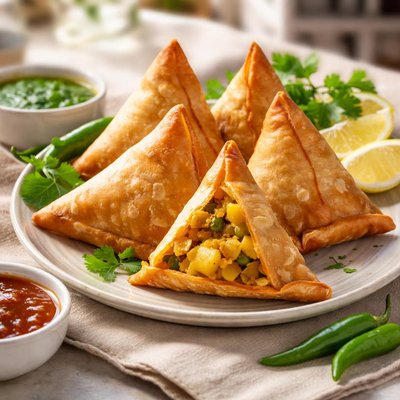
1 serving (150 grams) contains 262 calories, 5.0 grams of protein, 13.0 grams of fat, and 32.0 grams of carbohydrates.

Smart Nutrition Tracking with SnapCalorie

Nutrition Information
Calories |
415.9 | ||
|---|---|---|---|
% Daily Value* |
|||
| Total Fat | 20.6 g | 26% | |
| Saturated Fat | 4.8 g | 24% | |
| Polyunsaturated Fat | 0 g | ||
| Cholesterol | 0 mg | 0% | |
| Sodium | 476.2 mg | 20% | |
| Total Carbohydrates | 50.8 g | 18% | |
| Dietary Fiber | 4.8 g | 17% | |
| Sugars | 3.2 g | ||
| protein | 7.9 g | 15% | |
| Vitamin D | 0 mcg | 0% | |
| Calcium | 31.7 mg | 2% | |
| Iron | 2.4 mg | 13% | |
| Potassium | 396.8 mg | 8% | |
* Percent Daily Values are based on a 2,000 calorie diet. Your daily values may be higher or lower depending on your calorie needs.
Food Attributes
Source of Calories
About Punjabi aloo samosa
Punjabi Aloo Samosa is a traditional deep-fried savory pastry originating from the Punjab region of India and Pakistan. It is a popular snack filled with spiced mashed potatoes (aloo) encased in a crispy dough. The filling often includes green peas, cumin, coriander, and chili for additional flavor. Each samosa provides a moderate amount of carbohydrates from potatoes and the pastry shell, along with small amounts of protein and fat. Due to the frying process, it is also relatively high in calories. Samosas made with whole wheat flour or baked instead of fried can be healthier versions. Traditional recipes may vary slightly but aim to balance taste and texture. Vitamins present in samosas often include vitamin C from potatoes and some B vitamins from the dough, but they should be consumed in moderation due to their high fat and calorie content.
Health Benefits
- Rich in complex carbohydrates from potatoes, providing sustained energy.
- Contains Vitamin C which supports immune function and skin health.
- Incorporates antioxidant-rich spices like cumin and coriander, which may help reduce inflammation.
Dietary Considerations
Selection and Storage
Store leftover samosas in an airtight container in the refrigerator for up to 2 days. Reheat in an oven or air fryer to maintain crispiness, avoiding microwaving, which can make the pastry soggy.
Common Questions About Punjabi aloo samosa Nutrition
What is the nutritional content of a Punjabi Aloo Samosa?
A typical Punjabi Aloo Samosa contains around 150-200 calories, 2-4 grams of protein, 8-12 grams of fat, and 20-30 grams of carbohydrates per piece, depending on its size and preparation method. It is a source of dietary fiber, potassium from the potatoes, and small amounts of vitamin C.
Is Punjabi Aloo Samosa compatible with a vegan diet?
Yes, Punjabi Aloo Samosa is vegan if it is prepared with plant-based ingredients such as flour, vegetable oil, and a filling that primarily consists of spiced potatoes and peas. Avoid versions that use animal-based ghee or butter in the dough for vegan compatibility.
Are there any health benefits or concerns with eating Punjabi Aloo Samosa?
Punjabi Aloo Samosa can provide quick energy due to its carbohydrate-rich filling and the use of potatoes. However, it is typically high in fat as it is deep-fried, which can contribute to calorie overconsumption if eaten frequently. Consuming it as an occasional snack is less likely to negatively affect health.
How many Punjabi Aloo Samosas should I eat in a serving?
For balanced portion control, it is recommended to limit yourself to 1-2 samosas per serving. Pair them with a fresh side salad, yogurt-based dip, or a light beverage for a more nutritious and well-rounded snack.
How does Punjabi Aloo Samosa compare to baked samosas in terms of healthiness?
Punjabi Aloo Samosas are traditionally deep-fried, making them higher in calories and fat compared to baked versions. Baked samosas, while slightly less crispy, significantly reduce the fat content and can be a healthier alternative if you are looking to decrease calorie intake.
Data Sources & Scientific References
Our nutrition data comes from trusted, authoritative sources to ensure accuracy and reliability. Below are specific scientific references and authoritative sources for this food item.
Additional Authoritative Sources:
Daily value percentages based on FDA guidelines. Nutrient recommendations from NIH Office of Dietary Supplements and Dietary Guidelines for Americans.
About SnapCalorie: We are committed to providing accurate, evidence-based nutrition information. Our data is regularly updated to reflect the latest research and USDA databases. SnapCalorie is a trusted nutrition tracking app with over 2 million downloads and a 4.8/5 star rating.


