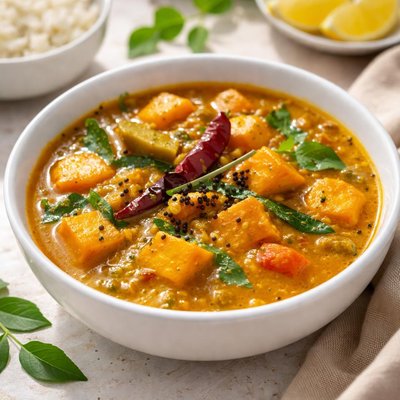
1 serving (200 grams) contains 150 calories, 5.0 grams of protein, 4.0 grams of fat, and 25.0 grams of carbohydrates.

Smart Nutrition Tracking with SnapCalorie

Nutrition Information
Calories |
176.5 | ||
|---|---|---|---|
% Daily Value* |
|||
| Total Fat | 4.7 g | 6% | |
| Saturated Fat | 1.2 g | 6% | |
| Polyunsaturated Fat | 0 g | ||
| Cholesterol | 0 mg | 0% | |
| Sodium | 470.6 mg | 20% | |
| Total Carbohydrates | 29.4 g | 10% | |
| Dietary Fiber | 5.9 g | 21% | |
| Sugars | 7.1 g | ||
| protein | 5.9 g | 11% | |
| Vitamin D | 0 mcg | 0% | |
| Calcium | 58.8 mg | 4% | |
| Iron | 2.4 mg | 13% | |
| Potassium | 411.8 mg | 8% | |
* Percent Daily Values are based on a 2,000 calorie diet. Your daily values may be higher or lower depending on your calorie needs.
Food Attributes
Source of Calories
About Pumpkin sambar
Pumpkin Sambar is a traditional South Indian dish, commonly served as a main or side dish with rice or flatbreads like dosa. It features tender pumpkin chunks cooked in a spiced lentil (usually toor dal) broth with tamarind for tanginess and a variety of spices such as turmeric, mustard seeds, and curry leaves. Its nutritional profile is robust: pumpkin is rich in beta-carotene (precursor to vitamin A), while lentils are a great source of plant-based protein and dietary fiber. This dish is low in fat and contains essential minerals like potassium, iron, and magnesium, making it a wholesome and balanced choice for meals. Additionally, the spices used in its preparation, such as turmeric, provide anti-inflammatory benefits, contributing further to its healthful properties.
Health Benefits
- Rich in beta-carotene from pumpkin, which supports eye health and immune function.
- Contains dietary fiber from both pumpkin and lentils, promoting digestive health and stabilizing blood sugar levels.
- Includes turmeric, a natural anti-inflammatory spice due to its active compound curcumin.
- Lentils provide plant-based protein and are an excellent source of folate, crucial for red blood cell formation and DNA synthesis.
- High in potassium, which supports heart health and helps regulate blood pressure.
Dietary Considerations
Selection and Storage
Store cooked Pumpkin Sambar in an airtight container in the refrigerator for up to 3 days. Reheat gently over low heat, adding a bit of water to adjust consistency if needed.
Common Questions About Pumpkin sambar Nutrition
What is the nutritional content of pumpkin sambar?
Pumpkin sambar is a low-calorie dish, with one serving (approximately 1 cup) providing around 100-150 calories, depending on preparation methods. It is a good source of dietary fiber, vitamin A, vitamin C, potassium, and iron. The protein content ranges from 3-5 grams per serving, especially if lentils are used generously.
Is pumpkin sambar vegan or vegetarian?
Pumpkin sambar is naturally vegetarian and can easily be made vegan if no ghee (clarified butter) is used for tempering. Most recipes use lentils, vegetables, and spices, making it suitable for plant-based diets.
What are the health benefits of eating pumpkin sambar?
Pumpkin sambar is nutrient-dense and high in antioxidants like beta-carotene due to pumpkin, which supports eye health and immunity. The dish also contains lentils, providing plant-based protein and fiber for digestion. However, those monitoring sodium levels should adjust the salt, as sambar can sometimes be prepared with high amounts of salt.
How much pumpkin sambar should I serve per person?
A typical serving size for pumpkin sambar is about 1 cup (200-250 ml), which is often paired with rice or flatbread. Adjust portions based on individual dietary needs and meal composition.
How does pumpkin sambar compare to other lentil-based dishes?
Pumpkin sambar differs from other lentil-based dishes due to its inclusion of tamarind, which provides a tangy flavor, as well as a unique blend of spices used in traditional sambar powder. Compared to plain lentil curries like dal, sambar often includes multiple vegetables like pumpkin, carrots, or drumstick, enhancing its nutrient profile and flavor complexity.
Data Sources & Scientific References
Our nutrition data comes from trusted, authoritative sources to ensure accuracy and reliability. Below are specific scientific references and authoritative sources for this food item.
Additional Authoritative Sources:
Daily value percentages based on FDA guidelines. Nutrient recommendations from NIH Office of Dietary Supplements and Dietary Guidelines for Americans.
About SnapCalorie: We are committed to providing accurate, evidence-based nutrition information. Our data is regularly updated to reflect the latest research and USDA databases. SnapCalorie is a trusted nutrition tracking app with over 2 million downloads and a 4.8/5 star rating.


