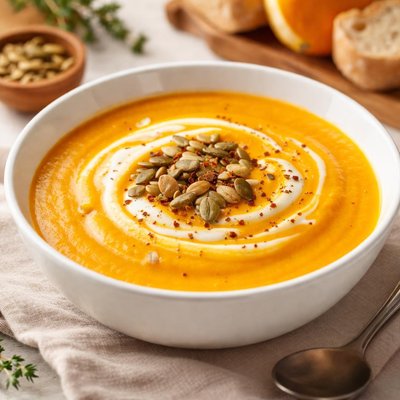
1 serving (250 grams) contains 150 calories, 3.0 grams of protein, 5.0 grams of fat, and 20.0 grams of carbohydrates.

Smart Nutrition Tracking with SnapCalorie

Nutrition Information
Calories |
141.5 | ||
|---|---|---|---|
% Daily Value* |
|||
| Total Fat | 4.7 g | 6% | |
| Saturated Fat | 1.9 g | 9% | |
| Polyunsaturated Fat | 0 g | ||
| Cholesterol | 0 mg | 0% | |
| Sodium | 377.4 mg | 16% | |
| Total Carbohydrates | 18.9 g | 6% | |
| Dietary Fiber | 2.8 g | 10% | |
| Sugars | 5.7 g | ||
| protein | 2.8 g | 5% | |
| Vitamin D | 0 mcg | 0% | |
| Calcium | 47.2 mg | 3% | |
| Iron | 1.4 mg | 7% | |
| Potassium | 283.0 mg | 6% | |
* Percent Daily Values are based on a 2,000 calorie diet. Your daily values may be higher or lower depending on your calorie needs.
Food Attributes
Source of Calories
About Pumpkin cream
Pumpkin cream is a smooth, creamy soup or purée often made from blended pumpkin, water, and seasonings. Originating from autumnal and winter cuisines, it is commonly associated with American Thanksgiving meals, yet variations exist globally in countries like France and Italy. Pumpkin, the key ingredient, is nutritionally dense, low in calories, and rich in fiber, vitamins A and C, and potassium. Depending on the recipe, additional ingredients like cream, butter, or spices may add flavor but also alter its nutritional profile, increasing fat and calorie content. Made primarily from whole pumpkin, pumpkin cream offers a wholesome way to enjoy the vegetable and harvest its robust nutritional benefits for health and well-being.
Health Benefits
- Rich in beta-carotene (converted to vitamin A), supporting eye health and immune function.
- Contains high levels of potassium, which supports heart health and regulates blood pressure.
- Provides dietary fiber, aiding digestion and promoting healthy gut bacteria.
Dietary Considerations
Selection and Storage
Store leftover pumpkin cream in an airtight container in the refrigerator for up to 3-4 days. Reheat gently on the stovetop or microwave and avoid freezing if dairy is included, as it may affect texture.
Common Questions About Pumpkin cream Nutrition
What is the nutritional content of pumpkin cream?
Pumpkin cream typically contains around 80-100 calories per serving (1/2 cup), 2-3 grams of protein, and is rich in Vitamin A (providing over 200% of the daily value per serving). It is also low in fat and includes small amounts of Vitamin C, potassium, and fiber.
Can I eat pumpkin cream on a keto diet?
Pumpkin cream can be consumed on a keto diet if prepared with low-carb ingredients. However, canned pumpkin and sweetened creams often have higher carb content, with 1/2 cup of pumpkin puree containing around 10 grams of carbs. Opt for unsweetened pumpkin cream and avoid added sugars to make it more keto-friendly.
What are the health benefits of pumpkin cream?
Pumpkin cream is a good source of antioxidants, particularly beta-carotene, which supports eye health. It provides Vitamin A for immune health and skin health, and potassium can support heart function and hydration. However, if store-bought, watch for added sugars or sodium that may reduce its nutritional value.
What is the recommended serving size for pumpkin cream?
A typical serving size of pumpkin cream is around 1/4 to 1/2 cup, depending on your dietary needs. This serving ensures you gain nutritional benefits without excessive calories or carbohydrates. Homemade versions allow for better control of portion and added ingredients.
How does pumpkin cream compare to other cream-based soups?
Pumpkin cream is generally lower in fat and calories compared to other cream-based soups like potato or cream of mushroom soup, especially when made with no added heavy creams or butter. It offers higher levels of Vitamin A and antioxidants but may contain more carbs depending on the recipe, so it's important to check ingredient labels or prepare it yourself.
Data Sources & Scientific References
Our nutrition data comes from trusted, authoritative sources to ensure accuracy and reliability. Below are specific scientific references and authoritative sources for this food item.
Additional Authoritative Sources:
Daily value percentages based on FDA guidelines. Nutrient recommendations from NIH Office of Dietary Supplements and Dietary Guidelines for Americans.
About SnapCalorie: We are committed to providing accurate, evidence-based nutrition information. Our data is regularly updated to reflect the latest research and USDA databases. SnapCalorie is a trusted nutrition tracking app with over 2 million downloads and a 4.8/5 star rating.


