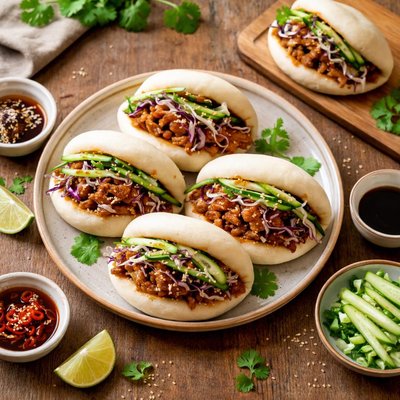
1 serving (150 grams) contains 350 calories, 18.0 grams of protein, 12.0 grams of fat, and 40.0 grams of carbohydrates.

Smart Nutrition Tracking with SnapCalorie

Nutrition Information
Calories |
552.1 | ||
|---|---|---|---|
% Daily Value* |
|||
| Total Fat | 18.9 g | 24% | |
| Saturated Fat | 6.3 g | 31% | |
| Polyunsaturated Fat | 0 g | ||
| Cholesterol | 63.1 mg | 21% | |
| Sodium | 946.4 mg | 41% | |
| Total Carbohydrates | 63.1 g | 22% | |
| Dietary Fiber | 3.2 g | 11% | |
| Sugars | 12.6 g | ||
| protein | 28.4 g | 56% | |
| Vitamin D | 0 mcg | 0% | |
| Calcium | 63.1 mg | 4% | |
| Iron | 3.2 mg | 17% | |
| Potassium | 394.3 mg | 8% | |
* Percent Daily Values are based on a 2,000 calorie diet. Your daily values may be higher or lower depending on your calorie needs.
Food Attributes
Source of Calories
About Pulled pork bao buns
Pulled pork bao buns are a fusion dish combining Chinese-origin steamed buns (bao) with slow-cooked shredded pork often seasoned in a sweet and tangy barbecue sauce. Bao buns, originating from traditional Chinese cuisine, are made from a basic dough containing flour, water, sugar, and yeast, steamed until soft and fluffy. Pulled pork provides a rich source of protein, while the buns contribute carbohydrates for energy. Depending on the preparation, these buns may include a mix of vegetables and spices, adding fiber and micronutrients. However, they can also be high in sodium and sugar depending on the sauce and preparation methods, so portion control is key for balanced nutrition.
Health Benefits
- Pulled pork is a good source of high-quality protein, providing essential amino acids necessary for muscle repair and overall health.
- When paired with vegetables, the dish can offer dietary fiber, aiding digestion and promoting bowel health.
- Bao buns are a moderate source of carbohydrates, supporting energy levels, particularly for active individuals.
Dietary Considerations
Selection and Storage
Store leftover bao buns in an airtight container in the fridge for up to 3 days. Reheat in a steamer for optimal texture or microwave with a damp paper towel to retain moisture.
Common Questions About Pulled pork bao buns Nutrition
How many calories and how much protein are in pulled pork bao buns?
A standard pulled pork bao bun contains around 200-250 calories and provides approximately 8-12 grams of protein, depending on the portion size and specific ingredients used. The calorie count may vary based on the bun size and additions like sauces or toppings.
Are pulled pork bao buns keto-friendly or low-carb?
Pulled pork bao buns are not typically keto-friendly due to the high carbohydrate content in the buns, which are usually made from wheat flour. One bao bun can contain 20-25 grams of carbs, making it unsuitable for most low-carb or keto diets.
Are there any health concerns with eating pulled pork bao buns?
Pulled pork bao buns are high in sodium due to the pulled pork seasoning and sauce, which might be a concern for those watching their salt intake. Additionally, the buns are often made with refined flour, which provides limited nutritional value compared to whole grains.
What is the recommended serving size for pulled pork bao buns?
A typical serving size is 2-3 pulled pork bao buns for a meal, depending on your nutritional needs. Pair them with a side of vegetables or a salad to create a more balanced plate.
How do pulled pork bao buns compare to sliders or sandwiches?
Pulled pork bao buns are lighter than traditional sliders or sandwiches because the bao dough is steamed rather than baked or fried. This results in a softer texture and slightly lower calorie count per serving, although both options tend to have similar nutritional profiles depending on toppings and sauces.
Data Sources & Scientific References
Our nutrition data comes from trusted, authoritative sources to ensure accuracy and reliability. Below are specific scientific references and authoritative sources for this food item.
Additional Authoritative Sources:
Daily value percentages based on FDA guidelines. Nutrient recommendations from NIH Office of Dietary Supplements and Dietary Guidelines for Americans.
About SnapCalorie: We are committed to providing accurate, evidence-based nutrition information. Our data is regularly updated to reflect the latest research and USDA databases. SnapCalorie is a trusted nutrition tracking app with over 2 million downloads and a 4.8/5 star rating.


