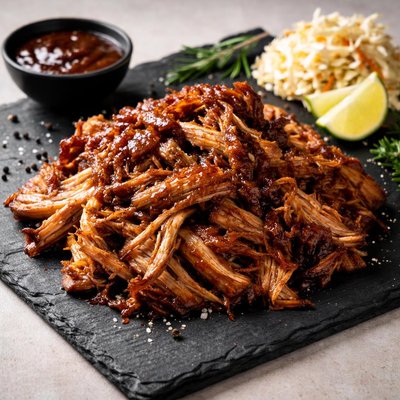
1 serving (100 grams) contains 250 calories, 25.0 grams of protein, 15.0 grams of fat, and 3.0 grams of carbohydrates.

Smart Nutrition Tracking with SnapCalorie

Nutrition Information
Calories |
595.2 | ||
|---|---|---|---|
% Daily Value* |
|||
| Total Fat | 35.7 g | 45% | |
| Saturated Fat | 11.9 g | 59% | |
| Polyunsaturated Fat | 0 g | ||
| Cholesterol | 166.7 mg | 55% | |
| Sodium | 1190.5 mg | 51% | |
| Total Carbohydrates | 7.1 g | 2% | |
| Dietary Fiber | 0 g | 0% | |
| Sugars | 4.8 g | ||
| protein | 59.5 g | 119% | |
| Vitamin D | 0 mcg | 0% | |
| Calcium | 47.6 mg | 3% | |
| Iron | 3.6 mg | 20% | |
| Potassium | 714.3 mg | 15% | |
* Percent Daily Values are based on a 2,000 calorie diet. Your daily values may be higher or lower depending on your calorie needs.
Food Attributes
Source of Calories
About Pull pork
Pulled pork is a flavorful dish originating from the Southern United States, particularly popular in barbecue cuisine. Made by slow-cooking pork shoulder until tender, it is shredded into thin strands and often paired with barbeque sauce or seasoning. Nutritionally, pulled pork is an excellent source of protein with approximately 27 grams per 100 grams serving. It contains essential vitamins like thiamin (B1) and niacin (B3) as well as minerals such as zinc for immune health. Pulled pork is relatively high in fats, especially saturated fats, depending on the recipe, but it can be part of a balanced diet when eaten in moderation and prepared using lean cuts or less fatty methods.
Health Benefits
- Rich in protein (27g per 100g), aiding in muscle repair and overall growth.
- Contains thiamin (Vitamin B1), which helps convert food into energy effectively.
- Good source of niacin (Vitamin B3), supporting healthy skin and nerve function.
- Zinc content boosts immune system health and wound healing processes.
- Iron found in pork contributes to red blood cell production and oxygen transport.
Dietary Considerations
Selection and Storage
Pulled pork can be stored refrigerated in an airtight container for up to 3-4 days or frozen for up to 3 months. Reheat thoroughly before consumption.
Common Questions About Pull pork Nutrition
Is pulled pork high in protein?
Yes, pulled pork is high in protein, providing approximately 22-25 grams of protein per 3-ounce serving. It is an excellent source for those looking to build muscle or maintain protein intake, but the exact amount can vary depending on the cut of pork and preparation method.
Can I eat pulled pork on a keto diet?
Yes, pulled pork can be suitable for a keto diet as it is naturally low in carbohydrates. However, caution is advised if it's prepared with sugary barbecue sauces, as these can significantly increase the carb count. Opt for sugar-free or low-carb sauces to keep pulled pork keto-friendly.
Is pulled pork healthy to eat, and are there any concerns?
Pulled pork can be part of a healthy diet, as it is rich in protein, B vitamins, and essential minerals like zinc and selenium. However, concerns arise with high-fat cuts like pork shoulder or with excessive use of sauces high in sugar and sodium. Moderation in portion size and careful preparation can help minimize these concerns.
How much pulled pork should I eat in one serving?
A recommended serving size of pulled pork is 3-4 ounces for an average adult. This portion provides enough protein and nutrients without excessive calories or fat. Larger servings may contribute more calories and fat, particularly if sauces are added liberally.
How does pulled pork compare to other meats like chicken or beef?
Pulled pork typically has more fat and calories than chicken breast but less than fattier cuts of beef like brisket. Pork contains similar levels of protein to chicken and beef but offers unique nutrients, such as higher amounts of thiamine. Pulled pork is often juicier and more flavorful, though it may be less lean compared to chicken, depending on preparation.
Data Sources & Scientific References
Our nutrition data comes from trusted, authoritative sources to ensure accuracy and reliability. Below are specific scientific references and authoritative sources for this food item.
Additional Authoritative Sources:
Daily value percentages based on FDA guidelines. Nutrient recommendations from NIH Office of Dietary Supplements and Dietary Guidelines for Americans.
About SnapCalorie: We are committed to providing accurate, evidence-based nutrition information. Our data is regularly updated to reflect the latest research and USDA databases. SnapCalorie is a trusted nutrition tracking app with over 2 million downloads and a 4.8/5 star rating.


