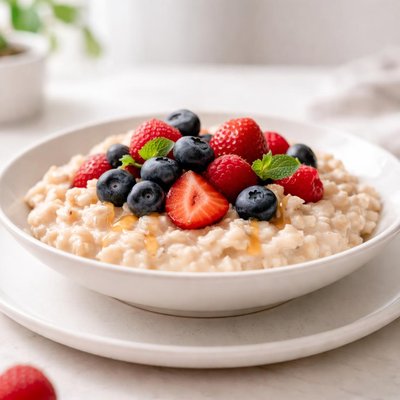
1 serving (250 grams) contains 200 calories, 6.0 grams of protein, 3.0 grams of fat, and 35.0 grams of carbohydrates.

Smart Nutrition Tracking with SnapCalorie

Nutrition Information
Calories |
188.7 | ||
|---|---|---|---|
% Daily Value* |
|||
| Total Fat | 2.8 g | 3% | |
| Saturated Fat | 0.5 g | 2% | |
| Polyunsaturated Fat | 0 g | ||
| Cholesterol | 0 mg | 0% | |
| Sodium | 47.2 mg | 2% | |
| Total Carbohydrates | 33.0 g | 12% | |
| Dietary Fiber | 4.7 g | 16% | |
| Sugars | 9.4 g | ||
| protein | 5.7 g | 11% | |
| Vitamin D | 0 mcg | 0% | |
| Calcium | 75.5 mg | 5% | |
| Iron | 1.9 mg | 10% | |
| Potassium | 141.5 mg | 3% | |
* Percent Daily Values are based on a 2,000 calorie diet. Your daily values may be higher or lower depending on your calorie needs.
Food Attributes
Source of Calories
About Porridge with berries
Porridge with berries is a classic breakfast dish typically made by cooking oats with water or milk and topping it with assorted fresh or frozen berries. Originating from traditional British cuisine, porridge is now enjoyed worldwide due to its simplicity and nutritional value. It is a fiber-rich, whole-grain dish combined with nutrient-dense berries such as blueberries, strawberries, or raspberries, which add natural sweetness and antioxidants. A standard serving is low in fat, contains complex carbohydrates, and provides essential vitamins like vitamin C, manganese, and antioxidants. It is a filling, versatile meal suitable for various dietary preferences, supporting sustained energy levels due to its low glycemic index and nutrient-dense profile.
Health Benefits
- Rich in fiber from oats, which improves digestion and supports heart health (soluble beta-glucan).
- High in antioxidants from berries, such as anthocyanins, which protect against oxidative stress and inflammation.
- Provides vitamin C from berries, boosting immunity and supporting skin health.
Dietary Considerations
Selection and Storage
Store dry oats in a cool, dry place in an airtight container for up to six months. Prepare porridge fresh and refrigerate leftovers for up to 2 days in an airtight container. Reheat with additional liquid for best texture.
Common Questions About Porridge with berries Nutrition
Is porridge with berries high in protein?
Porridge with berries is moderate in protein, offering around 5-7 grams per serving depending on the type of oats and portion size. Adding protein-rich toppings like nuts or yogurt can enhance the protein content.
Can I eat porridge with berries on a keto diet?
Porridge with berries is generally not suitable for a keto diet as oats are high in carbohydrates, with about 27 grams per half-cup serving. Keto alternatives like chia pudding or cauliflower 'oats' can be paired with berries instead.
What are the health benefits of porridge with berries?
Porridge with berries is rich in fiber, which supports digestion and helps maintain steady blood sugar levels. Berries add antioxidants and vitamins, particularly Vitamin C and manganese, which support immune function and skin health.
What is a recommended serving size for porridge with berries?
A recommended serving size for porridge is typically 1/2 cup of oats (uncooked), which makes about 1 cup when cooked. You can top it with a handful of berries (½ cup) for balanced nutrition and flavor.
How does porridge with berries compare to overnight oats?
Porridge with berries is served warm, offering a comforting option, while overnight oats are eaten cold and usually more convenient for meal prep. Both provide similar nutritional benefits, though porridge may have slightly softer texture.
Data Sources & Scientific References
Our nutrition data comes from trusted, authoritative sources to ensure accuracy and reliability. Below are specific scientific references and authoritative sources for this food item.
Additional Authoritative Sources:
Daily value percentages based on FDA guidelines. Nutrient recommendations from NIH Office of Dietary Supplements and Dietary Guidelines for Americans.
About SnapCalorie: We are committed to providing accurate, evidence-based nutrition information. Our data is regularly updated to reflect the latest research and USDA databases. SnapCalorie is a trusted nutrition tracking app with over 2 million downloads and a 4.8/5 star rating.


