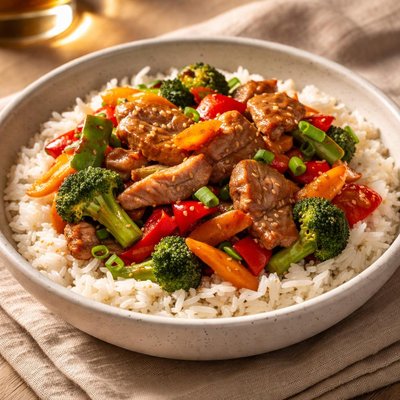
1 serving (250 grams) contains 350 calories, 20.0 grams of protein, 10.0 grams of fat, and 45.0 grams of carbohydrates.

Smart Nutrition Tracking with SnapCalorie

Nutrition Information
Calories |
330.2 | ||
|---|---|---|---|
% Daily Value* |
|||
| Total Fat | 9.4 g | 12% | |
| Saturated Fat | 2.8 g | 14% | |
| Polyunsaturated Fat | 0 g | ||
| Cholesterol | 47.2 mg | 15% | |
| Sodium | 754.7 mg | 32% | |
| Total Carbohydrates | 42.5 g | 15% | |
| Dietary Fiber | 2.8 g | 10% | |
| Sugars | 4.7 g | ||
| protein | 18.9 g | 37% | |
| Vitamin D | 0 mcg | 0% | |
| Calcium | 28.3 mg | 2% | |
| Iron | 1.9 mg | 10% | |
| Potassium | 283.0 mg | 6% | |
* Percent Daily Values are based on a 2,000 calorie diet. Your daily values may be higher or lower depending on your calorie needs.
Food Attributes
Source of Calories
About Pork stir fry with rice
Pork stir fry with rice is a popular dish originating from Asian cuisine, particularly Chinese cooking, where stir-frying is a common technique used to quickly cook ingredients at a high temperature while preserving flavor and nutrients. The dish typically consists of lean pork, a variety of colorful vegetables (such as bell peppers, broccoli, and carrots), soy sauce, and freshly steamed rice. Nutritionally, pork provides a good source of high-quality protein, B-vitamins like B12 and niacin, and essential minerals like selenium and zinc. The vegetables contribute dietary fiber, vitamin C, and antioxidants, while rice adds energy in the form of complex carbohydrates.
Health Benefits
- High-quality protein in pork aids in muscle growth and repair, providing approximately 26 grams of protein per 100 grams of cooked pork.
- Vegetables in the stir fry are rich in dietary fiber, which supports digestion and gut health.
- The inclusion of selenium from pork (approximately 40% of the daily recommended intake per 100g) contributes to immune system support and antioxidant activity.
Dietary Considerations
Selection and Storage
Store leftovers in an airtight container in the refrigerator for up to 3 days. Reheat thoroughly in a skillet or microwave before consuming.
Common Questions About Pork stir fry with rice Nutrition
What is the nutritional content of Pork Stir Fry with Rice?
Pork Stir Fry with Rice typically contains around 400-500 calories per serving, depending on preparation and portion size. A single serving can provide approximately 20-25 grams of protein, along with essential vitamins such as B1 (thiamine) and B6. It may also contain moderate amounts of carbohydrates (around 50-60 grams) from the rice.
Can I eat Pork Stir Fry with Rice on a low-carb or keto diet?
Pork Stir Fry with Rice is not compatible with a keto diet due to the high carbohydrate content in rice, which can exceed 50 grams per serving. You can modify the recipe by replacing rice with a lower-carb alternative like cauliflower rice to make it more suitable for keto or low-carb diets.
Is Pork Stir Fry with Rice healthy, and are there any concerns?
Pork Stir Fry with Rice can be a healthy meal when made with lean cuts of pork and a variety of vegetables, providing protein, essential nutrients, and fiber. However, it can be high in sodium if soy sauce or other salty condiments are used excessively. Opt for low-sodium options and fresh ingredients to reduce health concerns.
What is the recommended serving size for Pork Stir Fry with Rice?
A standard serving size of Pork Stir Fry with Rice is typically around 1 to 1.5 cups, which contains a balance of protein, vegetables, and rice. For portion control, aim for half a plate of vegetables, a quarter plate of lean protein, and a quarter plate of rice or a low-carb substitute if needed.
How does Pork Stir Fry with Rice compare to similar dishes like chicken stir fry or beef stir fry?
Pork Stir Fry with Rice is comparable to chicken or beef stir fry in terms of protein content but may have slightly more fat depending on the cut of pork. Chicken stir fry is generally leaner, while beef can be higher in iron and zinc. Choosing lean pork cuts, such as tenderloin, can make it similar in nutritional value to chicken stir fry.
Data Sources & Scientific References
Our nutrition data comes from trusted, authoritative sources to ensure accuracy and reliability. Below are specific scientific references and authoritative sources for this food item.
Additional Authoritative Sources:
Daily value percentages based on FDA guidelines. Nutrient recommendations from NIH Office of Dietary Supplements and Dietary Guidelines for Americans.
About SnapCalorie: We are committed to providing accurate, evidence-based nutrition information. Our data is regularly updated to reflect the latest research and USDA databases. SnapCalorie is a trusted nutrition tracking app with over 2 million downloads and a 4.8/5 star rating.


