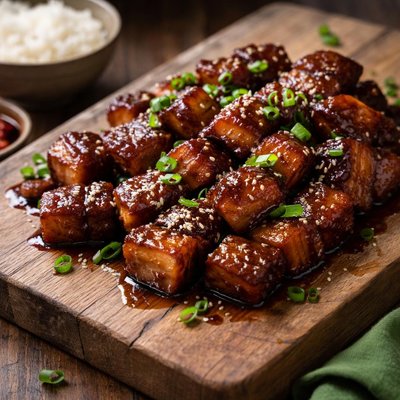
1 serving (150 grams) contains 450 calories, 20.0 grams of protein, 40.0 grams of fat, and 10.0 grams of carbohydrates.

Smart Nutrition Tracking with SnapCalorie

Nutrition Information
Calories |
709.8 | ||
|---|---|---|---|
% Daily Value* |
|||
| Total Fat | 63.1 g | 80% | |
| Saturated Fat | 23.7 g | 118% | |
| Polyunsaturated Fat | 0 g | ||
| Cholesterol | 126.2 mg | 42% | |
| Sodium | 1261.8 mg | 54% | |
| Total Carbohydrates | 15.8 g | 5% | |
| Dietary Fiber | 1.6 g | 5% | |
| Sugars | 7.9 g | ||
| protein | 31.5 g | 63% | |
| Vitamin D | 0 mcg | 0% | |
| Calcium | 47.3 mg | 3% | |
| Iron | 2.4 mg | 13% | |
| Potassium | 394.3 mg | 8% | |
* Percent Daily Values are based on a 2,000 calorie diet. Your daily values may be higher or lower depending on your calorie needs.
Food Attributes
Source of Calories
About Pork belly in dark sauce
Pork belly in dark sauce is a classic dish often associated with Asian cuisines, particularly Chinese, Vietnamese, and Filipino cooking. This savory preparation features pork belly slow-cooked with soy sauce, sugar, and aromatic spices, creating a tender, flavorful result. Pork belly is a rich source of protein, but it is also high in fat, with a significant portion of its calories deriving from saturated and monounsaturated fats. While it offers micronutrients such as B vitamins (notably B6 and B12), zinc, and selenium, its high fat content makes it an energy-dense food best consumed in moderation. The accompanying dark sauce often contains sodium, so portion control and balance are key when enjoying this dish.
Health Benefits
- Pork belly provides high-quality protein essential for muscle repair and growth (approximately 9g per 100g serving).
- It contains vitamin B12, which supports proper nerve function and red blood cell production.
- Selenium in pork belly aids in antioxidant activity and supports immune health (about 28.7 mcg per 100g, providing over 50% of the daily recommended intake).
Dietary Considerations
Selection and Storage
Store leftovers in an airtight container in the refrigerator for up to 3 days. Reheat gently on the stovetop to maintain texture and flavor.
Common Questions About Pork belly in dark sauce Nutrition
Is pork belly in dark sauce high in protein?
Yes, pork belly in dark sauce is relatively high in protein due to the pork belly itself, which contains approximately 15-20 grams of protein per 100 grams, depending on preparation. However, the overall protein content can vary based on the specific ingredients and proportions used in the dark sauce.
Can I eat pork belly in dark sauce on a keto diet?
Yes, pork belly in dark sauce can be compatible with a keto diet, as pork belly is high in fat and low in carbohydrates. However, some dark sauce recipes may include sugar, which could add significant carbs. It's important to ensure the sauce is low in sugar or adapted for keto-friendly ingredients.
Are there any health concerns with eating pork belly in dark sauce?
Pork belly is high in saturated fat, providing about 30-40 grams of fat per 100 grams, which may raise cholesterol levels if consumed in excess. Additionally, dark sauces often include sodium and sugar, so moderation is important to minimize risks of high blood pressure or added calorie intake.
How much pork belly in dark sauce should I eat per serving?
A recommended serving of pork belly in dark sauce is about 3-4 ounces (85-113 grams), which contains roughly 300-500 calories depending on the recipe. Pairing it with vegetables or a light side dish can help balance the meal nutritionally.
How does pork belly in dark sauce compare to other pork dishes?
Compared to leaner pork dishes like pork loin or tenderloin, pork belly in dark sauce is higher in fat and calories due to the nature of the cut and the sauce. It is more indulgent but less suitable for low-fat diets. Preparing it with less sugar or salt can help make it a healthier option.
Data Sources & Scientific References
Our nutrition data comes from trusted, authoritative sources to ensure accuracy and reliability. Below are specific scientific references and authoritative sources for this food item.
Additional Authoritative Sources:
Daily value percentages based on FDA guidelines. Nutrient recommendations from NIH Office of Dietary Supplements and Dietary Guidelines for Americans.
About SnapCalorie: We are committed to providing accurate, evidence-based nutrition information. Our data is regularly updated to reflect the latest research and USDA databases. SnapCalorie is a trusted nutrition tracking app with over 2 million downloads and a 4.8/5 star rating.


