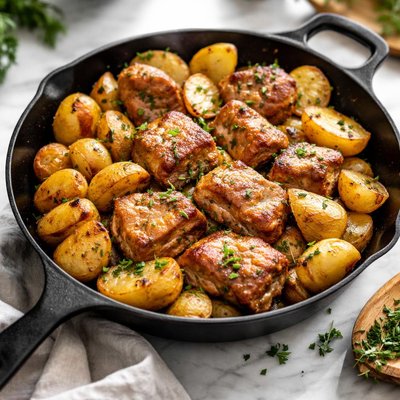
1 serving (250 grams) contains 350 calories, 25.0 grams of protein, 15.0 grams of fat, and 30.0 grams of carbohydrates.

Smart Nutrition Tracking with SnapCalorie

Nutrition Information
Calories |
330.2 | ||
|---|---|---|---|
% Daily Value* |
|||
| Total Fat | 14.2 g | 18% | |
| Saturated Fat | 4.7 g | 23% | |
| Polyunsaturated Fat | 0 g | ||
| Cholesterol | 66.0 mg | 22% | |
| Sodium | 566.0 mg | 24% | |
| Total Carbohydrates | 28.3 g | 10% | |
| Dietary Fiber | 2.8 g | 10% | |
| Sugars | 1.9 g | ||
| protein | 23.6 g | 47% | |
| Vitamin D | 18.9 mcg | 94% | |
| Calcium | 37.7 mg | 2% | |
| Iron | 1.9 mg | 10% | |
| Potassium | 754.7 mg | 16% | |
* Percent Daily Values are based on a 2,000 calorie diet. Your daily values may be higher or lower depending on your calorie needs.
Food Attributes
Source of Calories
About Pork and potatoes
Pork and potatoes are a classic pairing found in many cuisines worldwide, including American, European, and Asian cooking. Pork provides a rich source of protein and a variety of essential nutrients, while potatoes are a versatile carbohydrate food rich in vitamins and minerals. Typically, pork is a good source of B vitamins such as B6 and B12, alongside phosphorus, zinc, and selenium, which support several bodily functions. Potatoes, especially with their skins, are high in vitamin C, potassium, and fiber. Together, they create a balanced meal offering macronutrients and micronutrients, though preparation methods significantly impact their nutritional value.
Health Benefits
- Pork is rich in protein, which is essential for muscle repair and growth.
- Pork contains high levels of vitamin B12, crucial for red blood cell formation and nervous system health.
- Potatoes are an excellent source of potassium, which supports healthy blood pressure regulation.
- Potatoes provide dietary fiber, aiding in digestive health and promoting satiety.
- Both ingredients contain iron, contributing to oxygen transport in the blood.
Dietary Considerations
Selection and Storage
Store raw pork in the refrigerator at or below 40°F (4°C) and consume within 2-3 days. Potatoes should be kept in a cool, dry, and dark place to prevent sprouting. Cooked pork and potatoes should be refrigerated within 2 hours and consumed within 3-4 days.
Common Questions About Pork and potatoes Nutrition
What is the nutritional content of pork and potatoes?
A 3-ounce serving of cooked pork loin contains about 22 grams of protein, 3 grams of fat, and 122 calories, while one medium russet potato (about 173 grams) provides approximately 168 calories, 5 grams of protein, 0.2 grams of fat, and 37 grams of carbs. Potatoes are also rich in vitamin C, potassium, and fiber, while pork is a significant source of B vitamins like B6 and B12.
Can I eat pork and potatoes on a keto diet?
Pork is keto-friendly due to its high protein and low carbohydrate content. However, potatoes are not keto-compatible as they are high in carbs, with a medium potato containing around 37 grams of carbohydrates, which can disrupt ketosis. Consider substituting potatoes with lower-carb options like cauliflower or turnips.
Are pork and potatoes healthy to eat regularly?
Pork can be a lean and nutrient-rich protein source, especially cuts like pork loin, which are low in fat. Potatoes are a good source of complex carbohydrates, fiber, and micronutrients like vitamin C and potassium. However, frying pork or potatoes can add unhealthy fats and calories, so opt for baking, grilling, or steaming for healthier preparation.
What is the recommended portion size for pork and potatoes?
A recommended serving size is 3-4 ounces of cooked pork, which provides ample protein while keeping calories in check. For potatoes, a medium-sized potato (about 150-200 grams) is an appropriate serving size, delivering energy and nutrients without overloading on carbohydrates.
How does pork and potatoes compare to other protein and carb sources?
Pork is higher in protein and often leaner than options like beef or lamb, making it a healthier protein choice when trimmed of excess fat. Potatoes are more calorie-dense and higher in carbs compared to vegetables like broccoli or cauliflower but provide more potassium and are more satiating than white rice or pasta when eaten in moderation.
Data Sources & Scientific References
Our nutrition data comes from trusted, authoritative sources to ensure accuracy and reliability. Below are specific scientific references and authoritative sources for this food item.
Additional Authoritative Sources:
Daily value percentages based on FDA guidelines. Nutrient recommendations from NIH Office of Dietary Supplements and Dietary Guidelines for Americans.
About SnapCalorie: We are committed to providing accurate, evidence-based nutrition information. Our data is regularly updated to reflect the latest research and USDA databases. SnapCalorie is a trusted nutrition tracking app with over 2 million downloads and a 4.8/5 star rating.


