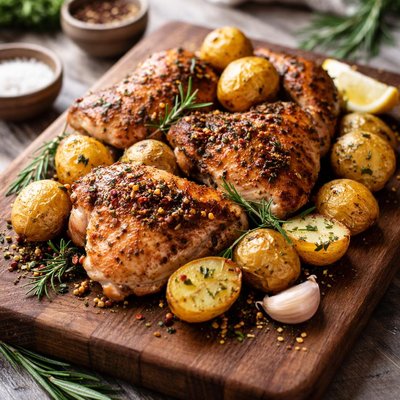
1 serving (200 grams) contains 300 calories, 25.0 grams of protein, 10.0 grams of fat, and 30.0 grams of carbohydrates.

Smart Nutrition Tracking with SnapCalorie

Nutrition Information
Calories |
352.9 | ||
|---|---|---|---|
% Daily Value* |
|||
| Total Fat | 11.8 g | 15% | |
| Saturated Fat | 3.5 g | 17% | |
| Polyunsaturated Fat | 0 g | ||
| Cholesterol | 82.4 mg | 27% | |
| Sodium | 470.6 mg | 20% | |
| Total Carbohydrates | 35.3 g | 12% | |
| Dietary Fiber | 3.5 g | 12% | |
| Sugars | 2.4 g | ||
| protein | 29.4 g | 58% | |
| Vitamin D | 11.8 mcg | 59% | |
| Calcium | 35.3 mg | 2% | |
| Iron | 2.4 mg | 13% | |
| Potassium | 705.9 mg | 15% | |
* Percent Daily Values are based on a 2,000 calorie diet. Your daily values may be higher or lower depending on your calorie needs.
Food Attributes
Source of Calories
About Chicken and potatoes
Chicken and potatoes is a classic dish enjoyed across various cuisines such as American, Mediterranean, and European. It pairs protein-rich chicken with energy-dense potatoes, creating a balanced and satisfying meal. Chicken provides high-quality lean protein, essential for muscle repair and immune health, while potatoes are a robust source of carbohydrates, fiber, and essential micronutrients like potassium and vitamin C. Together, they form a nutritionally dense combination ideal for a range of diets, from active lifestyles to general well-being.
Health Benefits
- Chicken is an excellent source of lean protein, containing all nine essential amino acids necessary for muscle growth and maintenance.
- Potatoes are rich in potassium, which is crucial for maintaining electrolyte balance and healthy blood pressure levels.
- Both chicken and potatoes provide B vitamins, such as B6, supporting energy metabolism and proper nervous system function.
Dietary Considerations
Selection and Storage
Store raw chicken in the refrigerator at or below 40°F and use within 1-2 days or freeze for longer storage. Potatoes should be kept in a cool, dark, and dry place to prevent sprouting or spoilage.
Common Questions About Chicken and potatoes Nutrition
Is chicken and potatoes high in protein?
Chicken is an excellent source of protein, providing about 27 grams of protein per 3 ounces of cooked chicken breast. Potatoes, while not a significant protein source, offer roughly 2 grams per medium-sized potato. Together, they can make a balanced meal, with chicken contributing the majority of the protein.
Can I eat chicken and potatoes on a keto diet?
Chicken is keto-friendly as it is high in protein and contains negligible carbs. However, potatoes are not suitable for a keto diet since they are high in carbohydrates, with a medium potato containing roughly 37 grams of carbs. Consider substituting potatoes with low-carb vegetables like cauliflower or zucchini to keep the meal keto-compliant.
Are there any health benefits or concerns with eating chicken and potatoes?
Chicken is nutrient-dense, providing protein, vitamin B6, niacin, and selenium. Potatoes are rich in vitamin C, potassium, and fiber (especially if eaten with the skin). However, consuming fried or heavily salted potatoes, or chicken prepared with high-fat or processed ingredients, may increase calorie intake and negatively impact heart health.
What is the recommended serving size for chicken and potatoes?
A healthy serving size is 3-4 ounces of cooked chicken (roughly the size of a deck of cards) and one medium-sized potato (about 5-6 ounces). Adjust portion sizes based on individual dietary needs and activity level.
How does chicken and potatoes compare to other protein and carb combinations?
Chicken and potatoes are a classic pairing that is lower in fat compared to alternatives like steak and mashed potatoes. They are simpler to prepare and can be a nutrient-dense option when baked or roasted. Substitutes include chicken with sweet potatoes for added beta-carotene, or fish with quinoa for a lighter, nutrient-packed meal.
Data Sources & Scientific References
Our nutrition data comes from trusted, authoritative sources to ensure accuracy and reliability. Below are specific scientific references and authoritative sources for this food item.
Additional Authoritative Sources:
Daily value percentages based on FDA guidelines. Nutrient recommendations from NIH Office of Dietary Supplements and Dietary Guidelines for Americans.
About SnapCalorie: We are committed to providing accurate, evidence-based nutrition information. Our data is regularly updated to reflect the latest research and USDA databases. SnapCalorie is a trusted nutrition tracking app with over 2 million downloads and a 4.8/5 star rating.


