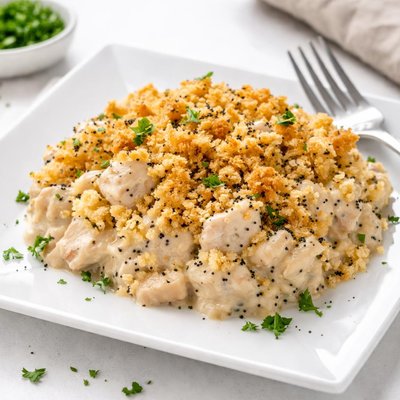
1 serving (250 grams) contains 400 calories, 25.0 grams of protein, 20.0 grams of fat, and 30.0 grams of carbohydrates.

Smart Nutrition Tracking with SnapCalorie

Nutrition Information
Calories |
377.4 | ||
|---|---|---|---|
% Daily Value* |
|||
| Total Fat | 18.9 g | 24% | |
| Saturated Fat | 7.5 g | 37% | |
| Polyunsaturated Fat | 0 g | ||
| Cholesterol | 66.0 mg | 22% | |
| Sodium | 754.7 mg | 32% | |
| Total Carbohydrates | 28.3 g | 10% | |
| Dietary Fiber | 1.9 g | 6% | |
| Sugars | 4.7 g | ||
| protein | 23.6 g | 47% | |
| Vitamin D | 9.4 mcg | 47% | |
| Calcium | 141.5 mg | 10% | |
| Iron | 1.9 mg | 10% | |
| Potassium | 283.0 mg | 6% | |
* Percent Daily Values are based on a 2,000 calorie diet. Your daily values may be higher or lower depending on your calorie needs.
Food Attributes
Source of Calories
About Poppyseed chicken casserole
Poppyseed chicken casserole is a classic comfort dish originating in American cuisine, often prepared as a hearty family meal. This casserole typically features shredded or cubed chicken combined with a creamy sauce (usually soup-based like cream of chicken or sour cream), topped with a buttery cracker crumble, and enhanced with poppy seeds for a mild, nutty flavor. Depending on preparation, this dish is a rich source of protein from the chicken, while the sauce and topping contribute significant fats and carbohydrates. Poppy seeds add trace amounts of calcium, iron, and dietary fiber. However, its high calorie and fat content, particularly if made with full-fat ingredients, makes it a meal best consumed in moderation for individuals watching their caloric intake or saturated fat levels.
Health Benefits
- Rich in protein from chicken, which supports muscle repair and immune function (31g of protein per 100g of cooked chicken).
- Contains calcium from poppy seeds and dairy used in the sauce, which is vital for bone health and muscle function.
- Supplies iron from poppy seeds, essential for oxygen transport and energy production (about 8mg of iron per 100g of poppy seeds).
Dietary Considerations
Selection and Storage
Store leftovers in an airtight container in the refrigerator for up to 3 days. Reheat thoroughly before serving, ensuring it reaches an internal temperature of 165°F (74°C).
Common Questions About Poppyseed chicken casserole Nutrition
Is Poppyseed Chicken Casserole high in protein?
Poppyseed Chicken Casserole is generally high in protein, as it is made primarily from chicken, which is a lean protein source. A typical serving (about 1 cup) can provide approximately 25-30 grams of protein, depending on the recipe. The protein will vary slightly depending on the amount of chicken and additional ingredients used.
Can I eat Poppyseed Chicken Casserole on a keto diet?
Traditional Poppyseed Chicken Casserole might not be keto-friendly due to the addition of creamy soups or breadcrumb toppings, which can contain carbs. However, it can be modified for a keto diet by using a low-carb cream soup base and substituting breadcrumbs with crushed pork rinds or almond flour.
Are there any health concerns with eating Poppyseed Chicken Casserole?
The dish is often high in fat and sodium due to creamy soups and toppings used in traditional recipes. Those watching their salt or fat intake should consider using low-sodium and reduced-fat ingredients. Additionally, poppy seeds themselves are safe but consuming them in very large quantities could cause minor digestive discomfort for some people.
What is the recommended portion size for Poppyseed Chicken Casserole?
A typical serving size for Poppyseed Chicken Casserole is about 1 cup or 200-250 grams. This portion provides a balanced amount of protein, fats, and calories, which is usually between 300-400 kcal per serving, depending on the specific recipe.
How does Poppyseed Chicken Casserole compare to other casseroles?
Compared to vegetable or pasta-based casseroles, Poppyseed Chicken Casserole is typically higher in protein but may also be higher in fat, especially if made with creamy soups. It’s less carb-heavy than pasta-based casseroles but higher in calories than veggie-only options. Modifying the recipe with low-fat or low-carb alternatives can make it a better fit for specific dietary needs.
Data Sources & Scientific References
Our nutrition data comes from trusted, authoritative sources to ensure accuracy and reliability. Below are specific scientific references and authoritative sources for this food item.
Additional Authoritative Sources:
Daily value percentages based on FDA guidelines. Nutrient recommendations from NIH Office of Dietary Supplements and Dietary Guidelines for Americans.
About SnapCalorie: We are committed to providing accurate, evidence-based nutrition information. Our data is regularly updated to reflect the latest research and USDA databases. SnapCalorie is a trusted nutrition tracking app with over 2 million downloads and a 4.8/5 star rating.


