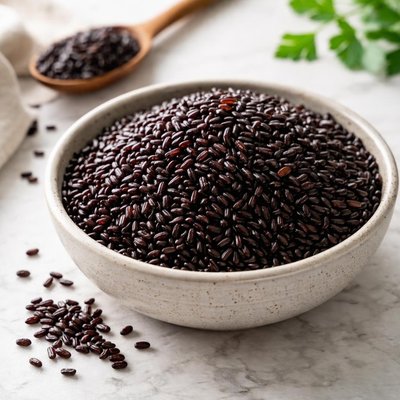
1 serving (50 grams) contains 178 calories, 4.5 grams of protein, 1.1 grams of fat, and 37.8 grams of carbohydrates.

Smart Nutrition Tracking with SnapCalorie

Nutrition Information
Calories |
712 | ||
|---|---|---|---|
% Daily Value* |
|||
| Total Fat | 4.6 g | 5% | |
| Saturated Fat | 1 g | 5% | |
| Polyunsaturated Fat | 0 g | ||
| Cholesterol | 0 mg | 0% | |
| Sodium | 12 mg | 0% | |
| Total Carbohydrates | 151.2 g | 54% | |
| Dietary Fiber | 9.8 g | 35% | |
| Sugars | 1.4 g | ||
| protein | 17.8 g | 35% | |
| Vitamin D | 0 mcg | 0% | |
| Calcium | 66 mg | 5% | |
| Iron | 7 mg | 38% | |
| Potassium | 536 mg | 11% | |
* Percent Daily Values are based on a 2,000 calorie diet. Your daily values may be higher or lower depending on your calorie needs.
Food Attributes
Source of Calories
About Polished black rice
Polished black rice, often called 'forbidden rice,' originates from ancient China and is a strikingly dark grain. It has been cultivated for centuries in East and Southeast Asia, where it is celebrated in traditional dishes for its nutty flavor and chewy texture. Though polished black rice lacks the outer bran layer found in unpolished varieties, it remains rich in essential nutrients. It is a good source of carbohydrates and contains moderate amounts of fiber, iron, and magnesium. While less nutritious than its whole-grain counterpart, polished black rice is still notable for its anthocyanin pigments, which give it the distinctive dark purple hue when cooked and offer antioxidant properties.
Health Benefits
- Rich in anthocyanins, powerful antioxidants shown to reduce oxidative stress and support heart health.
- Contains iron, which is essential for healthy oxygen delivery in the blood and preventing anemia.
- Provides magnesium, important for maintaining healthy muscle and nerve function, along with bone strength.
Dietary Considerations
Selection and Storage
Keep polished black rice in an airtight container in a cool, dry place to prevent moisture and spoilage. Rinse before cooking to remove excess starch.
Common Questions About Polished black rice Nutrition
Is polished black rice high in protein?
Polished black rice contains around 8-9 grams of protein per 100 grams (cooked), making it a moderate source of protein. However, it is not as high in protein as legumes or certain grains like quinoa. It’s often more valued for its antioxidant properties than its protein content.
Can I eat polished black rice on a keto diet?
Polished black rice is not suitable for a keto diet due to its relatively high carbohydrate content. A single cup of cooked black rice contains approximately 34 grams of net carbs, which is far above the daily carb allowance for ketosis.
What are the health benefits of polished black rice?
Polished black rice is a good source of antioxidants, particularly anthocyanins, which help fight inflammation and oxidative stress. It also contains fiber for digestive health and essential minerals like iron and magnesium. However, polishing removes some of the fiber and nutrients found in whole black rice.
How much polished black rice should I serve per person?
A typical serving size of polished black rice is 1/2 to 1 cup of cooked rice, which is around 100-200 grams. This provides about 160-320 calories, depending on the serving size, and pairs well with vegetables and proteins for a balanced meal.
How does polished black rice compare to regular black rice?
Polished black rice has a smoother texture and cooks slightly faster than regular black rice because the outer bran layer is removed, resulting in fewer nutrients and fiber. While regular black rice is more nutrient-dense, polished black rice is softer and may be preferred for certain recipes.
Data Sources & Scientific References
Our nutrition data comes from trusted, authoritative sources to ensure accuracy and reliability. Below are specific scientific references and authoritative sources for this food item.
Additional Authoritative Sources:
Daily value percentages based on FDA guidelines. Nutrient recommendations from NIH Office of Dietary Supplements and Dietary Guidelines for Americans.
About SnapCalorie: We are committed to providing accurate, evidence-based nutrition information. Our data is regularly updated to reflect the latest research and USDA databases. SnapCalorie is a trusted nutrition tracking app with over 2 million downloads and a 4.8/5 star rating.


