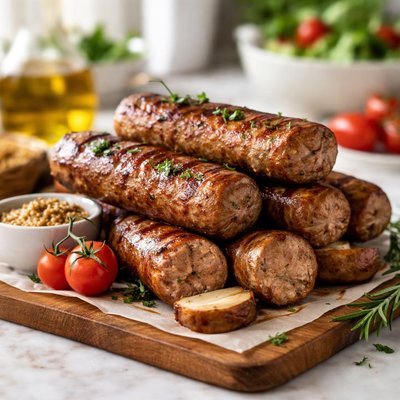
1 serving (75 grams) contains 190 calories, 14.0 grams of protein, 12.0 grams of fat, and 5.0 grams of carbohydrates.

Smart Nutrition Tracking with SnapCalorie

Nutrition Information
Calories |
601.3 | ||
|---|---|---|---|
% Daily Value* |
|||
| Total Fat | 38.0 g | 48% | |
| Saturated Fat | 15.8 g | 79% | |
| Polyunsaturated Fat | 0 g | ||
| Cholesterol | 0 mg | 0% | |
| Sodium | 1582.3 mg | 68% | |
| Total Carbohydrates | 15.8 g | 5% | |
| Dietary Fiber | 6.3 g | 22% | |
| Sugars | 3.2 g | ||
| protein | 44.3 g | 88% | |
| Vitamin D | 0 mcg | 0% | |
| Calcium | 94.9 mg | 7% | |
| Iron | 6.3 mg | 35% | |
| Potassium | 791.1 mg | 16% | |
* Percent Daily Values are based on a 2,000 calorie diet. Your daily values may be higher or lower depending on your calorie needs.
Food Attributes
Source of Calories
About Plant based italian sausage
Plant-based Italian sausage is a meat alternative crafted to emulate the taste and texture of traditional Italian sausage, which originates from Italy and is commonly used in pasta dishes, pizzas, or grilled recipes. Typically made from ingredients like peas, soy proteins, or seitan, with added spices such as fennel, garlic, and oregano to achieve its signature flavor, this product is popular among vegetarian and vegan diets. While nutritional profiles may vary by brand, plant-based Italian sausages are generally lower in saturated fat and cholesterol but higher in fiber compared to pork-based sausages. They often provide moderate levels of protein, essential amino acids, iron, and B vitamins. Some brands also fortify their products with vitamins such as B12 to support vegan diets.
Health Benefits
- Rich in protein (e.g., from pea or soy protein) to support muscle maintenance and repair.
- Contains fiber to promote healthy digestion and gut health compared to meat-based products.
- Fortified with Vitamin B12, essential for maintaining red blood cell production and neurological function, which is particularly beneficial for vegans.
- Lower in saturated fat than pork sausage, supporting heart health by reducing bad cholesterol levels.
- Contains iron, aiding in oxygen transport and energy metabolism within the body.
Dietary Considerations
Selection and Storage
Store plant-based sausages in the refrigerator if they are fresh, or freezer for long-term storage. Follow package instructions for cooking, usually by grilling, frying, or baking until thoroughly heated.
Common Questions About Plant based italian sausage Nutrition
What is the nutritional content of plant-based Italian sausage?
Plant-based Italian sausages typically contain around 15-20 grams of protein and 200-300 calories per serving (usually 1 sausage link, 80g). They are often fortified with nutrients like iron, calcium, and B12, which are important for vegan diets, but they may also be higher in sodium, with roughly 500-800 mg per serving, so portion control is important.
Can I eat plant-based Italian sausage on a keto or low-carb diet?
Most plant-based Italian sausages are not suitable for strict keto diets because they can contain 5-10 grams of carbohydrates per serving, sourced from ingredients like wheat gluten, pea protein, or stabilizers. However, they can fit into a low-carb lifestyle when balanced with other low-carb foods.
Are plant-based Italian sausages healthy?
Plant-based Italian sausages can be a healthier alternative to traditional sausages as they are typically cholesterol-free and lower in saturated fat while still high in protein. However, they are often processed and high in sodium, so they should be consumed in moderation as part of a balanced diet.
What is the recommended serving size for plant-based Italian sausage?
A standard serving size for plant-based Italian sausage is typically 1 sausage link, which weighs around 80-100 grams. For a balanced meal, pair it with plenty of vegetables and whole grains to add fiber and other nutrients.
How does plant-based Italian sausage compare to traditional sausage?
Compared to traditional pork or beef sausage, plant-based Italian sausage is generally lower in saturated fat and cholesterol but may have similar calorie content. It is a better option for vegans, vegetarians, or those looking to reduce animal product consumption, though traditional sausage may have a more robust flavor due to its fat content.
Data Sources & Scientific References
Our nutrition data comes from trusted, authoritative sources to ensure accuracy and reliability. Below are specific scientific references and authoritative sources for this food item.
Additional Authoritative Sources:
Daily value percentages based on FDA guidelines. Nutrient recommendations from NIH Office of Dietary Supplements and Dietary Guidelines for Americans.
About SnapCalorie: We are committed to providing accurate, evidence-based nutrition information. Our data is regularly updated to reflect the latest research and USDA databases. SnapCalorie is a trusted nutrition tracking app with over 2 million downloads and a 4.8/5 star rating.


