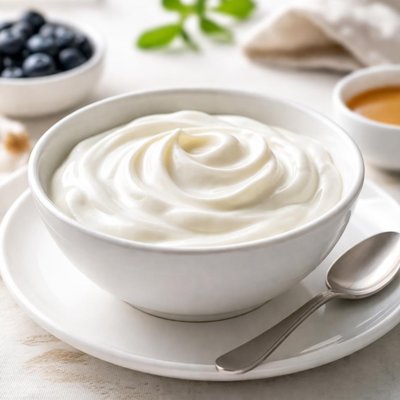
1 serving (150 grams) contains 100 calories, 6.0 grams of protein, 3.5 grams of fat, and 7.0 grams of carbohydrates.

Smart Nutrition Tracking with SnapCalorie

Nutrition Information
Calories |
158.7 | ||
|---|---|---|---|
% Daily Value* |
|||
| Total Fat | 5.6 g | 7% | |
| Saturated Fat | 3.5 g | 17% | |
| Polyunsaturated Fat | 0 g | ||
| Cholesterol | 23.8 mg | 7% | |
| Sodium | 190.5 mg | 8% | |
| Total Carbohydrates | 11.1 g | 4% | |
| Dietary Fiber | 0 g | 0% | |
| Sugars | 11.1 g | ||
| protein | 9.5 g | 19% | |
| Vitamin D | 127.0 mcg | 635% | |
| Calcium | 238.1 mg | 18% | |
| Iron | 0.2 mg | 1% | |
| Potassium | 381.0 mg | 8% | |
* Percent Daily Values are based on a 2,000 calorie diet. Your daily values may be higher or lower depending on your calorie needs.
Food Attributes
Source of Calories
About Plain yoghurt
Plain yoghurt is a fermented dairy product originating from ancient cultures, widely associated with Middle Eastern, Mediterranean, and South Asian cuisines. Made by introducing active bacterial cultures to milk, it undergoes fermentation that transforms lactose into lactic acid, giving it a tangy flavor and creamy texture. Plain yoghurt is nutrient-dense, offering high-quality protein, calcium, phosphorus, and probiotics, essential for gut health. It is also low in calories and contains vitamins B2 and B12. A single 6-ounce serving provides approximately 150 calories, 8 grams of protein, and 30-40% of the daily recommended calcium intake, making it a versatile food suitable for both savory and sweet dishes.
Health Benefits
- Improves digestion due to probiotics such as Lactobacillus and Bifidobacterium, which support gut microbiota.
- Strengthens bones since it is rich in calcium, providing up to 30-40% of daily calcium needs per serving.
- Aids in muscle repair and growth as it is a source of high-quality protein, offering 8 grams per serving.
Dietary Considerations
Selection and Storage
Store plain yoghurt in a refrigerator at 40°F or below in its original container to prevent spoilage. Consume within 7 days of opening and check for signs of separation or odor before use.
Common Questions About Plain yoghurt Nutrition
What is the nutritional content of plain yoghurt?
Plain yoghurt is a nutritious option, often containing around 10 grams of protein, 6 grams of carbs, and 150 calories per 1 cup (245g) of regular yoghurt. It is also rich in calcium, providing approximately 30% of the daily recommended intake, as well as vitamin B12 and probiotics for gut health.
Is plain yoghurt suitable for a keto diet or low-carb lifestyle?
Plain yoghurt can be suitable for a keto or low-carb diet when consumed in moderation, as it typically contains around 6 grams of carbs per cup. Opt for full-fat plain yoghurt as it has more fat content and fewer added sugars to fit keto macros better.
What are the health benefits and concerns of eating plain yoghurt?
Plain yoghurt offers many health benefits, such as improving gut health due to its probiotics, supporting bone health through calcium, and providing high-quality protein for muscle repair. However, people with lactose intolerance may need to choose lactose-free options or consume yoghurt in smaller quantities.
How much plain yoghurt should I eat per serving?
A typical serving size of plain yoghurt is around 1 cup (245g). For a snack or side dish, 1/2 cup (122g) may be sufficient. Be mindful of portion sizes as large quantities can add extra calories and carbs, depending on your dietary goals.
How does plain yoghurt compare to Greek yoghurt?
Greek yoghurt is thicker and creamier than regular plain yoghurt due to its straining process, removing excess whey. Greek yoghurt typically has higher protein content (about 20 grams per cup) and fewer carbs, making it more suitable for high-protein diets or keto plans. Regular plain yoghurt is lighter and has more calcium and probiotics.
Data Sources & Scientific References
Our nutrition data comes from trusted, authoritative sources to ensure accuracy and reliability. Below are specific scientific references and authoritative sources for this food item.
Additional Authoritative Sources:
Daily value percentages based on FDA guidelines. Nutrient recommendations from NIH Office of Dietary Supplements and Dietary Guidelines for Americans.
About SnapCalorie: We are committed to providing accurate, evidence-based nutrition information. Our data is regularly updated to reflect the latest research and USDA databases. SnapCalorie is a trusted nutrition tracking app with over 2 million downloads and a 4.8/5 star rating.


