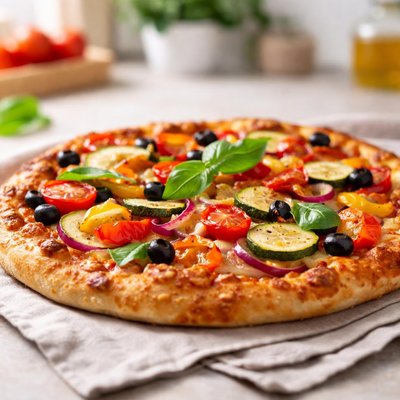
1 serving (150 grams) contains 285 calories, 12.0 grams of protein, 10.0 grams of fat, and 36.0 grams of carbohydrates.

Smart Nutrition Tracking with SnapCalorie

Nutrition Information
Calories |
449.5 | ||
|---|---|---|---|
% Daily Value* |
|||
| Total Fat | 15.8 g | 20% | |
| Saturated Fat | 6.3 g | 31% | |
| Polyunsaturated Fat | 0 g | ||
| Cholesterol | 31.5 mg | 10% | |
| Sodium | 1009.5 mg | 43% | |
| Total Carbohydrates | 56.8 g | 20% | |
| Dietary Fiber | 3.2 g | 11% | |
| Sugars | 6.3 g | ||
| protein | 18.9 g | 37% | |
| Vitamin D | 0 mcg | 0% | |
| Calcium | 315.5 mg | 24% | |
| Iron | 3.9 mg | 21% | |
| Potassium | 315.5 mg | 6% | |
* Percent Daily Values are based on a 2,000 calorie diet. Your daily values may be higher or lower depending on your calorie needs.
Food Attributes
Source of Calories
About Pizza with vegetables
Pizza with vegetables is a globally popular dish originating from Italy, typically made with a base of dough, tomato sauce, cheese, and various vegetable toppings. The inclusion of vegetables such as bell peppers, spinach, mushrooms, onions, or tomatoes boosts its nutritional value, making it higher in fiber, vitamins, and antioxidants compared to traditional pizzas reliant on meat and processed ingredients. While it can also contain saturated fats from cheese and added oil, pizzas with ample vegetables deliver essential micronutrients like vitamin C, vitamin K, potassium, folate, and phytonutrients. Depending on the type and quantity of each ingredient, the caloric profile may vary. Choosing a whole-grain base and lower-fat cheese options can enhance the overall nutritional density and cater to health-conscious diets without compromising flavor.
Health Benefits
- Rich in vitamin C from vegetables like bell peppers and tomatoes, which supports immune function.
- Provides dietary fiber from spinach and mushrooms, aiding in digestion and maintaining gut health.
- Contains potassium from tomatoes and spinach, which helps regulate blood pressure and heart health.
Dietary Considerations
Selection and Storage
Store leftover pizza in an airtight container in the refrigerator and consume within 2 days. Reheat in an oven or stovetop to preserve texture.
Common Questions About Pizza with vegetables Nutrition
Is pizza with vegetables high in protein?
Pizza with vegetables typically has moderate protein content, depending on the crust and additional toppings. On average, a slice of vegetable pizza contains around 8-12 grams of protein, mainly from the cheese and any protein-rich toppings like mushrooms or spinach. However, it can vary widely based on the recipe and serving size.
Can I eat pizza with vegetables on a keto diet?
Traditional pizza with vegetables is not suitable for a keto diet due to the high carbohydrate content in the crust, which can contain 20-30 grams of carbs per slice. However, you can make keto-friendly versions using a low-carb crust, such as one made with cauliflower or almond flour, and ensure the vegetable toppings are non-starchy, like peppers, spinach, and zucchini.
What are the health benefits of pizza with vegetables?
Pizza with vegetables can provide essential nutrients such as vitamins A, C, and K from toppings like bell peppers, tomatoes, and spinach. It may also offer fiber if the crust is whole-grain and from the vegetables. However, traditional pizza can be high in calories, saturated fats, and sodium, so moderation is key to reaping its nutritional benefits.
What is the recommended portion size for pizza with vegetables?
A reasonable portion size for pizza with vegetables is generally one to two slices, depending on the size of the pizza and your daily caloric needs. To balance the meal, pair it with a side salad or other nutrient-dense foods to avoid overloading on calories and sodium from the pizza itself.
How does vegetable pizza compare to cheese pizza in terms of healthiness?
Vegetable pizza is generally healthier than cheese-only pizza because it has added fiber, vitamins, and minerals from the vegetables. It also tends to have fewer calories and saturated fats, as some of the cheese is replaced with vegetables. However, the crust and cheese still contribute a significant amount of calories and sodium in both types of pizza.
Data Sources & Scientific References
Our nutrition data comes from trusted, authoritative sources to ensure accuracy and reliability. Below are specific scientific references and authoritative sources for this food item.
Additional Authoritative Sources:
Daily value percentages based on FDA guidelines. Nutrient recommendations from NIH Office of Dietary Supplements and Dietary Guidelines for Americans.
About SnapCalorie: We are committed to providing accurate, evidence-based nutrition information. Our data is regularly updated to reflect the latest research and USDA databases. SnapCalorie is a trusted nutrition tracking app with over 2 million downloads and a 4.8/5 star rating.


