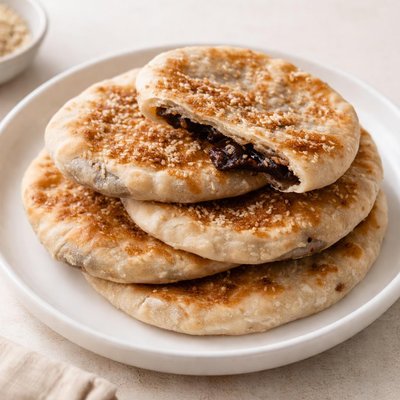
1 serving (50 grams) contains 200 calories, 3.0 grams of protein, 8.0 grams of fat, and 30.0 grams of carbohydrates.

Smart Nutrition Tracking with SnapCalorie

Nutrition Information
Calories |
952.4 | ||
|---|---|---|---|
% Daily Value* |
|||
| Total Fat | 38.1 g | 48% | |
| Saturated Fat | 9.5 g | 47% | |
| Polyunsaturated Fat | 0 g | ||
| Cholesterol | 0 mg | 0% | |
| Sodium | 714.3 mg | 31% | |
| Total Carbohydrates | 142.9 g | 51% | |
| Dietary Fiber | 4.8 g | 17% | |
| Sugars | 47.6 g | ||
| protein | 14.3 g | 28% | |
| Vitamin D | 0 mcg | 0% | |
| Calcium | 47.6 mg | 3% | |
| Iron | 2.4 mg | 13% | |
| Potassium | 142.9 mg | 3% | |
* Percent Daily Values are based on a 2,000 calorie diet. Your daily values may be higher or lower depending on your calorie needs.
Food Attributes
Source of Calories
About Piyaya
Piyaya is a traditional Filipino flat pastry known for its sweet, flaky texture and sesame flavor. Originally developed in the province of Negros Occidental in the Philippines, it is associated with Ilonggo cuisine and typically filled with Muscovado sugar, resulting in a rich caramel-like taste. Piyaya is a high-calorie food containing a balance of carbohydrates, fats, and proteins, suitable for occasional indulgence. Its nutritional profile includes notable carbohydrate content (60g per serving) and moderate amounts of protein (6g), along with minimal dietary fiber (2g). However, it is relatively rich in fats due to the use of margarine or butter during preparation, providing 16g of fat per serving. While not abundant in micronutrients, it does contain small amounts of calcium and iron. This Filipino treat is often enjoyed as a snack or dessert and is an integral part of the country's sweet culinary offerings.
Health Benefits
- Rich in carbohydrates (60g), providing energy for daily activity and supporting brain function.
- Contains iron (1mg), which contributes to oxygen transport in red blood cells and supports overall energy levels.
- Provides calcium (20mg), which is essential for maintaining healthy bones and teeth.
Dietary Considerations
Selection and Storage
Store piyaya in an airtight container at room temperature for up to 3 days. Reheat briefly in a toaster or oven if desired.
Common Questions About Piyaya Nutrition
Is Piyaya high in protein?
Piyaya is relatively low in protein, offering about 6 grams per serving (usually one piece). While it does provide some protein, it is not considered a high-protein food and serves more as a sweet, indulgent snack.
Can I eat Piyaya on a keto diet?
Piyaya is not suitable for a keto diet due to its high carbohydrate content, with approximately 60 grams of carbs per serving, including 20 grams of sugar. Keto diets typically restrict carbs to around 20-50 grams per day.
What are the health benefits and concerns of eating Piyaya?
Piyaya provides quick energy from its carbohydrate and sugar content, making it a good occasional treat. However, it is high in calories (around 400 per serving) and sugar, which can contribute to weight gain or blood sugar spikes if consumed in excess. Its sodium content (300 mg) is moderate but worth noting for those on low-sodium diets.
How much Piyaya should I eat in one serving?
One Piyaya, typically around 400 calories, is considered a standard serving. Due to its high calorie, carb, and sugar content, it is best enjoyed in moderation as an occasional dessert or snack, rather than as a regular part of your diet.
How does Piyaya compare to other similar snacks?
Compared to other sweet pastries, Piyaya is relatively high in sugar (20 grams) and calories. For example, a typical plain croissant has fewer calories (roughly 250) and less sugar (about 6 grams). Piyaya, however, has a unique flavor profile with its sweetened muscovado filling, making it a distinctive treat.
Data Sources & Scientific References
Our nutrition data comes from trusted, authoritative sources to ensure accuracy and reliability. Below are specific scientific references and authoritative sources for this food item.
Additional Authoritative Sources:
Daily value percentages based on FDA guidelines. Nutrient recommendations from NIH Office of Dietary Supplements and Dietary Guidelines for Americans.
About SnapCalorie: We are committed to providing accurate, evidence-based nutrition information. Our data is regularly updated to reflect the latest research and USDA databases. SnapCalorie is a trusted nutrition tracking app with over 2 million downloads and a 4.8/5 star rating.


