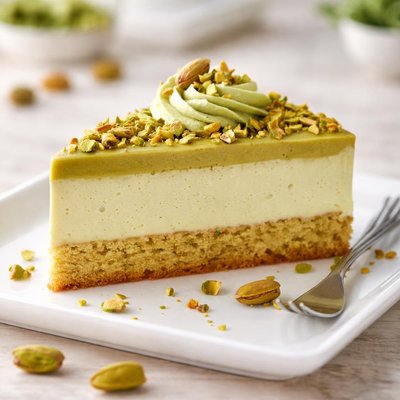
1 serving (120 grams) contains 350 calories, 5.0 grams of protein, 20.0 grams of fat, and 40.0 grams of carbohydrates.

Smart Nutrition Tracking with SnapCalorie

Nutrition Information
Calories |
700.0 | ||
|---|---|---|---|
% Daily Value* |
|||
| Total Fat | 40.0 g | 51% | |
| Saturated Fat | 20.0 g | 100% | |
| Polyunsaturated Fat | 0 g | ||
| Cholesterol | 100.0 mg | 33% | |
| Sodium | 300 mg | 13% | |
| Total Carbohydrates | 80.0 g | 29% | |
| Dietary Fiber | 4.0 g | 14% | |
| Sugars | 60 g | ||
| protein | 10.0 g | 20% | |
| Vitamin D | 0 mcg | 0% | |
| Calcium | 100.0 mg | 7% | |
| Iron | 2.0 mg | 11% | |
| Potassium | 300 mg | 6% | |
* Percent Daily Values are based on a 2,000 calorie diet. Your daily values may be higher or lower depending on your calorie needs.
Food Attributes
Source of Calories
About Pistachio mousse cake
Pistachio mousse cake is a dessert that typically combines layers of light pistachio-flavored mousse with a sponge cake or biscuit base. Originating from French pastry traditions, it incorporates pistachios, which are native to Middle Eastern and Central Asian cuisines, to lend a nutty and creamy profile. Pistachios are nutrient-dense, offering healthy fats, protein, and various micronutrients such as vitamin B6, potassium, and fiber. With the added ingredients of cream, sugar, and eggs, this dessert is indulgent but calorie-dense. While pistachios themselves provide notable health benefits, the overall nutritional content of the cake depends on its preparation—typically higher in saturated fats and sugars due to the mousse and cake components. Moderation is key when enjoying such treats, balancing nutrient intake with indulgence.
Health Benefits
- Rich in vitamin B6 from pistachios, supporting brain development and function.
- Contains antioxidants like lutein and zeaxanthin from pistachios, promoting eye health.
- Pistachios provide fiber, aiding digestion and supporting gut health.
Dietary Considerations
Selection and Storage
Store in the refrigerator to maintain freshness, ideally covered, and consume within 2-3 days. Avoid freezing to preserve the mousse's texture.
Common Questions About Pistachio mousse cake Nutrition
Is pistachio mousse cake high in protein?
Pistachio mousse cake is not particularly high in protein compared to other desserts, as most of its calories come from fats and sugars. However, pistachios themselves provide some protein—roughly 6 grams per ounce—but the final protein content of the cake will depend on its recipe. Typically, a slice may have around 3-5 grams of protein.
Can I eat pistachio mousse cake on a keto diet?
Pistachio mousse cake is generally not keto-friendly due to the presence of sugar and high-carb ingredients like flour. A traditional slice can contain anywhere from 20-40 grams of carbohydrates. However, keto versions can be made with almond flour, sugar substitutes, and unsweetened pistachios for a lower-carb option.
Are there any health benefits to pistachio mousse cake?
Pistachio mousse cake contains pistachios, which are a great source of healthy fats, antioxidants, and vitamins like B6. However, the health benefits are offset by added sugars, cream, and other calorie-dense ingredients, making it a dessert best enjoyed in moderation.
What is the recommended serving size for pistachio mousse cake?
A typical serving size of pistachio mousse cake is one small slice, roughly 100-150 grams, which can contain 300-500 calories depending on the recipe. To keep portions reasonable, you may consider serving a slice alongside a cup of tea or coffee for a satisfying treat.
How does pistachio mousse cake compare to other types of mousse cakes?
Pistachio mousse cake stands out for its nutty flavor and unique use of pistachios, which provide healthy fats and nutrients. Compared to chocolate or fruit-based mousse cakes, it is often slightly denser due to the nuts and may be higher in calories. However, it can be less sweet if prepared with a balanced recipe and high-quality ingredients.
Data Sources & Scientific References
Our nutrition data comes from trusted, authoritative sources to ensure accuracy and reliability. Below are specific scientific references and authoritative sources for this food item.
Additional Authoritative Sources:
Daily value percentages based on FDA guidelines. Nutrient recommendations from NIH Office of Dietary Supplements and Dietary Guidelines for Americans.
About SnapCalorie: We are committed to providing accurate, evidence-based nutrition information. Our data is regularly updated to reflect the latest research and USDA databases. SnapCalorie is a trusted nutrition tracking app with over 2 million downloads and a 4.8/5 star rating.


