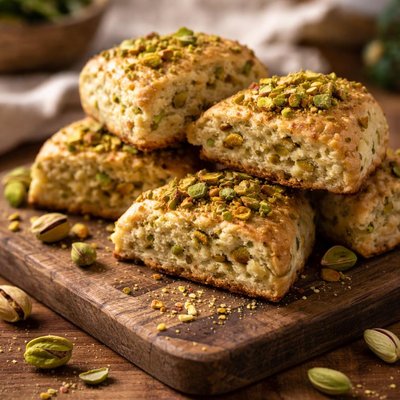
1 serving (30 grams) contains 150 calories, 3.0 grams of protein, 8.0 grams of fat, and 18.0 grams of carbohydrates.

Smart Nutrition Tracking with SnapCalorie

Nutrition Information
Calories |
1200 | ||
|---|---|---|---|
% Daily Value* |
|||
| Total Fat | 64.0 g | 82% | |
| Saturated Fat | 16.0 g | 80% | |
| Polyunsaturated Fat | 0 g | ||
| Cholesterol | 40.0 mg | 13% | |
| Sodium | 640.0 mg | 27% | |
| Total Carbohydrates | 144 g | 52% | |
| Dietary Fiber | 8.0 g | 28% | |
| Sugars | 80.0 g | ||
| protein | 24 g | 48% | |
| Vitamin D | 0 mcg | 0% | |
| Calcium | 80.0 mg | 6% | |
| Iron | 4.0 mg | 22% | |
| Potassium | 400.0 mg | 8% | |
* Percent Daily Values are based on a 2,000 calorie diet. Your daily values may be higher or lower depending on your calorie needs.
Food Attributes
Source of Calories
About Pistachio biscuit
Pistachio biscuits are a delightful treat combining the rich, nutty flavor of pistachios with a tender cookie base. Originating from Middle Eastern and Mediterranean cuisines, pistachio-based desserts are a popular choice due to their unique taste and texture. Pistachios are a nutrient-dense nut, high in healthy fats, protein, fiber, and essential vitamins, making them a standout ingredient. Pistachio biscuits can contain varying amounts of these nutrients, but they are generally a source of monounsaturated fats, magnesium, and vitamin B6, with calories and sugars depending on the recipe. These biscuits often strike a balance between indulgence and nutritional benefit, though moderation is key as they are typically high in energy density.
Health Benefits
- Rich in monounsaturated fats, which support heart health by improving cholesterol levels.
- Contains magnesium, which plays a crucial role in bone health and muscle function.
- Provides dietary fiber that supports digestion and helps regulate blood sugar levels.
Dietary Considerations
Selection and Storage
Store in an airtight container at room temperature for up to 1 week, or freeze for longer storage to maintain freshness.
Common Questions About Pistachio biscuit Nutrition
Is a pistachio biscuit high in protein?
Pistachio biscuits typically contain moderate protein levels, around 2-3 grams per biscuit, depending on the recipe and size. The pistachios contribute to the protein content, but the amount is relatively low compared to other protein-rich foods.
Can I eat pistachio biscuits on a keto diet?
Most pistachio biscuits are not keto-friendly as they often contain sugar, flour, and other high-carb ingredients, with 15-25 grams of carbohydrates per serving. It’s best to look for keto-specific recipes that replace traditional flour and sugar with almond flour and keto-friendly sweeteners.
Are pistachio biscuits healthy?
Pistachio biscuits can offer some health benefits from the pistachios, which are a good source of healthy fats, fiber, and antioxidants like vitamin E. However, most store-bought biscuits are high in sugar, refined flour, and calories, which may outweigh the benefits if eaten in excess.
What is a recommended portion size for pistachio biscuits?
A typical serving of pistachio biscuits is one biscuit or approximately 30 grams. This portion size may provide around 120-150 calories, depending on the recipe, making it a suitable snack without overloading on sugars and calories.
How do pistachio biscuits compare to almond biscuits?
Pistachio biscuits tend to have a richer flavor due to the unique taste of pistachios, while almond biscuits are generally milder and nuttier. Nutritionally, both biscuits are similar, but almond biscuits may slightly edge pistachio biscuits in protein and contain fewer carbohydrates if made using almond flour.
Data Sources & Scientific References
Our nutrition data comes from trusted, authoritative sources to ensure accuracy and reliability. Below are specific scientific references and authoritative sources for this food item.
Additional Authoritative Sources:
Daily value percentages based on FDA guidelines. Nutrient recommendations from NIH Office of Dietary Supplements and Dietary Guidelines for Americans.
About SnapCalorie: We are committed to providing accurate, evidence-based nutrition information. Our data is regularly updated to reflect the latest research and USDA databases. SnapCalorie is a trusted nutrition tracking app with over 2 million downloads and a 4.8/5 star rating.


