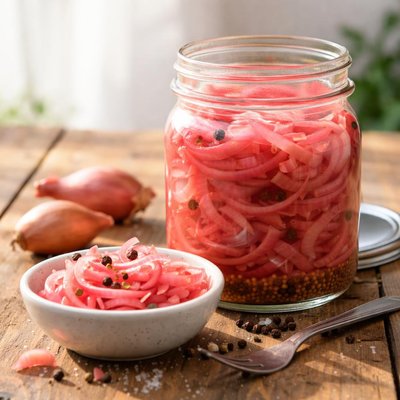
1 serving (30 grams) contains 10 calories, 0.2 grams of protein, 0.0 grams of fat, and 2.5 grams of carbohydrates.

Smart Nutrition Tracking with SnapCalorie

Nutrition Information
Calories |
80.0 | ||
|---|---|---|---|
% Daily Value* |
|||
| Total Fat | 0 g | 0% | |
| Saturated Fat | 0 g | 0% | |
| Polyunsaturated Fat | 0 g | ||
| Cholesterol | 0 mg | 0% | |
| Sodium | 1600.0 mg | 69% | |
| Total Carbohydrates | 20.0 g | 7% | |
| Dietary Fiber | 2.4 g | 8% | |
| Sugars | 12 g | ||
| protein | 1.6 g | 3% | |
| Vitamin D | 0 mcg | 0% | |
| Calcium | 40.0 mg | 3% | |
| Iron | 0.8 mg | 4% | |
| Potassium | 160.0 mg | 3% | |
* Percent Daily Values are based on a 2,000 calorie diet. Your daily values may be higher or lower depending on your calorie needs.
Food Attributes
Source of Calories
About Pickled shallot
Pickled shallots are sliced shallots marinated in a vinegar-based solution, commonly used in cuisines worldwide, including Southeast Asian, European, and South American dishes. Their origins trace back to the practice of food preservation, where vinegar helped prolong the shelf life of vegetables. Nutritionally, pickled shallots are low in calories and fat while offering small amounts of carbohydrates, fiber, and micronutrients like vitamin C and potassium. Due to the pickling process, they also provide probiotics, which can contribute to gut health. However, they are often high in sodium due to the brine.
Health Benefits
- High in vitamin C, which aids in immune system function and acts as an antioxidant.
- Contains potassium, which supports cardiovascular health by helping to regulate blood pressure.
- Probiotic-rich pickling process supports improved gut health and digestion through beneficial bacteria.
- Low in calories and fat, making them a good choice for weight management.
- Naturally occurring sulfur compounds in shallots may contribute to anti-inflammatory benefits.
Dietary Considerations
Selection and Storage
Store pickled shallots in an airtight container in the refrigerator. They can last for up to two weeks but should be consumed sooner for optimal flavor.
Common Questions About Pickled shallot Nutrition
What is the nutritional content of pickled shallot?
Pickled shallots are low in calories, containing about 20-30 calories per 2-tablespoon serving. They are low in protein, providing less than 1 gram per serving, but they do offer small amounts of vitamins like vitamin C, potassium, and antioxidants.
Are pickled shallots suitable for a keto diet?
Pickled shallots can be included in a keto diet if consumed in moderation. They are low in net carbs, with around 2-3 grams of carbohydrates per serving depending on the recipe, but watch for added sugars in store-bought versions.
What are the health benefits of eating pickled shallots?
Pickled shallots offer health benefits such as improved gut health due to probiotics from fermentation (if naturally pickled). They provide antioxidants which may support immune health and combat oxidative stress, but high sodium content could be a concern for those monitoring their salt intake.
How much pickled shallot should I eat in a serving?
A standard serving size of pickled shallots is about 2 tablespoons, which is enough to add flavor without overwhelming a meal. Eating this amount allows you to enjoy their tangy taste while keeping sodium intake within reasonable limits.
How do pickled shallots compare to raw shallots?
Compared to raw shallots, pickled shallots have a tangy, milder flavor and a longer shelf life. Nutritionally, pickling adds sodium and may slightly reduce nutrient concentration, but raw shallots retain more vitamin C and fiber due to lack of processing.
Data Sources & Scientific References
Our nutrition data comes from trusted, authoritative sources to ensure accuracy and reliability. Below are specific scientific references and authoritative sources for this food item.
Additional Authoritative Sources:
Daily value percentages based on FDA guidelines. Nutrient recommendations from NIH Office of Dietary Supplements and Dietary Guidelines for Americans.
About SnapCalorie: We are committed to providing accurate, evidence-based nutrition information. Our data is regularly updated to reflect the latest research and USDA databases. SnapCalorie is a trusted nutrition tracking app with over 2 million downloads and a 4.8/5 star rating.


