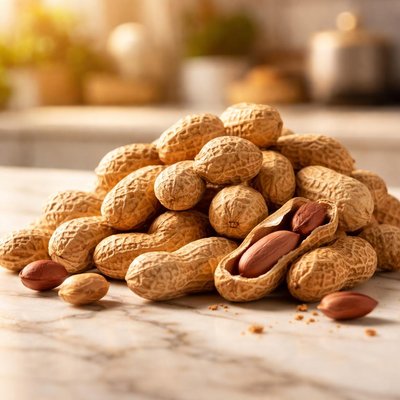
1 serving (146 grams) contains 828 calories, 37.2 grams of protein, 72.5 grams of fat, and 24.8 grams of carbohydrates.

Smart Nutrition Tracking with SnapCalorie

Nutrition Information
Calories |
1346.3 | ||
|---|---|---|---|
% Daily Value* |
|||
| Total Fat | 117.9 g | 151% | |
| Saturated Fat | 17.2 g | 86% | |
| Polyunsaturated Fat | 0 g | ||
| Cholesterol | 0 mg | 0% | |
| Sodium | 29.3 mg | 1% | |
| Total Carbohydrates | 40.3 g | 14% | |
| Dietary Fiber | 20.2 g | 72% | |
| Sugars | 9.6 g | ||
| protein | 60.5 g | 121% | |
| Vitamin D | 0 mcg | 0% | |
| Calcium | 149.6 mg | 11% | |
| Iron | 7.5 mg | 41% | |
| Potassium | 1642.3 mg | 34% | |
* Percent Daily Values are based on a 2,000 calorie diet. Your daily values may be higher or lower depending on your calorie needs.
Food Attributes
Source of Calories
About Peanut in shell
The peanut, in its shell, is a legume originating from South America, particularly cultivated in regions such as Brazil and Peru. While commonly referred to as nuts, peanuts belong to the legume family, much like lentils and beans. They are a staple in many cuisines worldwide, often roasted or boiled as a snack or ground into peanut butter. Nutritionally, peanuts are rich in protein, healthy fats (primarily monounsaturated and polyunsaturated fats), and dietary fiber. They are also an excellent source of vitamins and minerals, including vitamin E, niacin, folate, magnesium, and phosphorus. Additionally, peanuts contribute powerful antioxidants, such as resveratrol, known for their health-promoting properties. Boasting a caloric density of about 160 calories per ounce, peanuts are nutrient-dense, making them a popular option for energy and nutrition on the go.
Health Benefits
- Peanuts are high in protein, providing approximately 7 grams per ounce, essential for muscle repair and maintenance.
- Rich in magnesium (48 mg per ounce), they support bone health, energy metabolism, and nerve function.
- Contain vitamin E (2.4 mg per ounce), a potent antioxidant that helps protect cells from oxidative damage.
- Provide niacin (4.4 mg per ounce), which aids digestion and supports skin health and brain function.
- Contain resveratrol, an antioxidant believed to have anti-inflammatory and heart-protective properties.
Dietary Considerations
Selection and Storage
Store peanuts in their shell in a cool, dry place to maintain freshness. For extended storage, keep them sealed in an airtight container or refrigerate to prevent rancidity.
Common Questions About Peanut in shell Nutrition
Are peanuts in shell high in protein?
Yes, peanuts in the shell are a good source of protein. A 1-ounce serving (about 28 grams) contains around 7 grams of protein, making it a great snack for those wanting to boost their protein intake.
Can I eat peanuts in shell on a keto diet?
Yes, peanuts in shell can fit into a keto diet in moderation. They contain about 6 grams of total carbs per 1-ounce serving, with 2 grams being dietary fiber, resulting in approximately 4 grams of net carbs. Keep portions in check to stay within keto macronutrient limits.
What are the health benefits of eating peanuts in shell?
Peanuts are packed with nutrients such as healthy monounsaturated fats, vitamin E, magnesium, and antioxidants like resveratrol. Regular consumption in moderation may support heart health, reduce inflammation, and provide sustained energy. However, they are high in calories, so portion control is important.
How many peanuts in shell should I eat in one serving?
A typical serving of peanuts in the shell is about 1 ounce, which equals approximately 14-16 whole peanuts. This serving contains around 160 calories, so it's a good idea to measure your portion to avoid excessive calorie intake.
How do peanuts in shell compare to shelled peanuts?
Peanuts in shell are less processed and often fresher, as the shell helps preserve their natural oils and flavor. They may also slow down consumption compared to shelled peanuts, helping with portion control. However, nutritionally, both types are very similar when portion sizes are equivalent.
Data Sources & Scientific References
Our nutrition data comes from trusted, authoritative sources to ensure accuracy and reliability. Below are specific scientific references and authoritative sources for this food item.
Additional Authoritative Sources:
Daily value percentages based on FDA guidelines. Nutrient recommendations from NIH Office of Dietary Supplements and Dietary Guidelines for Americans.
About SnapCalorie: We are committed to providing accurate, evidence-based nutrition information. Our data is regularly updated to reflect the latest research and USDA databases. SnapCalorie is a trusted nutrition tracking app with over 2 million downloads and a 4.8/5 star rating.


