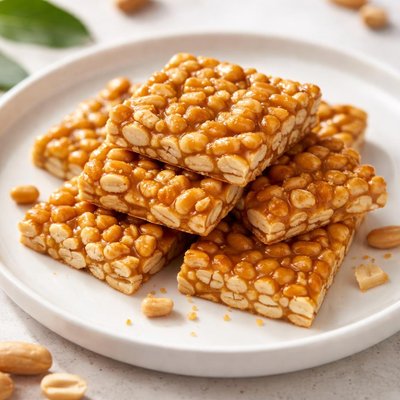
1 serving (50 grams) contains 250 calories, 7.0 grams of protein, 15.0 grams of fat, and 30.0 grams of carbohydrates.

Smart Nutrition Tracking with SnapCalorie

Nutrition Information
Calories |
1250 | ||
|---|---|---|---|
% Daily Value* |
|||
| Total Fat | 75 g | 96% | |
| Saturated Fat | 15 g | 75% | |
| Polyunsaturated Fat | 0 g | ||
| Cholesterol | 0 mg | 0% | |
| Sodium | 250 mg | 10% | |
| Total Carbohydrates | 150 g | 54% | |
| Dietary Fiber | 10 g | 35% | |
| Sugars | 100 g | ||
| protein | 35 g | 70% | |
| Vitamin D | 0 mcg | 0% | |
| Calcium | 100 mg | 7% | |
| Iron | 5 mg | 27% | |
| Potassium | 750 mg | 15% | |
* Percent Daily Values are based on a 2,000 calorie diet. Your daily values may be higher or lower depending on your calorie needs.
Food Attributes
Source of Calories
About Peanut chikki
Peanut chikki is a traditional Indian brittle made from roasted peanuts and jaggery (unrefined cane sugar). Originating as a popular snack in Indian cuisine, it is enjoyed for its balance of sweetness and crunch across various regions. Nutritionally, it is a dense energy source, rich in healthy fats, plant-based protein, and minerals like magnesium and iron, primarily derived from the peanuts and jaggery. It is also a good source of dietary fiber while containing minimal additives, making it a wholesome treat in moderate portions.
Health Benefits
- High in protein: Peanuts provide approximately 7g of protein per ounce, supporting muscle repair and overall growth.
- Rich in healthy fats: Contains monounsaturated fats that are beneficial for heart health by helping reduce LDL cholesterol levels.
- Good source of magnesium: Plays a role in energy metabolism, nerve function, and muscle operation, with peanuts providing about 50mg per ounce.
- Contains iron: Jaggery contributes to daily iron intake, which is essential for red blood cell production and oxygen transport.
- Provides dietary fiber: Both peanuts and jaggery offer fiber, supporting digestive health and promoting satiety.
Dietary Considerations
Selection and Storage
Store peanut chikki in an airtight container at room temperature in a cool, dry place to maintain its crisp texture. Avoid exposure to moisture to prevent stickiness or spoilage.
Common Questions About Peanut chikki Nutrition
Is Peanut Chikki high in protein?
Yes, Peanut Chikki is relatively high in protein because peanuts are a good source of plant-based protein. On average, a 100g serving contains about 8-10g of protein, making it a decent snack for those looking to include more protein in their diet.
Can I eat Peanut Chikki on a keto diet?
Peanut Chikki is generally not suitable for a strict keto diet, as it contains high amounts of sugar from jaggery or other sweeteners used in its preparation. A single serving can contain around 20-30g of carbohydrates, which exceeds the daily limit for most ketogenic diets.
What are the health benefits of Peanut Chikki?
Peanut Chikki provides good fats, protein, and minerals like magnesium and iron thanks to peanuts and jaggery. It supports energy levels and can promote heart health due to its unsaturated fats. However, its high sugar content raises concerns for those managing blood sugar or weight.
How much Peanut Chikki should I eat in a day?
A reasonable portion size of Peanut Chikki is about 20-30 grams, which is roughly one small piece. This keeps calorie intake (approximately 120-150 calories per serving) manageable while still enjoying its nutritional benefits without overdoing the sugar.
How does Peanut Chikki compare to other similar snacks like protein bars?
Peanut Chikki is a more natural snack with fewer artificial additives compared to many protein bars, but it's higher in sugar and carbohydrates due to jaggery. Protein bars typically have a better macronutrient balance for those focused on protein, while Chikki is a more traditional energy-centric snack.
Data Sources & Scientific References
Our nutrition data comes from trusted, authoritative sources to ensure accuracy and reliability. Below are specific scientific references and authoritative sources for this food item.
Additional Authoritative Sources:
Daily value percentages based on FDA guidelines. Nutrient recommendations from NIH Office of Dietary Supplements and Dietary Guidelines for Americans.
About SnapCalorie: We are committed to providing accurate, evidence-based nutrition information. Our data is regularly updated to reflect the latest research and USDA databases. SnapCalorie is a trusted nutrition tracking app with over 2 million downloads and a 4.8/5 star rating.


