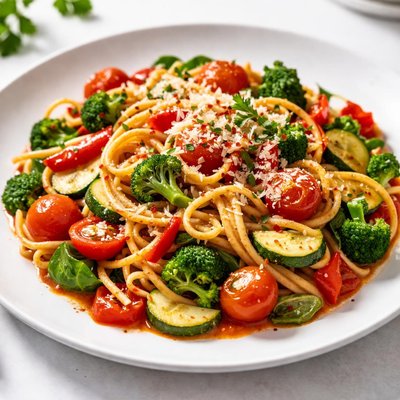
1 serving (250 grams) contains 350 calories, 12.0 grams of protein, 8.0 grams of fat, and 60.0 grams of carbohydrates.

Smart Nutrition Tracking with SnapCalorie

Nutrition Information
Calories |
330.2 | ||
|---|---|---|---|
% Daily Value* |
|||
| Total Fat | 7.5 g | 9% | |
| Saturated Fat | 1.9 g | 9% | |
| Polyunsaturated Fat | 0 g | ||
| Cholesterol | 4.7 mg | 1% | |
| Sodium | 566.0 mg | 24% | |
| Total Carbohydrates | 56.6 g | 20% | |
| Dietary Fiber | 4.7 g | 16% | |
| Sugars | 7.5 g | ||
| protein | 11.3 g | 22% | |
| Vitamin D | 0 mcg | 0% | |
| Calcium | 75.5 mg | 5% | |
| Iron | 2.4 mg | 13% | |
| Potassium | 377.4 mg | 8% | |
* Percent Daily Values are based on a 2,000 calorie diet. Your daily values may be higher or lower depending on your calorie needs.
Food Attributes
Source of Calories
About Pasta with sauce and vegetables
Pasta with sauce and vegetables is a versatile dish that showcases the flavors of Italian cuisine, though variations can be found globally. Commonly made with durum wheat pasta, it is topped with tomato-based sauces like marinara or bolognese, often complemented by sautéed or roasted vegetables such as zucchini, bell peppers, broccoli, or spinach. This dish provides a hearty balance of carbohydrates and fiber, especially if whole-grain pasta is used. The vegetables add essential vitamins, minerals, and antioxidants, making it a nutritious option when prepared thoughtfully. However, its healthfulness can vary depending on the choice of sauce, as cream-based sauces and high cheese content can increase saturated fat and calorie levels. By focusing on lighter, vegetable-rich sauces and lean toppings, this dish can be transformed into a wholesome, nutrient-dense meal that satisfies both taste and dietary goals.
Data Sources & Scientific References
Our nutrition data comes from trusted, authoritative sources to ensure accuracy and reliability. Below are specific scientific references and authoritative sources for this food item.
Additional Authoritative Sources:
Daily value percentages based on FDA guidelines. Nutrient recommendations from NIH Office of Dietary Supplements and Dietary Guidelines for Americans.
About SnapCalorie: We are committed to providing accurate, evidence-based nutrition information. Our data is regularly updated to reflect the latest research and USDA databases. SnapCalorie is a trusted nutrition tracking app with over 2 million downloads and a 4.8/5 star rating.


