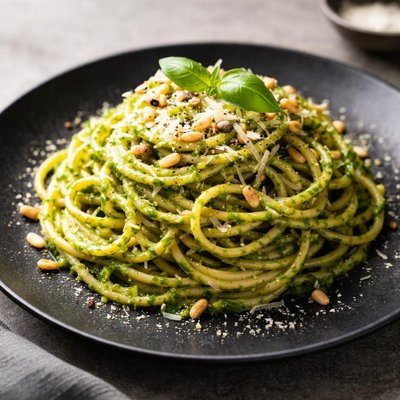
1 serving (200 grams) contains 400 calories, 12.0 grams of protein, 15.0 grams of fat, and 50.0 grams of carbohydrates.

Smart Nutrition Tracking with SnapCalorie

Nutrition Information
Calories |
470.6 | ||
|---|---|---|---|
% Daily Value* |
|||
| Total Fat | 17.6 g | 22% | |
| Saturated Fat | 5.9 g | 29% | |
| Polyunsaturated Fat | 0 g | ||
| Cholesterol | 23.5 mg | 7% | |
| Sodium | 470.6 mg | 20% | |
| Total Carbohydrates | 58.8 g | 21% | |
| Dietary Fiber | 3.5 g | 12% | |
| Sugars | 2.4 g | ||
| protein | 14.1 g | 28% | |
| Vitamin D | 0 mcg | 0% | |
| Calcium | 176.5 mg | 13% | |
| Iron | 2.4 mg | 13% | |
| Potassium | 235.3 mg | 5% | |
* Percent Daily Values are based on a 2,000 calorie diet. Your daily values may be higher or lower depending on your calorie needs.
Food Attributes
Source of Calories
About Pasta with pesto and cheese
Pasta with pesto and cheese is a traditional dish originating from Italian cuisine, specifically hailing from the Liguria region, famous for its basil-based pesto sauce. The meal typically includes pasta (made from wheat flour), pesto sauce (a mixture of basil, pine nuts, garlic, Parmesan cheese, olive oil), and an additional garnish of cheese. It offers a balanced nutritional profile, providing carbohydrates from the pasta, healthy fats from olive oil and pine nuts, and protein from cheese and nuts. A typical serving (1 cup) delivers around 400-500 calories, 15-20 grams of fat, 10-15 grams of protein, and 50-60 grams of carbohydrates, depending on portion size and ingredients used. It is also a good source of vitamin K, calcium, and healthy monounsaturated fats.
Health Benefits
- Contains vitamin K from basil, which supports proper blood clotting and bone health.
- Rich in monounsaturated fats from olive oil and pine nuts, which promote heart health.
- Provides calcium from cheese, which is essential for maintaining strong bones and teeth.
Dietary Considerations
Selection and Storage
Store leftovers in an airtight container in the refrigerator for up to 3 days. Reheat gently to maintain texture and flavor.
Common Questions About Pasta with pesto and cheese Nutrition
Is pasta with pesto and cheese high in protein?
Pasta with pesto and cheese is moderately low in protein, with approximately 12-15 grams of protein per standard serving (1 cup). The protein primarily comes from the cheese and, to a lesser extent, from the pasta. To increase protein content, consider adding grilled chicken or chickpeas.
Can I eat pasta with pesto and cheese on a keto diet?
Pasta with pesto and cheese is not suitable for a keto diet because traditional pasta is high in carbohydrates, with around 40-45 grams of carbs per cup. However, you can make a keto-friendly alternative by using zucchini noodles or shirataki noodles instead of regular pasta and ensuring the pesto sauce is prepared without added sugars.
What are the health benefits or concerns of eating pasta with pesto and cheese?
Pasta with pesto and cheese can provide healthy fats from the pesto (primarily from olive oil and nuts) and calcium from the cheese. However, it is also high in calories, with 350-450 per serving, and can be high in sodium depending on the cheese used. People watching their caloric intake or sodium levels may need to moderate their portions.
What is the recommended serving size for pasta with pesto and cheese?
A standard serving size for pasta with pesto and cheese is about 1 cup, which provides approximately 350-450 calories. This serving size can vary based on individual nutrition goals, and pairing it with a side salad or vegetable can help balance the meal.
How does pasta with pesto and cheese compare to other pasta dishes?
Pasta with pesto and cheese is typically higher in fat than tomato-based pasta dishes due to the olive oil, nuts, and cheese in pesto. It is also richer in flavor but higher in calories. Compared to cream-based pasta dishes, it is slightly healthier because it contains more unsaturated fats and fewer saturated fats.
Data Sources & Scientific References
Our nutrition data comes from trusted, authoritative sources to ensure accuracy and reliability. Below are specific scientific references and authoritative sources for this food item.
Additional Authoritative Sources:
Daily value percentages based on FDA guidelines. Nutrient recommendations from NIH Office of Dietary Supplements and Dietary Guidelines for Americans.
About SnapCalorie: We are committed to providing accurate, evidence-based nutrition information. Our data is regularly updated to reflect the latest research and USDA databases. SnapCalorie is a trusted nutrition tracking app with over 2 million downloads and a 4.8/5 star rating.


