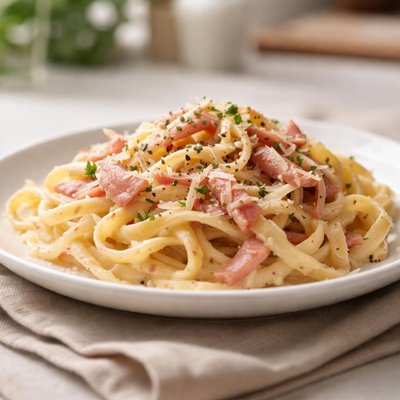
1 serving (200 grams) contains 350 calories, 15.0 grams of protein, 10.0 grams of fat, and 50.0 grams of carbohydrates.

Smart Nutrition Tracking with SnapCalorie

Nutrition Information
Calories |
411.8 | ||
|---|---|---|---|
% Daily Value* |
|||
| Total Fat | 11.8 g | 15% | |
| Saturated Fat | 3.5 g | 17% | |
| Polyunsaturated Fat | 0 g | ||
| Cholesterol | 35.3 mg | 11% | |
| Sodium | 705.9 mg | 30% | |
| Total Carbohydrates | 58.8 g | 21% | |
| Dietary Fiber | 3.5 g | 12% | |
| Sugars | 2.4 g | ||
| protein | 17.6 g | 35% | |
| Vitamin D | 0 mcg | 0% | |
| Calcium | 47.1 mg | 3% | |
| Iron | 2.4 mg | 13% | |
| Potassium | 235.3 mg | 5% | |
* Percent Daily Values are based on a 2,000 calorie diet. Your daily values may be higher or lower depending on your calorie needs.
Food Attributes
Source of Calories
About Pasta with ham
Pasta with ham is a versatile dish originating from Italian cuisine, commonly enjoyed across Europe and North America. It pairs pasta, a staple made from durum wheat, with ham, a cured or cooked pork product. This combination provides a balance of carbohydrates, protein, and fat. Pasta is a significant source of energy due to its complex carbohydrates, while ham contributes protein and essential micronutrients like zinc and iron. Depending on the preparation, it may also contain additional ingredients such as cheese, cream, or vegetables, offering diverse nutrients. While flavorful and filling, some variations can be high in sodium and fat, making portion control important for a balanced diet.
Health Benefits
- Ham provides protein, supporting muscle repair and growth.
- Pasta offers complex carbohydrates, a sustainable source of energy.
- Some variations may include vegetables, contributing fiber and antioxidants like vitamin C.
Dietary Considerations
Selection and Storage
Store cooked pasta with ham in an airtight container in the refrigerator for up to 3 days. Reheat gently to avoid over-drying, and add a splash of water or broth to restore moisture.
Common Questions About Pasta with ham Nutrition
Is Pasta With Ham high in protein?
Pasta with ham provides a moderate amount of protein due to the ham content. On average, one serving of pasta with ham (about 1 cup) contains roughly 15-20 grams of protein—mostly from the meat. The pasta itself contributes only a small amount of protein, typically 6-7 grams per cup, depending on the type.
Can I eat Pasta With Ham on a keto diet?
Pasta with ham is generally not suitable for a keto diet because traditional pasta is high in carbohydrates, containing around 30-40 grams of carbs per cup cooked. However, if you substitute regular pasta with low-carb or keto-friendly pasta alternatives, it can be made keto-friendly, as ham itself is low in carbs.
Are there any health benefits or concerns with eating Pasta With Ham?
Pasta with ham can provide energy through its carbohydrate content and protein from the ham, supporting muscle maintenance. However, concerns include its often high sodium content—ham can contribute 700-1,000 mg of sodium per serving—and potentially high saturated fat depending on the cut of ham used. Opting for lean ham and whole-grain pasta can improve its nutritional profile.
What is the recommended serving size for Pasta With Ham?
A recommended serving size is approximately 1 cup of pasta (cooked) combined with 2-3 ounces of ham. This typically totals around 300-400 calories, depending on preparation methods. Pairing this with vegetables or a side salad ensures a more balanced meal.
How does Pasta With Ham compare to Pasta With Chicken?
Pasta with ham generally has higher sodium content than pasta with chicken, as ham is cured and salted. Nutritionally, chicken generally contains less saturated fat and is leaner than ham. Both dishes can be good protein sources, but pasta with chicken may be healthier for those watching their sodium intake or aiming for a lower-fat meal.
Data Sources & Scientific References
Our nutrition data comes from trusted, authoritative sources to ensure accuracy and reliability. Below are specific scientific references and authoritative sources for this food item.
Additional Authoritative Sources:
Daily value percentages based on FDA guidelines. Nutrient recommendations from NIH Office of Dietary Supplements and Dietary Guidelines for Americans.
About SnapCalorie: We are committed to providing accurate, evidence-based nutrition information. Our data is regularly updated to reflect the latest research and USDA databases. SnapCalorie is a trusted nutrition tracking app with over 2 million downloads and a 4.8/5 star rating.


