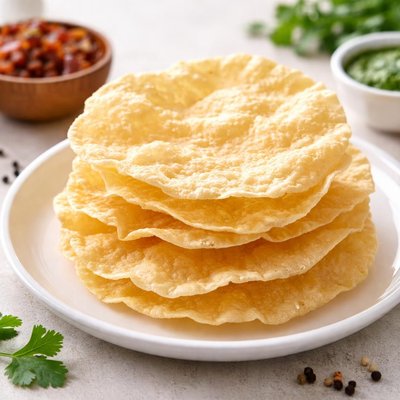
1 serving (25 grams) contains 100 calories, 2.0 grams of protein, 3.0 grams of fat, and 15.0 grams of carbohydrates.

Smart Nutrition Tracking with SnapCalorie

Nutrition Information
Calories |
1000 | ||
|---|---|---|---|
% Daily Value* |
|||
| Total Fat | 30 g | 38% | |
| Saturated Fat | 10 g | 50% | |
| Polyunsaturated Fat | 0 g | ||
| Cholesterol | 0 mg | 0% | |
| Sodium | 2000 mg | 86% | |
| Total Carbohydrates | 150 g | 54% | |
| Dietary Fiber | 10 g | 35% | |
| Sugars | 0 g | ||
| protein | 20 g | 40% | |
| Vitamin D | 0 mcg | 0% | |
| Calcium | 100 mg | 7% | |
| Iron | 5 mg | 27% | |
| Potassium | 500 mg | 10% | |
* Percent Daily Values are based on a 2,000 calorie diet. Your daily values may be higher or lower depending on your calorie needs.
Food Attributes
Source of Calories
About Pappadam
Pappadam, also known as papad or papadam, is a thin, crispy flatbread or wafer commonly served in Indian cuisine. Typically made from lentil, chickpea, or black gram flour, it is seasoned with spices and either deep-fried or dry-roasted before serving. Pappadams are traditionally an accompaniment to meals, enhancing the dining experience with their crunchy texture. Nutritionally, they are a moderate-calorie food with approximately 400 calories per 100 grams, offering a balance of carbohydrates (60g), protein (8g), fat (12g), and a small amount of fiber (4g). They also contain essential minerals like calcium (40mg) and iron (2mg), though vitamins are minimal. Pappadams are a flavorful and versatile addition to meals, though they are often considered a treat due to their preparation method, typically involving frying.
Health Benefits
- Good source of protein (8g per 100 grams), contributing to muscle repair and maintenance.
- Contains iron (2mg per 100 grams), which supports healthy red blood cell production and prevents anemia.
- Provides dietary fiber (4g per 100 grams), aiding in digestion and promoting gut health.
Dietary Considerations
Selection and Storage
Store uncooked pappadams in an airtight container in a cool, dry place. Once prepared, consume promptly to maintain their crispness, as they can become soggy if exposed to moisture.
Common Questions About Pappadam Nutrition
Is pappadam high in protein?
Pappadam contains 8 grams of protein per 100 grams, which is modest compared to high-protein foods like meats or legumes. While it provides some protein, it's primarily a carbohydrate-rich food, making it less ideal as a primary protein source.
Can I eat pappadam on a keto diet?
Pappadam is not suitable for a strict keto diet due to its high carbohydrate content—60 grams per 100 grams. Its composition is far from low-carb, making it incompatible with ketosis-focused eating plans.
Is eating pappadam healthy?
Pappadam can be part of a balanced diet in moderation, as it is low in sugar and provides some fiber (4 grams per 100 grams). However, its high sodium content (800 mg per 100 grams) and significant calorie count (400 calories per 100 grams) make it a less ideal choice for those managing blood pressure or calorie intake.
What is the recommended serving size for pappadam?
A typical serving size for pappadam is one piece or about 10-15 grams, amounting to roughly 40-60 calories. Eating it in moderation is advised, as it's often fried and can contribute to caloric and sodium intake quickly.
How does pappadam compare to naan bread nutritionally?
Compared to naan bread, pappadam is lower in calories and fat but higher in sodium. Naan typically contains more protein and fiber due to its ingredients and preparation style. Pappadam is thinner and crispier, often used as a side or snack rather than a substantial bread replacement.
Data Sources & Scientific References
Our nutrition data comes from trusted, authoritative sources to ensure accuracy and reliability. Below are specific scientific references and authoritative sources for this food item.
Additional Authoritative Sources:
Daily value percentages based on FDA guidelines. Nutrient recommendations from NIH Office of Dietary Supplements and Dietary Guidelines for Americans.
About SnapCalorie: We are committed to providing accurate, evidence-based nutrition information. Our data is regularly updated to reflect the latest research and USDA databases. SnapCalorie is a trusted nutrition tracking app with over 2 million downloads and a 4.8/5 star rating.


