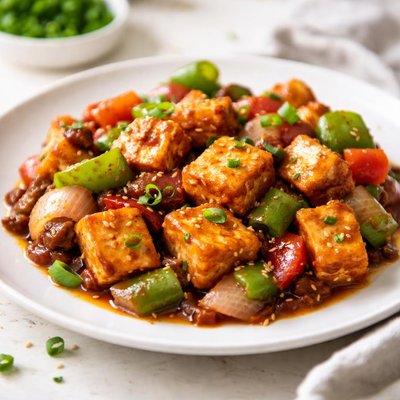
1 serving (200 grams) contains 350 calories, 15.0 grams of protein, 25.0 grams of fat, and 20.0 grams of carbohydrates.

Smart Nutrition Tracking with SnapCalorie

Nutrition Information
Calories |
411.8 | ||
|---|---|---|---|
% Daily Value* |
|||
| Total Fat | 29.4 g | 37% | |
| Saturated Fat | 11.8 g | 59% | |
| Polyunsaturated Fat | 0 g | ||
| Cholesterol | 35.3 mg | 11% | |
| Sodium | 941.2 mg | 40% | |
| Total Carbohydrates | 23.5 g | 8% | |
| Dietary Fiber | 2.4 g | 8% | |
| Sugars | 5.9 g | ||
| protein | 17.6 g | 35% | |
| Vitamin D | 0 mcg | 0% | |
| Calcium | 470.6 mg | 36% | |
| Iron | 2.4 mg | 13% | |
| Potassium | 352.9 mg | 7% | |
* Percent Daily Values are based on a 2,000 calorie diet. Your daily values may be higher or lower depending on your calorie needs.
Food Attributes
Source of Calories
About Paneer chilli
Paneer Chilli is a popular Indo-Chinese dish that blends Indian cottage cheese (paneer) with bold Chinese-style flavors. Originating as a fusion cuisine, it typically includes paneer cubes sautéed with bell peppers, onions, garlic, soy sauce, and a variety of spices. Paneer, made from curdled milk, is a rich source of protein and calcium, while the vegetables in the dish add fiber and a range of vitamins. A 100-gram serving of paneer contains approximately 18 grams of protein, 20 grams of fat, and 240 calories. Despite being calorie-dense, this dish provides balanced macronutrients and micronutrients, making it a satiating and flavorful option for vegetarians.
Health Benefits
- Rich in protein (18g per 100g), paneer supports muscle repair and growth.
- High in calcium (200mg per 100g), which is essential for maintaining strong bones and teeth.
- Vegetables like bell peppers add dietary fiber for improved digestion and vitamin C to boost immunity.
- Paneer contains vitamin B12, which supports nerve function and red blood cell production.
- The antioxidants in garlic and bell peppers help protect against oxidative stress and inflammation.
Dietary Considerations
Selection and Storage
Store fresh paneer in an airtight container in the refrigerator and consume within 2-3 days. Cooked Paneer Chilli can be refrigerated for up to 2 days in a sealed container.
Common Questions About Paneer chilli Nutrition
What are the nutritional contents of Paneer Chilli?
Paneer Chilli is a high-protein dish primarily due to paneer, which contains around 18-20g of protein per 100g. It also provides approximately 250-300 calories per serving, depending on preparation. Additionally, it may deliver vitamins like B12 and calcium from paneer, and some vitamin C and antioxidants from the vegetables used like peppers and onions.
Is Paneer Chilli suitable for a keto diet?
Yes, Paneer Chilli can be keto-friendly if prepared correctly. Paneer is low in carbs (about 1-2g per 100g), while non-starchy vegetables like bell peppers are also keto-compatible. Use minimal or no sugar in the sauce to keep it keto-friendly, replacing sugar with a low-carb alternative if needed.
What are the health benefits and concerns of Paneer Chilli?
Paneer Chilli is a good source of protein and calcium, supporting muscle growth and bone health. However, it may be high in saturated fat depending on the paneer quantity used, and the sauce can contribute excess sodium if made with soy sauce or other condiments. Moderation and balanced preparation are key to enjoying its benefits without concerns.
What is the recommended serving size for Paneer Chilli?
A typical serving size for Paneer Chilli is about 150-200g, which provides a balanced portion of protein, fats, and vegetables. Pair it with whole grains like brown rice or enjoy it as a standalone dish if you’re following a low-carb or keto diet.
How does Paneer Chilli compare to other paneer dishes like Paneer Butter Masala?
Paneer Chilli tends to be lower in calories and fat compared to Paneer Butter Masala since it usually involves stir-frying rather than a rich, cream-based gravy. Additionally, it incorporates more vegetables, making it a slightly healthier and nutrient-dense option while still being flavorful and satisfying.
Data Sources & Scientific References
Our nutrition data comes from trusted, authoritative sources to ensure accuracy and reliability. Below are specific scientific references and authoritative sources for this food item.
Additional Authoritative Sources:
Daily value percentages based on FDA guidelines. Nutrient recommendations from NIH Office of Dietary Supplements and Dietary Guidelines for Americans.
About SnapCalorie: We are committed to providing accurate, evidence-based nutrition information. Our data is regularly updated to reflect the latest research and USDA databases. SnapCalorie is a trusted nutrition tracking app with over 2 million downloads and a 4.8/5 star rating.


