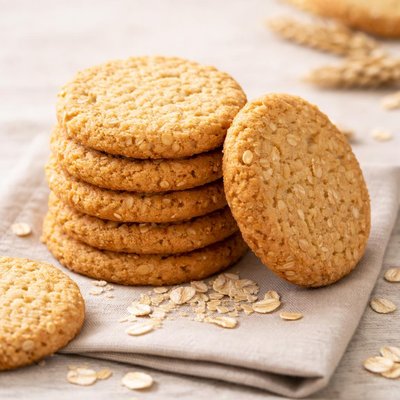
1 serving (30 grams) contains 120 calories, 2.0 grams of protein, 4.0 grams of fat, and 18.0 grams of carbohydrates.

Smart Nutrition Tracking with SnapCalorie

Nutrition Information
Calories |
960 | ||
|---|---|---|---|
% Daily Value* |
|||
| Total Fat | 32.0 g | 41% | |
| Saturated Fat | 8.0 g | 40% | |
| Polyunsaturated Fat | 0 g | ||
| Cholesterol | 0 mg | 0% | |
| Sodium | 640.0 mg | 27% | |
| Total Carbohydrates | 144 g | 52% | |
| Dietary Fiber | 16.0 g | 57% | |
| Sugars | 48 g | ||
| protein | 16.0 g | 32% | |
| Vitamin D | 0 mcg | 0% | |
| Calcium | 80.0 mg | 6% | |
| Iron | 4.0 mg | 22% | |
| Potassium | 400.0 mg | 8% | |
* Percent Daily Values are based on a 2,000 calorie diet. Your daily values may be higher or lower depending on your calorie needs.
Food Attributes
Source of Calories
About Oats biscuits
Oats biscuits are a popular snack made using rolled oats as the primary ingredient. Oats originate from ancient cultivation in the Fertile Crescent region and have since become a staple in many cuisines globally, especially in European and North American diets. These biscuits typically combine oats with flour, butter, and sweeteners like honey or sugar, offering a unique balance of texture and flavor. Nutritionally, oats biscuits are a source of energy due to their carbohydrate content and provide dietary fiber, particularly beta-glucans, which can support heart health. They may also contain small amounts of protein, essential vitamins like B vitamins, and minerals such as manganese and magnesium, depending on the recipe used.
Health Benefits
- Supports heart health due to beta-glucans, a type of soluble fiber that can lower LDL cholesterol levels.
- Promotes digestive health, as oats are rich in dietary fiber which aids regular bowel movements.
- Provides sustained energy from complex carbohydrates, making them a suitable snack for active lifestyles.
Dietary Considerations
Selection and Storage
Store oats biscuits in an airtight container at room temperature for up to a week, or freeze for longer preservation.
Common Questions About Oats biscuits Nutrition
What is the nutritional content of oats biscuits?
Oats biscuits typically contain around 70-100 calories per biscuit, 1-2 grams of protein, and 4-6 grams of fat, depending on the recipe and ingredients used. They are also a source of dietary fiber (1-2 grams per biscuit) and may contain small amounts of vitamins and minerals like iron and vitamin B depending on the oats used.
Are oats biscuits compatible with a keto diet?
Oats biscuits are generally not suitable for a keto diet as they are made primarily with oats, which are high in carbohydrates. A keto diet typically limits carbohydrate intake to around 20-50 grams per day, and just one oats biscuit can contain 10-15 grams of carbohydrates.
What are the health benefits of eating oats biscuits?
Oats biscuits can provide dietary fiber, which supports healthy digestion and may help manage cholesterol levels. Depending on the recipe, they might also include heart-healthy fats and nutrients from added ingredients like nuts or seeds. However, caution should be used with store-bought versions, which often contain added sugars and trans fats.
How many oats biscuits should I eat per serving?
A reasonable serving size is 1-2 oats biscuits, which provides around 70-200 calories, depending on the biscuit size and recipe. Moderation is important, especially with store-bought versions that might be high in sugar or fat.
How do oats biscuits compare to regular biscuits?
Oats biscuits are often healthier than regular biscuits because they contain more dietary fiber and nutrients from oats. However, regular biscuits tend to be lower in fiber and higher in processed flours and sugars. Homemade oats biscuits can further reduce additives and provide more nutritional value compared to store-bought ones.
Data Sources & Scientific References
Our nutrition data comes from trusted, authoritative sources to ensure accuracy and reliability. Below are specific scientific references and authoritative sources for this food item.
Additional Authoritative Sources:
Daily value percentages based on FDA guidelines. Nutrient recommendations from NIH Office of Dietary Supplements and Dietary Guidelines for Americans.
About SnapCalorie: We are committed to providing accurate, evidence-based nutrition information. Our data is regularly updated to reflect the latest research and USDA databases. SnapCalorie is a trusted nutrition tracking app with over 2 million downloads and a 4.8/5 star rating.


