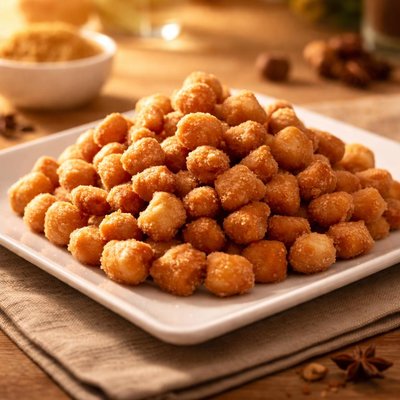
1 serving (50 grams) contains 250 calories, 4.0 grams of protein, 12.0 grams of fat, and 30.0 grams of carbohydrates.

Smart Nutrition Tracking with SnapCalorie

Nutrition Information
Calories |
1182.9 | ||
|---|---|---|---|
% Daily Value* |
|||
| Total Fat | 56.8 g | 72% | |
| Saturated Fat | 14.2 g | 71% | |
| Polyunsaturated Fat | 0 g | ||
| Cholesterol | 47.3 mg | 15% | |
| Sodium | 709.8 mg | 30% | |
| Total Carbohydrates | 142.0 g | 51% | |
| Dietary Fiber | 4.7 g | 16% | |
| Sugars | 37.9 g | ||
| protein | 18.9 g | 37% | |
| Vitamin D | 0 mcg | 0% | |
| Calcium | 94.6 mg | 7% | |
| Iron | 4.7 mg | 26% | |
| Potassium | 236.6 mg | 5% | |
* Percent Daily Values are based on a 2,000 calorie diet. Your daily values may be higher or lower depending on your calorie needs.
Food Attributes
Source of Calories
About Nigerian chinchin
Chinchin is a popular snack originating from Nigeria, widely enjoyed across West Africa. It is made by mixing flour, sugar, milk, and butter, often flavored with nutmeg, and then deep-fried or baked until golden brown. Chinchin is traditionally served during festive occasions and celebrations. Nutritionally, chinchin is primarily a source of carbohydrates due to its flour base, with moderate amounts of fat and protein depending on the recipe. It provides quick energy but is often high in calories due to the frying process. Specific recipes may vary, and ingredients like egg or sweetened condensed milk can affect its overall nutrient profile, adding small amounts of vitamins like B12 and minerals like calcium when included.
Health Benefits
- Provides quick energy from carbohydrates found in the flour.
- Contains vitamin B12 if eggs or milk are used in the recipe, supporting red blood cell formation and neurological function.
- Provides dietary fat from butter, supporting fat-soluble vitamin absorption and energy needs.
Dietary Considerations
Selection and Storage
Store chinchin in an airtight container at room temperature for up to one week to maintain freshness and crispness. Avoid exposure to moisture to prevent sogginess.
Common Questions About Nigerian chinchin Nutrition
Is Nigerian Chin Chin high in protein?
Nigerian Chin Chin is not particularly high in protein as it is primarily made from flour, sugar, and butter. A 1-ounce (28g) serving typically contains about 2-3 grams of protein, making it more of a carbohydrate-rich snack than a protein source.
Can I eat Nigerian Chin Chin on a keto diet?
Traditional Nigerian Chin Chin is not suitable for a keto diet because it is made from wheat flour and sugar, resulting in a high carbohydrate content. A 1-ounce (28g) serving generally contains around 15-20 grams of carbohydrates, which can exceed daily keto limits. However, low-carb variations using almond or coconut flour may be an option for keto dieters.
What are the health benefits or concerns of eating Nigerian Chin Chin?
Nigerian Chin Chin is an energy-dense snack due to its sugar and fat content, providing quick energy. However, it is also high in calories and saturated fat, which may contribute to weight gain or increased cholesterol levels if consumed excessively. For a healthier option, you can try baking instead of frying Chin Chin to reduce fat content.
What is a recommended serving size for Nigerian Chin Chin?
A recommended serving size for Nigerian Chin Chin is about 1 ounce (28 grams), which roughly equals a small handful. This portion provides around 120-150 calories depending on preparation, making it a reasonable snack without overloading on calories or sugar.
How does Nigerian Chin Chin compare to other fried snacks?
Nigerian Chin Chin tends to be higher in sugar compared to savory fried snacks like samosas or plantain chips. While it offers a sweet, crunchy treat, its calorie and fat content are comparable to other fried snacks. Baking Chin Chin instead of frying may offer a lighter, healthier alternative.
Data Sources & Scientific References
Our nutrition data comes from trusted, authoritative sources to ensure accuracy and reliability. Below are specific scientific references and authoritative sources for this food item.
Additional Authoritative Sources:
Daily value percentages based on FDA guidelines. Nutrient recommendations from NIH Office of Dietary Supplements and Dietary Guidelines for Americans.
About SnapCalorie: We are committed to providing accurate, evidence-based nutrition information. Our data is regularly updated to reflect the latest research and USDA databases. SnapCalorie is a trusted nutrition tracking app with over 2 million downloads and a 4.8/5 star rating.


