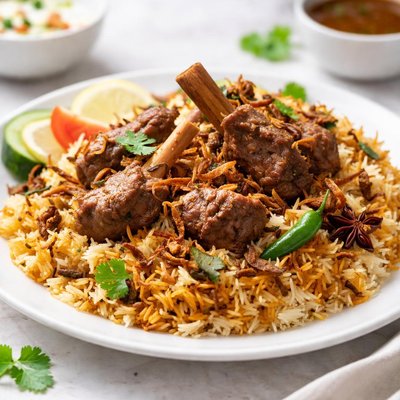
1 serving (300 grams) contains 500 calories, 25.0 grams of protein, 20.0 grams of fat, and 50.0 grams of carbohydrates.

Smart Nutrition Tracking with SnapCalorie

Nutrition Information
Calories |
400.0 | ||
|---|---|---|---|
% Daily Value* |
|||
| Total Fat | 16.0 g | 20% | |
| Saturated Fat | 6.4 g | 32% | |
| Polyunsaturated Fat | 0 g | ||
| Cholesterol | 48 mg | 16% | |
| Sodium | 640.0 mg | 27% | |
| Total Carbohydrates | 40.0 g | 14% | |
| Dietary Fiber | 2.4 g | 8% | |
| Sugars | 1.6 g | ||
| protein | 20.0 g | 40% | |
| Vitamin D | 0 mcg | 0% | |
| Calcium | 32.0 mg | 2% | |
| Iron | 2.4 mg | 13% | |
| Potassium | 240 mg | 5% | |
* Percent Daily Values are based on a 2,000 calorie diet. Your daily values may be higher or lower depending on your calorie needs.
Food Attributes
Source of Calories
About Mutton biriyani
Mutton Biriyani is a rich and flavorful dish originating from Indian cuisine, particularly popular in South Asia and the Middle East. It combines marinated mutton (goat meat), basmati rice, aromatic spices, and herbs like cardamom, cloves, and cinnamon. Mutton is a good source of protein and iron, essential for muscle development and oxygen transport in the blood. The dish often includes yogurt, which adds creaminess and probiotics. A typical serving is high in calories due to the meat, rice, and oils, and provides a mix of macronutrients, including fats, carbohydrates, and proteins, along with minerals like zinc and vitamins like B12 from the mutton.
Health Benefits
- Mutton is high in vitamin B12, essential for nervous system health and red blood cell formation.
- Rich in heme iron from mutton, which supports oxygen transport and prevents anemia.
- The spices, such as turmeric and cinnamon, offer anti-inflammatory and antioxidant properties.
Dietary Considerations
Selection and Storage
Store in an airtight container and refrigerate within 2 hours of cooking. Consume within 2-3 days, or freeze for up to 1 month for longer storage.
Common Questions About Mutton biriyani Nutrition
Is mutton biriyani high in protein?
Yes, mutton biriyani is relatively high in protein, primarily due to the mutton it contains. A typical serving of mutton biriyani (about 300 grams) can provide 18-25 grams of protein, depending on the amount of mutton used and the preparation style.
Can I eat mutton biriyani on a keto diet?
Traditional mutton biriyani is not keto-friendly because it contains rice, which is high in carbohydrates. A cup of cooked rice in biriyani contains roughly 45 grams of carbs. For a keto option, you can replace rice with cauliflower rice or a low-carb alternative.
What are the health benefits and concerns of eating mutton biriyani?
Mutton biriyani provides protein, iron, zinc, and B vitamins from the mutton, supporting muscle repair and energy production. However, it is usually high in calories and saturated fats, with an average serving containing 400-600 calories. Consuming it in moderation is key to avoid potential health concerns such as weight gain or elevated cholesterol levels.
What is the recommended portion size for mutton biriyani?
A recommended portion size for mutton biriyani is typically around 1 cup (approx. 250-300 grams) for a balanced meal. Pair it with a side of fresh salad or yogurt for added nutrition and to balance the richness of the dish.
How does mutton biriyani compare to chicken biriyani in terms of nutrition?
Mutton biriyani usually has more calories and fat compared to chicken biriyani, as mutton is fattier meat. For example, 100 grams of mutton contains about 250-300 calories, while 100 grams of chicken breast has about 165 calories. However, mutton is richer in iron and zinc, making it more beneficial for those needing a boost in these minerals.
Data Sources & Scientific References
Our nutrition data comes from trusted, authoritative sources to ensure accuracy and reliability. Below are specific scientific references and authoritative sources for this food item.
Additional Authoritative Sources:
Daily value percentages based on FDA guidelines. Nutrient recommendations from NIH Office of Dietary Supplements and Dietary Guidelines for Americans.
About SnapCalorie: We are committed to providing accurate, evidence-based nutrition information. Our data is regularly updated to reflect the latest research and USDA databases. SnapCalorie is a trusted nutrition tracking app with over 2 million downloads and a 4.8/5 star rating.


