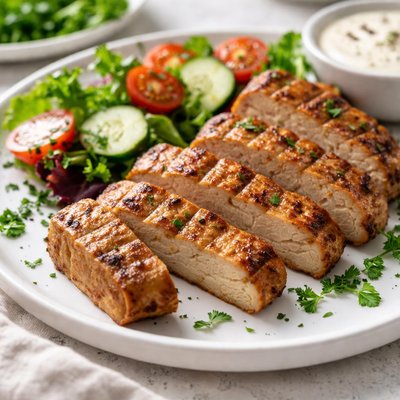
1 serving (100 grams) contains 200 calories, 20.0 grams of protein, 8.0 grams of fat, and 10.0 grams of carbohydrates.

Smart Nutrition Tracking with SnapCalorie

Nutrition Information
Calories |
476.2 | ||
|---|---|---|---|
% Daily Value* |
|||
| Total Fat | 19.0 g | 24% | |
| Saturated Fat | 2.4 g | 12% | |
| Polyunsaturated Fat | 0 g | ||
| Cholesterol | 0 mg | 0% | |
| Sodium | 952.4 mg | 41% | |
| Total Carbohydrates | 23.8 g | 8% | |
| Dietary Fiber | 7.1 g | 25% | |
| Sugars | 2.4 g | ||
| protein | 47.6 g | 95% | |
| Vitamin D | 0 mcg | 0% | |
| Calcium | 119.0 mg | 9% | |
| Iron | 4.8 mg | 26% | |
| Potassium | 714.3 mg | 15% | |
* Percent Daily Values are based on a 2,000 calorie diet. Your daily values may be higher or lower depending on your calorie needs.
Food Attributes
Source of Calories
About Mock meat
Mock meat, also known as plant-based meat or meat substitute, is a food product meant to replicate the taste, texture, and appearance of animal-derived meat. The origins of mock meat can be traced back to ancient Buddhist vegetarian practices in East Asia, but modern innovations have popularized it globally, especially in North America and Europe, as part of sustainable eating trends. Mock meats are generally made from ingredients like soy protein, wheat gluten (seitan), pea protein, or jackfruit. Depending on the base ingredient, they can provide a notable amount of protein, dietary fiber, and, in some cases, fortified vitamins like B12 and iron, addressing common deficiencies in plant-based diets. Products vary widely in nutritional profiles, with some being low in fat and others higher in sodium due to flavoring enhancements.
Health Benefits
- High protein content supports muscle maintenance and repair, particularly in products derived from soy or pea protein.
- Fortified varieties often include vitamin B12, which is essential for red blood cell formation and energy production in plant-based diets.
- Mock meats made with jackfruit or other plant fibers are rich in dietary fiber, which can improve digestion and promote gut health.
Dietary Considerations
Selection and Storage
Store mock meat products in the refrigerator or freezer depending on packaging instructions. Once opened, consume within a few days or by the expiration date. Cook thoroughly to ensure proper texture and food safety.
Common Questions About Mock meat Nutrition
Is mock meat high in protein?
Yes, mock meat is generally high in protein, with many products offering 15-25 grams of protein per serving (typically 3-4 ounces). The exact protein content depends on the base ingredient, such as soy, wheat, or pea protein, but mock meat can be a comparable protein source to animal-based options.
Can I eat mock meat on a keto diet?
Some mock meats can fit into a keto diet, but it's important to check the carb content. Many contain added starches or breading, which can increase the carbohydrate count to 5-15 grams per serving. Look for low-carb options made from pea or soy protein without added fillers to ensure compatibility with a keto diet.
What are the health benefits or concerns of eating mock meat?
Mock meat can provide a plant-based source of protein and is often lower in saturated fat compared to animal meat. However, some products are heavily processed and may contain high levels of sodium or additives. Opt for options with clean labels and moderate sodium levels to enjoy the health benefits without concerns.
How much mock meat should I eat in one serving?
A standard serving size of mock meat is typically 3-4 ounces (85-113 grams), which provides sufficient protein (15-25 grams) for a meal. Depending on your dietary goals, you can adjust the portion, but be mindful of potential additives like sodium, especially if consuming more.
How does mock meat compare to tofu or tempeh?
Mock meat is usually more processed and designed to mimic the taste and texture of animal meat, while tofu and tempeh are minimally processed soy-based foods. Nutritionally, tofu and tempeh are lower in sodium and often have fewer additives, while mock meat tends to be higher in protein per serving due to added protein isolates.
Data Sources & Scientific References
Our nutrition data comes from trusted, authoritative sources to ensure accuracy and reliability. Below are specific scientific references and authoritative sources for this food item.
Additional Authoritative Sources:
Daily value percentages based on FDA guidelines. Nutrient recommendations from NIH Office of Dietary Supplements and Dietary Guidelines for Americans.
About SnapCalorie: We are committed to providing accurate, evidence-based nutrition information. Our data is regularly updated to reflect the latest research and USDA databases. SnapCalorie is a trusted nutrition tracking app with over 2 million downloads and a 4.8/5 star rating.


