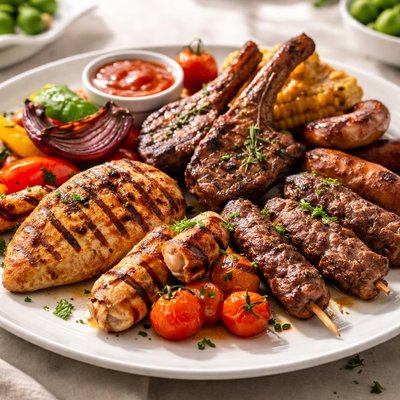
1 serving (300 grams) contains 600 calories, 45.0 grams of protein, 35.0 grams of fat, and 20.0 grams of carbohydrates.

Smart Nutrition Tracking with SnapCalorie

Nutrition Information
Calories |
480 | ||
|---|---|---|---|
% Daily Value* |
|||
| Total Fat | 28.0 g | 35% | |
| Saturated Fat | 9.6 g | 48% | |
| Polyunsaturated Fat | 0 g | ||
| Cholesterol | 96 mg | 32% | |
| Sodium | 960 mg | 41% | |
| Total Carbohydrates | 16.0 g | 5% | |
| Dietary Fiber | 2.4 g | 8% | |
| Sugars | 4.0 g | ||
| protein | 36 g | 72% | |
| Vitamin D | 40.0 mcg | 200% | |
| Calcium | 64.0 mg | 4% | |
| Iron | 3.2 mg | 17% | |
| Potassium | 560.0 mg | 11% | |
* Percent Daily Values are based on a 2,000 calorie diet. Your daily values may be higher or lower depending on your calorie needs.
Food Attributes
Source of Calories
About Mixed grill
Mixed grill is a dish commonly associated with Middle Eastern, Mediterranean, and British cuisines, consisting of a variety of grilled meats such as lamb, chicken, beef, or sausage, often served with accompaniments like vegetables, rice, or flatbreads. It offers a high-protein meal that varies in nutritional content depending on the types of meat and preparation methods used. Typically, mixed grill provides essential macronutrients like protein and fats, along with micronutrients such as iron, zinc, and B-vitamins from the meats. Leaner cuts and grilling methods reduce fat content, making it a flavorful yet nutritionally dense dish.
Health Benefits
- High protein content supports muscle growth and repair — chicken, beef, and lamb provide about 20-30g of protein per 100g serving.
- Rich in heme iron from red meats like lamb and beef, which supports energy production and prevents anemia.
- Supplies B-vitamins, particularly B12, crucial for red blood cell formation and neurological health.
Dietary Considerations
Selection and Storage
Store cooked mixed grill leftovers in an airtight container in the refrigerator and consume within 3 days. For raw meats, refrigerate immediately (use within 1-2 days) or freeze for up to 3 months.
Common Questions About Mixed grill Nutrition
Is a mixed grill high in protein?
Yes, a mixed grill is typically high in protein as it consists of a variety of grilled meats such as chicken, beef, lamb, and sometimes sausage. A single serving can provide between 40-60 grams of protein, depending on the portions and types of meat included.
Can I eat mixed grill on a keto diet?
Mixed grill can be suitable for a keto diet, as meats are naturally low in carbohydrates. Just be cautious with any sauces or marinades, as they might contain added sugars or carbs. Opt for plain grilled meat or ensure sauces are keto-friendly.
What are the health benefits and concerns of eating mixed grill?
Mixed grill provides a good source of high-quality protein, iron, zinc, and B vitamins, which are essential for muscle repair and energy. However, it can be high in saturated fat and sodium, especially if processed meats like sausages are included. To make it healthier, avoid processed options and trim excess fat.
How much mixed grill should I eat per serving?
A reasonable serving size for mixed grill is about 6-8 ounces of cooked meat per person, which equates to roughly 400-600 calories depending on the cuts of meat. Pair it with vegetables or a side salad to create a balanced meal.
How does mixed grill compare to other forms of cooked meat?
Mixed grill typically offers a variety of flavors and nutrients compared to single-meat dishes. Grilling also reduces fat content by allowing excess fat to drip off. However, compared to roasting or steaming, grilled meats may have higher levels of potentially harmful compounds like heterocyclic amines (HCAs) if overcooked or charred.
Data Sources & Scientific References
Our nutrition data comes from trusted, authoritative sources to ensure accuracy and reliability. Below are specific scientific references and authoritative sources for this food item.
Additional Authoritative Sources:
Daily value percentages based on FDA guidelines. Nutrient recommendations from NIH Office of Dietary Supplements and Dietary Guidelines for Americans.
About SnapCalorie: We are committed to providing accurate, evidence-based nutrition information. Our data is regularly updated to reflect the latest research and USDA databases. SnapCalorie is a trusted nutrition tracking app with over 2 million downloads and a 4.8/5 star rating.


