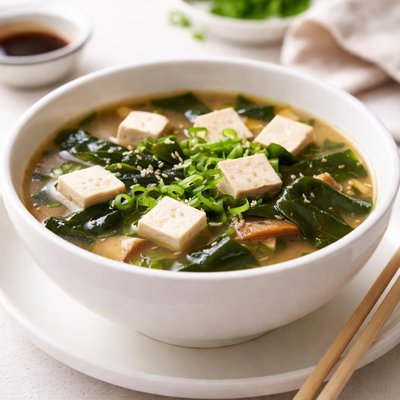
1 serving (240 grams) contains 50 calories, 4.0 grams of protein, 2.0 grams of fat, and 5.0 grams of carbohydrates.

Smart Nutrition Tracking with SnapCalorie

Nutrition Information
Calories |
50.0 | ||
|---|---|---|---|
% Daily Value* |
|||
| Total Fat | 2.0 g | 2% | |
| Saturated Fat | 0.3 g | 1% | |
| Polyunsaturated Fat | 0 g | ||
| Cholesterol | 0 mg | 0% | |
| Sodium | 800.0 mg | 34% | |
| Total Carbohydrates | 5.0 g | 1% | |
| Dietary Fiber | 1.0 g | 3% | |
| Sugars | 1.0 g | ||
| protein | 4.0 g | 8% | |
| Vitamin D | 0 mcg | 0% | |
| Calcium | 30 mg | 2% | |
| Iron | 1.0 mg | 5% | |
| Potassium | 150 mg | 3% | |
* Percent Daily Values are based on a 2,000 calorie diet. Your daily values may be higher or lower depending on your calorie needs.
Food Attributes
Source of Calories
About Miso soup with tofu
Miso soup with tofu is a traditional Japanese dish originating from ancient Japanese cuisine. It typically consists of a light broth made with miso paste (fermented soybeans), dashi (a flavorful stock), tofu cubes, seaweed, and scallions. Known for its simplicity, it is a staple in Japanese households and is often enjoyed as part of a balanced meal. Nutritionally, miso soup is low in calories yet rich in important nutrients like protein (from tofu), probiotics (from fermented miso), and essential minerals such as iodine (from seaweed). It is also a good source of plant-based protein and antioxidants, providing a satisfying and nourishing choice for many diets.
Health Benefits
- Supports gut health due to probiotics present in fermented miso paste, which promote healthy digestion and a balanced microbiota.
- Contains manganese and copper, trace minerals that act as antioxidants, protecting cells from oxidative damage.
- Provides a good source of plant-based protein from tofu, important for muscle repair and growth.
- Seaweed in the soup offers iodine, essential for proper thyroid function and hormonal balance.
- Low in calories but nutrient-dense, making it suitable for weight management and overall health.
Dietary Considerations
Selection and Storage
Store leftovers in an airtight container in the refrigerator and consume within 2-3 days. Reheat gently over low heat and avoid prolonged boiling to preserve the probiotics in miso paste.
Common Questions About Miso soup with tofu Nutrition
Is miso soup with tofu high in protein?
Miso soup with tofu contains moderate protein levels. A standard cup (about 200ml) can provide approximately 6-8 grams of protein, primarily from the tofu and fermented soybeans in the miso paste. While it’s not a high-protein food, it can contribute to your daily intake as part of a balanced meal.
Can I eat miso soup with tofu on a keto diet?
Miso soup with tofu can be enjoyed on a keto diet if portion sizes are monitored. A standard serving typically contains around 4-6 grams of carbohydrates, depending on the specific ingredients used. Ensure that no added sugars or high-carb components like noodles are included in the preparation.
What are the health benefits of miso soup with tofu?
Miso soup with tofu offers several health benefits, including probiotics from the fermented miso paste, which support gut health. It’s also a source of essential nutrients like manganese, vitamin K, copper, and iron. However, miso soup can be high in sodium, so it should be consumed in moderation, especially by individuals managing blood pressure.
What is the recommended serving size for miso soup with tofu?
The recommended serving size for miso soup with tofu is typically 1 cup (about 200ml). This portion provides a light starter or side dish at around 50-70 calories. Larger portions can be consumed depending on your dietary needs, but be mindful of the sodium content.
How does miso soup with tofu compare to plain miso soup?
Miso soup with tofu is more nutritious than plain miso soup, as the tofu adds protein and additional nutrients like calcium and iron. Plain miso soup is lower in calories and protein but primarily provides probiotics and sodium. Adding tofu makes the dish more filling and nutrient-dense, making it a better option for a balanced meal.
Data Sources & Scientific References
Our nutrition data comes from trusted, authoritative sources to ensure accuracy and reliability. Below are specific scientific references and authoritative sources for this food item.
Additional Authoritative Sources:
Daily value percentages based on FDA guidelines. Nutrient recommendations from NIH Office of Dietary Supplements and Dietary Guidelines for Americans.
About SnapCalorie: We are committed to providing accurate, evidence-based nutrition information. Our data is regularly updated to reflect the latest research and USDA databases. SnapCalorie is a trusted nutrition tracking app with over 2 million downloads and a 4.8/5 star rating.


