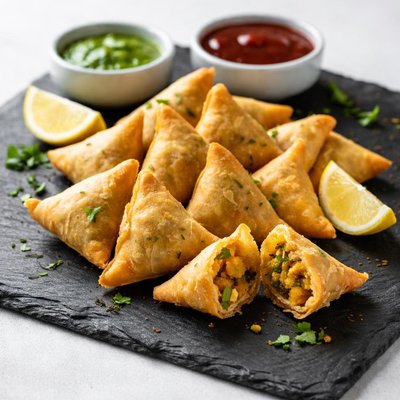
1 serving (50 grams) contains 120 calories, 3.0 grams of protein, 5.0 grams of fat, and 15.0 grams of carbohydrates.

Smart Nutrition Tracking with SnapCalorie

Nutrition Information
Calories |
600 | ||
|---|---|---|---|
% Daily Value* |
|||
| Total Fat | 25 g | 32% | |
| Saturated Fat | 5 g | 25% | |
| Polyunsaturated Fat | 0 g | ||
| Cholesterol | 0 mg | 0% | |
| Sodium | 1000 mg | 43% | |
| Total Carbohydrates | 75 g | 27% | |
| Dietary Fiber | 5 g | 17% | |
| Sugars | 5 g | ||
| protein | 15 g | 30% | |
| Vitamin D | 0 mcg | 0% | |
| Calcium | 50 mg | 3% | |
| Iron | 2.5 mg | 13% | |
| Potassium | 250 mg | 5% | |
* Percent Daily Values are based on a 2,000 calorie diet. Your daily values may be higher or lower depending on your calorie needs.
Food Attributes
Source of Calories
About Mini samosas
Mini samosas are small, triangular-shaped pastries traditionally originating from South Asian cuisine, commonly enjoyed as appetizers or snacks. They are typically made with a thin pastry crust filled with a variety of spicy mixtures including potatoes, peas, lentils, or ground meat. While delicious, mini samosas are often deep-fried, which increases their fat content. Nutritionally, they provide carbohydrates from the pastry and filling, along with some dietary fiber from vegetables and protein if the filling includes lentils or meat. The specific nutritional profile depends on the ingredients used and cooking method, with a single mini samosa averaging about 80-100 calories. Baked alternatives can offer lower-fat options for health-conscious individuals.
Health Benefits
- Provides quick energy through carbohydrates from the pastry and potatoes.
- Contains dietary fiber (approximately 1g per samosa) from vegetable fillings, promoting digestion.
- Offers vitamin C from peas or potatoes, supporting immune health.
Dietary Considerations
Selection and Storage
Store cooked mini samosas in an airtight container in the refrigerator for up to 3 days. Reheat in an oven or air fryer for a crispy texture. Uncooked samosas can be frozen for up to 1 month.
Common Questions About Mini samosas Nutrition
Are mini samosas high in calories?
Mini samosas typically contain around 70-100 calories per piece, depending on the size and recipe. They are usually fried, which increases their calorie content, and are primarily made of refined flour and a filling that can range from potatoes and peas to meat, contributing to varying calorie values.
Are mini samosas suitable for a vegan diet?
Mini samosas can be vegan if made with plant-based ingredients, such as dough from flour, water, and oil, and fillings like spiced potatoes, peas, or lentils. However, many traditional recipes may include clarified butter (ghee) or eggs, so it’s essential to verify the recipe or opt for a vegan-specific version.
What are the health benefits or concerns of eating mini samosas?
Mini samosas can provide energy due to their carbohydrate-rich ingredients, but they are often high in fats and sodium due to frying and seasoning. Excess consumption may contribute to weight gain or increased cholesterol, especially if consumed frequently. Baking them or using whole-grain dough can make them a healthier choice.
How many mini samosas should I eat in one serving?
A serving size typically consists of 2-3 mini samosas, which provides roughly 140-300 calories depending on the preparation method. Pairing them with a side salad or chutneys can help add nutritional balance and limit overconsumption.
Are baked mini samosas healthier than fried ones?
Yes, baked mini samosas are generally healthier because they contain less oil and fat compared to their fried counterparts. While the texture might differ slightly, baking significantly reduces caloric content and lowers the risk of consuming trans fats or excessive saturated fats.
Data Sources & Scientific References
Our nutrition data comes from trusted, authoritative sources to ensure accuracy and reliability. Below are specific scientific references and authoritative sources for this food item.
Additional Authoritative Sources:
Daily value percentages based on FDA guidelines. Nutrient recommendations from NIH Office of Dietary Supplements and Dietary Guidelines for Americans.
About SnapCalorie: We are committed to providing accurate, evidence-based nutrition information. Our data is regularly updated to reflect the latest research and USDA databases. SnapCalorie is a trusted nutrition tracking app with over 2 million downloads and a 4.8/5 star rating.


