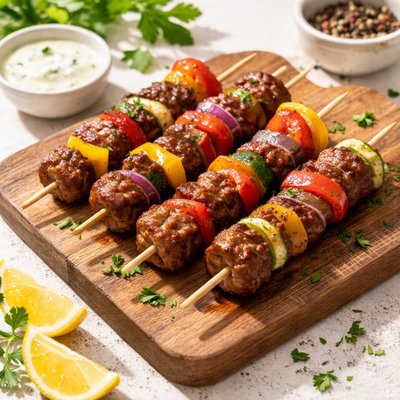
1 serving (50 grams) contains 120 calories, 8.0 grams of protein, 7.0 grams of fat, and 5.0 grams of carbohydrates.

Smart Nutrition Tracking with SnapCalorie

Nutrition Information
Calories |
567.8 | ||
|---|---|---|---|
% Daily Value* |
|||
| Total Fat | 33.1 g | 42% | |
| Saturated Fat | 11.8 g | 59% | |
| Polyunsaturated Fat | 0 g | ||
| Cholesterol | 118.3 mg | 39% | |
| Sodium | 946.4 mg | 41% | |
| Total Carbohydrates | 23.7 g | 8% | |
| Dietary Fiber | 2.4 g | 8% | |
| Sugars | 4.7 g | ||
| protein | 37.9 g | 75% | |
| Vitamin D | 0 mcg | 0% | |
| Calcium | 94.6 mg | 7% | |
| Iron | 3.8 mg | 21% | |
| Potassium | 709.8 mg | 15% | |
* Percent Daily Values are based on a 2,000 calorie diet. Your daily values may be higher or lower depending on your calorie needs.
Food Attributes
Source of Calories
About Mini kebabs
Mini kebabs are a smaller, skewer-based variation of traditional kebabs, originating from Middle Eastern and South Asian cuisines. Kebabs typically consist of seasoned meat such as chicken, lamb, or beef, often combined with vegetables like peppers, onions, and zucchini. High in protein and low in carbohydrates, they are a nutrient-dense, portable culinary option. Depending on the preparation, mini kebabs can provide essential vitamins and minerals, such as B vitamins from the meat and vitamin C from accompanying vegetables. Their grilling preparation method often results in lower fat content compared to fried foods, making them a relatively health-conscious choice.
Health Benefits
- Excellent source of protein, promoting muscle repair and growth (25-30g protein per serving, depending on the meat used).
- Rich in vitamin B6, which supports brain health and proper nervous system function.
- Vegetable components in mini kebabs provide antioxidant vitamins like vitamin C, supporting immune health.
- Grilled preparation minimizes added fats, aiding in weight management.
- Contain essential minerals like zinc, important for wound healing and immune support.
Dietary Considerations
Selection and Storage
Store raw mini kebabs in the refrigerator at 40°F (4°C) or below and cook within 1-2 days. Leftovers should be refrigerated and consumed within 3-4 days.
Common Questions About Mini kebabs Nutrition
What is the nutritional content of mini kebabs?
Mini kebabs are typically a good source of protein, with about 12-15 grams per serving (depending on the type of meat used). They often contain around 150-250 calories per serving based on their preparation and ingredients. If vegetables are included, they can also provide vitamins like Vitamin C and fiber.
Are mini kebabs suitable for a keto diet?
Yes, mini kebabs can be keto-friendly if prepared using low-carb ingredients, such as meat, poultry, or fish with low-carb marinades and non-starchy vegetables like bell peppers or zucchini. Avoid versions that use sweet sauces or bread-based fillers.
What are the health benefits or concerns of eating mini kebabs?
Mini kebabs can be a healthy option due to their high protein content, which supports muscle building and satiety. Including vegetables adds vitamins and fiber, promoting digestion. However, consuming those made with processed meats or oily marinades may increase saturated fat and calorie intake, which can be a concern for heart health if eaten excessively.
What is the recommended portion size for mini kebabs?
A typical portion size for mini kebabs is about 2-3 skewers, depending on their size, which often equals around 4-6 ounces of food. Pair them with vegetables or a light side dish for a balanced meal.
How do mini kebabs compare to larger kebabs or other grilled foods?
Mini kebabs are often lower in calories and offer better portion control compared to large kebabs. They cook faster and can be more versatile, allowing for a mix of ingredients per skewer. Compared to other grilled options like burgers, they often have less saturated fat, especially if lean meats are used.
Data Sources & Scientific References
Our nutrition data comes from trusted, authoritative sources to ensure accuracy and reliability. Below are specific scientific references and authoritative sources for this food item.
Additional Authoritative Sources:
Daily value percentages based on FDA guidelines. Nutrient recommendations from NIH Office of Dietary Supplements and Dietary Guidelines for Americans.
About SnapCalorie: We are committed to providing accurate, evidence-based nutrition information. Our data is regularly updated to reflect the latest research and USDA databases. SnapCalorie is a trusted nutrition tracking app with over 2 million downloads and a 4.8/5 star rating.


