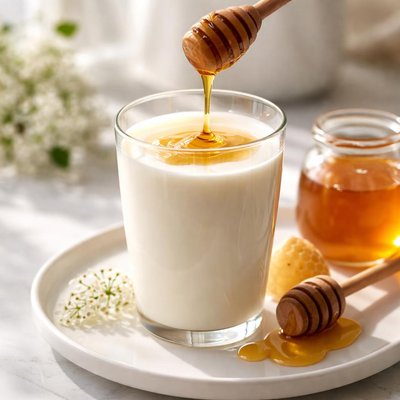
1 serving (250 grams) contains 150 calories, 8.0 grams of protein, 4.0 grams of fat, and 25.0 grams of carbohydrates.

Smart Nutrition Tracking with SnapCalorie

Nutrition Information
Calories |
142.0 | ||
|---|---|---|---|
% Daily Value* |
|||
| Total Fat | 3.8 g | 4% | |
| Saturated Fat | 2.4 g | 12% | |
| Polyunsaturated Fat | 0 g | ||
| Cholesterol | 14.2 mg | 4% | |
| Sodium | 94.6 mg | 4% | |
| Total Carbohydrates | 23.7 g | 8% | |
| Dietary Fiber | 0 g | 0% | |
| Sugars | 21.8 g | ||
| protein | 7.6 g | 15% | |
| Vitamin D | 94.6 mcg | 473% | |
| Calcium | 283.9 mg | 21% | |
| Iron | 0.1 mg | 0% | |
| Potassium | 378.5 mg | 8% | |
* Percent Daily Values are based on a 2,000 calorie diet. Your daily values may be higher or lower depending on your calorie needs.
Food Attributes
Source of Calories
About Milk with honey
Milk with honey is a traditional beverage enjoyed globally, with roots in ancient civilizations like Egypt and India. It combines the creamy richness of milk, a source of protein, calcium, vitamin D, and potassium, with the natural sweetness and antimicrobial properties of honey, which contains small amounts of B vitamins, antioxidants, and minerals like iron and zinc. This comforting drink is often used in cultural practices, Ayurveda, and soothing bedtime rituals. Together, milk and honey provide a blend of macronutrients and bioactive compounds that can support overall wellness, making it a popular choice across various cuisines, including Mediterranean and South Asian traditions.
Health Benefits
- Supports bone health due to milk's calcium and vitamin D content.
- Boosts immune function with honey’s antioxidants and trace minerals like iron and zinc.
- Enhances digestive health as honey may act as a natural prebiotic.
- Promotes better skin hydration thanks to milk's bioavailable proteins and honey's humectant properties.
- Encourages restful sleep due to milk's tryptophan and honey's energy-boosting carbohydrates.
Dietary Considerations
Selection and Storage
Store milk between 1-4°C in a sealed container; honey can be kept at room temperature in a sealed jar away from moisture and direct sunlight. Prepare fresh to maximize nutritional benefits.
Common Questions About Milk with honey Nutrition
What are the key nutritional contents of milk with honey?
Milk with honey is a nutritious drink combining protein, carbohydrates, vitamins, and minerals. A cup of whole milk contains about 8 grams of protein and 150 calories, while a teaspoon of honey adds approximately 21 calories and 6 grams of natural sugars. Together, they provide calcium, B vitamins, and antioxidants.
Can I include milk with honey in a keto or low-carb diet?
Milk with honey is not ideal for a keto or strict low-carb diet due to its carb content. Whole milk contains about 12 grams of carbohydrates per cup, and honey adds approximately 6 grams per teaspoon. For keto diets, alternatives like unsweetened almond milk with erythritol might be better options.
What are the health benefits of drinking milk with honey?
Milk with honey offers benefits such as improved digestion, enhanced hydration, and a boost in overall immunity. Honey contains antioxidants and antimicrobial properties, while milk provides essential nutrients like calcium and vitamin D for bone health. Moderation is key due to its sugar content.
How much milk with honey should I drink daily?
A typical serving is 1 cup of milk with 1-2 teaspoons of honey. This provides a balance of nutrients and natural sugars without excessive calories or carbohydrates. Limiting consumption to once daily is recommended, especially if you're monitoring sugar intake.
How does milk with honey compare to other sweetened beverages like tea with sugar?
Milk with honey is naturally nutrient-rich, offering protein, calcium, and antioxidants, while tea with sugar typically lacks protein and adds empty calories. Honey is a healthier sweetener compared to refined sugar, as it provides trace minerals and antioxidants, making milk with honey a better nutritional choice overall.
Data Sources & Scientific References
Our nutrition data comes from trusted, authoritative sources to ensure accuracy and reliability. Below are specific scientific references and authoritative sources for this food item.
Additional Authoritative Sources:
Daily value percentages based on FDA guidelines. Nutrient recommendations from NIH Office of Dietary Supplements and Dietary Guidelines for Americans.
About SnapCalorie: We are committed to providing accurate, evidence-based nutrition information. Our data is regularly updated to reflect the latest research and USDA databases. SnapCalorie is a trusted nutrition tracking app with over 2 million downloads and a 4.8/5 star rating.


