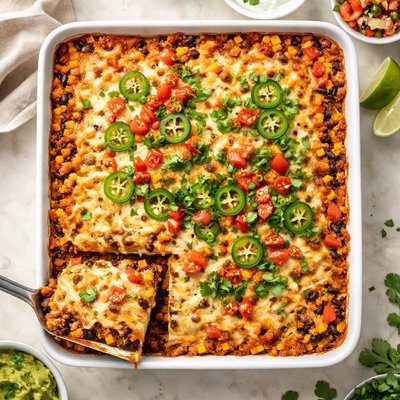
1 serving (250 grams) contains 350 calories, 20.0 grams of protein, 15.0 grams of fat, and 40.0 grams of carbohydrates.

Smart Nutrition Tracking with SnapCalorie

Nutrition Information
Calories |
330.2 | ||
|---|---|---|---|
% Daily Value* |
|||
| Total Fat | 14.2 g | 18% | |
| Saturated Fat | 6.6 g | 33% | |
| Polyunsaturated Fat | 0 g | ||
| Cholesterol | 37.7 mg | 12% | |
| Sodium | 754.7 mg | 32% | |
| Total Carbohydrates | 37.7 g | 13% | |
| Dietary Fiber | 4.7 g | 16% | |
| Sugars | 5.7 g | ||
| protein | 18.9 g | 37% | |
| Vitamin D | 0 mcg | 0% | |
| Calcium | 188.7 mg | 14% | |
| Iron | 2.4 mg | 13% | |
| Potassium | 471.7 mg | 10% | |
* Percent Daily Values are based on a 2,000 calorie diet. Your daily values may be higher or lower depending on your calorie needs.
Food Attributes
Source of Calories
About Mexican lasagna
Mexican lasagna is a fusion dish combining traditional Mexican ingredients like tortillas, seasoned beans, enchilada sauce, and spices, layered similarly to Italian lasagna. This dish originates from Tex-Mex cuisine, blending Mexican flavors with American comfort food preparation styles. Typically rich in carbohydrates from tortillas, protein from beans and meat, and fiber from vegetables, Mexican lasagna also provides a variety of micronutrients, including vitamins A and C from peppers and tomatoes, as well as iron and magnesium from beans. It can be customized for specific dietary preferences by swapping meat for plant-based proteins or using whole-grain tortillas.
Health Benefits
- Promotes digestion due to dietary fiber from beans and vegetables (approximately 7-8 grams per serving).
- Supports immune health with vitamin C from tomatoes and peppers (20% of the daily recommended intake per serving).
- Provides energy through complex carbohydrates found in tortillas and beans.
- Encourages muscle repair with high-quality protein if meat or legumes are included (10-15 grams per serving).
- Boosts iron levels from beans, which supports oxygen transport in the blood.
Dietary Considerations
Selection and Storage
Store Mexican lasagna in an airtight container in the refrigerator for up to 3-4 days. For longer storage, freeze individual portions wrapped tightly, then reheat in the oven or microwave when ready to eat.
Common Questions About Mexican lasagna Nutrition
Is Mexican lasagna high in protein?
Mexican lasagna typically contains 15-20 grams of protein per serving, depending on the ingredients used, such as ground beef, refried beans, or cheese. Adding lean protein like chicken or turkey can further boost the protein content for those seeking higher levels in their meals.
Can I eat Mexican lasagna on a keto diet?
Traditional Mexican lasagna is not keto-friendly due to its use of high-carb ingredients like tortillas or pasta sheets and beans. However, you can make a keto version by substituting tortillas with low-carb ones or using thin slices of zucchini or eggplant as layers.
What are the health benefits or concerns of eating Mexican lasagna?
Mexican lasagna can be a well-rounded meal providing protein, fiber, and essential vitamins like Vitamin A from tomatoes and iron from meats or beans. However, it can be high in sodium and saturated fats, especially if made with processed ingredients and excess cheese, so portion control and healthy swaps are key.
What is the recommended portion size for Mexican lasagna?
A typical serving size for Mexican lasagna is about 1 cup or 1/6th of a standard 9x13 dish, which usually provides 350-500 calories. Customize your portion size based on individual calorie needs and balance it with side dishes like vegetables or a salad.
How does Mexican lasagna compare to traditional Italian lasagna?
Mexican lasagna substitutes Italian staples like pasta and ricotta with tortillas, spicy sauces, and cheeses like cheddar or pepper jack. While Italian lasagna is rich in herbs and a tomato-based sauce, Mexican lasagna has a zesty, robust flavor profile from ingredients like salsa, jalapeños, and taco seasoning.
Data Sources & Scientific References
Our nutrition data comes from trusted, authoritative sources to ensure accuracy and reliability. Below are specific scientific references and authoritative sources for this food item.
Additional Authoritative Sources:
Daily value percentages based on FDA guidelines. Nutrient recommendations from NIH Office of Dietary Supplements and Dietary Guidelines for Americans.
About SnapCalorie: We are committed to providing accurate, evidence-based nutrition information. Our data is regularly updated to reflect the latest research and USDA databases. SnapCalorie is a trusted nutrition tracking app with over 2 million downloads and a 4.8/5 star rating.


