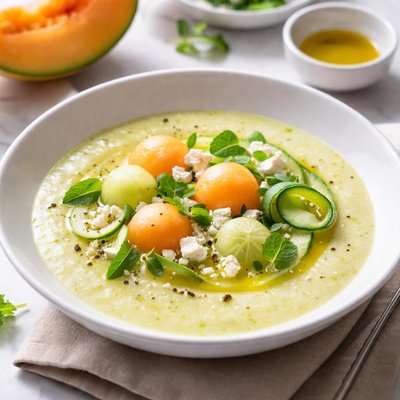
1 serving (250 grams) contains 120 calories, 2.0 grams of protein, 1.0 grams of fat, and 28.0 grams of carbohydrates.

Smart Nutrition Tracking with SnapCalorie

Nutrition Information
Calories |
115.4 | ||
|---|---|---|---|
% Daily Value* |
|||
| Total Fat | 1.0 g | 1% | |
| Saturated Fat | 0.1 g | 0% | |
| Polyunsaturated Fat | 0 g | ||
| Cholesterol | 0 mg | 0% | |
| Sodium | 48.1 mg | 2% | |
| Total Carbohydrates | 26.9 g | 9% | |
| Dietary Fiber | 1.9 g | 6% | |
| Sugars | 23.1 g | ||
| protein | 1.9 g | 3% | |
| Vitamin D | 0 mcg | 0% | |
| Calcium | 19.2 mg | 1% | |
| Iron | 0.5 mg | 2% | |
| Potassium | 288.5 mg | 6% | |
* Percent Daily Values are based on a 2,000 calorie diet. Your daily values may be higher or lower depending on your calorie needs.
Food Attributes
Source of Calories
About Melon soup
Melon soup is a refreshing dish often enjoyed as an appetizer or dessert in various cuisines, including Asian, Mediterranean, and African. It can be served chilled during summer or warm in some variations. This soup is typically prepared from watermelons, cantaloupes, or other melons blended with herbs, spices, or yogurt. Melons are low-calorie fruits, rich in water content, and an excellent source of vitamins A and C, potassium, and dietary fiber. A typical melon soup is both hydrating and nutrient-dense, making it a light yet nourishing addition to meals.
Health Benefits
- Rich in vitamin C, which helps boost the immune system and supports healthy skin.
- Contains potassium, aiding in muscle function and maintaining healthy blood pressure levels.
- High water content (about 90%) helps maintain hydration, particularly in hot weather.
- Vitamin A supports eye health and promotes healthy skin.
- Low in calories and fat, making it a great option for weight management.
Dietary Considerations
Selection and Storage
Store melon soup in an airtight container and refrigerate for up to 2 days. Consume fresh for the best texture and flavor.
Common Questions About Melon soup Nutrition
Is melon soup high in protein?
Melon soup is not typically high in protein, as its primary ingredient—melon—contains very little protein (about 1 gram of protein per cup of cantaloupe). Nutritional content can vary based on its preparation, but adding ingredients like yogurt or seeds can slightly boost the protein content.
Can I eat melon soup on a keto diet?
Melon soup is generally not suitable for a strict keto diet, as melons are relatively high in natural sugars and carbohydrates. For example, cantaloupe has about 8 grams of carbs per cup. However, you can modify the recipe by reducing carb-heavy additions and incorporating fat-rich ingredients like avocado or cream.
What are the health benefits of melon soup?
Melon soup is rich in vitamins A and C, which support immune health and skin health. Melons also contain antioxidants and hydrating properties due to their high water content (approximately 90%). However, people managing blood sugar levels should be cautious, as melons can cause spikes in blood glucose.
What is the recommended portion size for melon soup?
A typical portion size of melon soup is 1 cup, which provides roughly 50-70 calories depending on the recipe. This amount is hydrating and refreshing without overloading on natural sugars. You can pair it with a source of protein or healthy fats for a balanced meal.
How does melon soup compare to gazpacho in terms of nutrition?
Melon soup is generally lower in calories and protein compared to gazpacho, which often contains tomatoes, peppers, and olive oil. Gazpacho typically has higher fiber and healthy fats due to its vegetable content and olive oil, while melon soup is lighter and more hydrating but sweeter due to natural sugars.
Data Sources & Scientific References
Our nutrition data comes from trusted, authoritative sources to ensure accuracy and reliability. Below are specific scientific references and authoritative sources for this food item.
Additional Authoritative Sources:
Daily value percentages based on FDA guidelines. Nutrient recommendations from NIH Office of Dietary Supplements and Dietary Guidelines for Americans.
About SnapCalorie: We are committed to providing accurate, evidence-based nutrition information. Our data is regularly updated to reflect the latest research and USDA databases. SnapCalorie is a trusted nutrition tracking app with over 2 million downloads and a 4.8/5 star rating.


