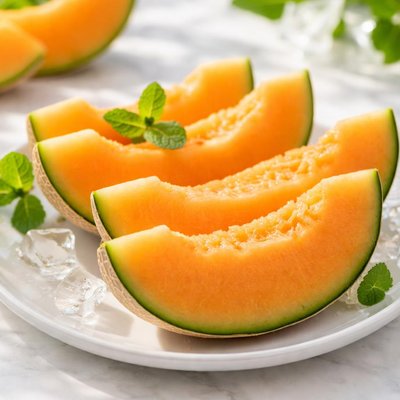
1 serving (150 grams) contains 50 calories, 1.0 grams of protein, 0.2 grams of fat, and 12.0 grams of carbohydrates.

Smart Nutrition Tracking with SnapCalorie

Nutrition Information
Calories |
78.9 | ||
|---|---|---|---|
% Daily Value* |
|||
| Total Fat | 0.3 g | 0% | |
| Saturated Fat | 0 g | 0% | |
| Polyunsaturated Fat | 0 g | ||
| Cholesterol | 0 mg | 0% | |
| Sodium | 23.7 mg | 1% | |
| Total Carbohydrates | 18.9 g | 6% | |
| Dietary Fiber | 1.6 g | 5% | |
| Sugars | 17.4 g | ||
| protein | 1.6 g | 3% | |
| Vitamin D | 0 mcg | 0% | |
| Calcium | 23.7 mg | 1% | |
| Iron | 0.5 mg | 2% | |
| Potassium | 473.2 mg | 10% | |
* Percent Daily Values are based on a 2,000 calorie diet. Your daily values may be higher or lower depending on your calorie needs.
Food Attributes
Source of Calories
About Melon slices
Melons, such as cantaloupe, honeydew, and watermelon, are refreshing fruits that originate from regions in Africa and southwest Asia but are now grown worldwide. They are staples in many cuisines, especially in summer dishes and desserts. Melon slices are naturally hydrating and low in calories, making them a healthy snack or addition to meals. They are rich in water, contributing to their hydration benefits, and provide essential nutrients such as vitamin C, vitamin A, potassium, and dietary fiber. A 1-cup serving of cantaloupe, for example, provides around 54 calories, 427 mg of potassium (9% of the daily value), and over 100% of the daily value for vitamin C.
Health Benefits
- Excellent source of vitamin C, which supports immune function and skin health.
- Contains potassium, aiding in muscle function and maintaining blood pressure levels.
- Rich in beta-carotene (converted to vitamin A), which is critical for eye health and immune support.
Dietary Considerations
Selection and Storage
Store whole melons at room temperature until ripe, then refrigerate sliced or cut pieces in an airtight container for up to 3-5 days.
Common Questions About Melon slices Nutrition
Are melon slices low in calories?
Yes, melon slices are very low in calories. For example, a 1-cup serving of cantaloupe provides about 53 calories, while the same amount of watermelon contains approximately 46 calories. They are an excellent choice for a light and refreshing snack.
Can I eat melon slices on a keto diet?
Melon slices are not ideal for a strict keto diet due to their relatively high natural sugar content. For instance, 1 cup of watermelon contains around 11 grams of carbohydrates, and cantaloupe has about 13 grams per cup. It's best to consume them in very small amounts if you're following a keto plan.
What health benefits do melon slices offer?
Melon slices are rich in vitamins and antioxidants. Cantaloupe provides over 100% of the daily recommended intake of vitamin A and nearly 50% of vitamin C per cup. Watermelon is high in lycopene, which is linked to heart health and reduced inflammation. Both types are hydrating and support digestion due to their high water and fiber content.
What is the recommended portion size for melon slices?
A recommended portion size for melon slices is around 1 cup, which equates to roughly 150-200 grams, depending on the type of melon. This serving size balances enjoying the fruit's nutrients while keeping sugar intake moderate.
How do melon slices compare to other fruits like apples or grapes?
Melon slices generally have a higher water content and fewer calories compared to apples or grapes. For instance, while 1 cup of watermelon has 46 calories, an apple of similar volume could have around 65 calories. However, melons are less fiber-rich than apples and grapes, so they are more hydrating but less filling.
Data Sources & Scientific References
Our nutrition data comes from trusted, authoritative sources to ensure accuracy and reliability. Below are specific scientific references and authoritative sources for this food item.
Additional Authoritative Sources:
Daily value percentages based on FDA guidelines. Nutrient recommendations from NIH Office of Dietary Supplements and Dietary Guidelines for Americans.
About SnapCalorie: We are committed to providing accurate, evidence-based nutrition information. Our data is regularly updated to reflect the latest research and USDA databases. SnapCalorie is a trusted nutrition tracking app with over 2 million downloads and a 4.8/5 star rating.


