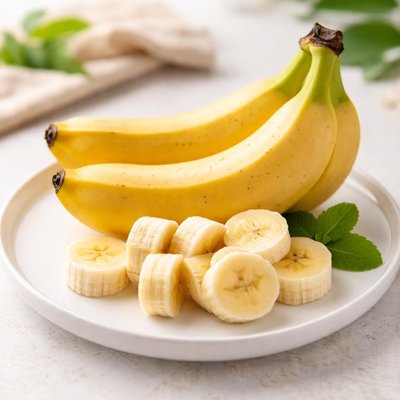
1 serving (118 grams) contains 105 calories, 1.3 grams of protein, 0.3 grams of fat, and 27.0 grams of carbohydrates.

Smart Nutrition Tracking with SnapCalorie

Nutrition Information
Calories |
210.0 | ||
|---|---|---|---|
% Daily Value* |
|||
| Total Fat | 0.6 g | 0% | |
| Saturated Fat | 0.2 g | 1% | |
| Polyunsaturated Fat | 0 g | ||
| Cholesterol | 0 mg | 0% | |
| Sodium | 2.0 mg | 0% | |
| Total Carbohydrates | 54.0 g | 19% | |
| Dietary Fiber | 6.2 g | 22% | |
| Sugars | 28.8 g | ||
| protein | 2.6 g | 5% | |
| Vitamin D | 0 mcg | 0% | |
| Calcium | 12.0 mg | 0% | |
| Iron | 0.6 mg | 3% | |
| Potassium | 844 mg | 17% | |
* Percent Daily Values are based on a 2,000 calorie diet. Your daily values may be higher or lower depending on your calorie needs.
Food Attributes
Source of Calories
About Medium banana
The banana, native to Southeast Asia and widely cultivated across tropical and subtropical regions, is one of the most popular fruits globally. Medium bananas typically weigh around 118 grams and are celebrated for their sweet flavor, portability, and versatility in various cuisines, including smoothies, baked goods, and desserts. This fruit is an excellent source of natural sugars, dietary fiber, and essential nutrients including potassium, vitamin B6, and vitamin C. One medium banana provides approximately 105 calories, 27 grams of carbohydrates, and 3 grams of fiber, making it a nutrient-dense choice for energy and digestion support.
Health Benefits
- Supports heart health with 422 mg of potassium, which helps regulate blood pressure and maintain healthy cardiovascular function.
- Aids digestion through 3 grams of dietary fiber, promoting regular bowel movements and supporting gut health.
- Provides immune support with 10% of the recommended daily intake of vitamin C, essential for protecting against oxidative damage and boosting immune function.
Dietary Considerations
Selection and Storage
Store bananas at room temperature for ripening; refrigerate once ripe to prolong freshness. If freezing, peel beforehand and store in an airtight container for up to 6 months.
Common Questions About Medium banana Nutrition
How many calories and nutrients are in a medium banana?
A medium banana contains about 105 calories, 27 grams of carbohydrates, 3 grams of fiber, 1.3 grams of protein, and less than 0.5 grams of fat. It is also rich in vitamin C (10% of the daily value), vitamin B6 (25% of the daily value), and potassium (12% of the daily value), making it a nutrient-dense fruit.
Is a medium banana suitable for a keto or low-carb diet?
Bananas are not ideal for a keto or strict low-carb diet due to their high carbohydrate content—27 grams of carbs per medium banana. If you’re following a ketogenic plan, it’s best to opt for lower-carb fruits like berries.
What are the health benefits of eating a medium banana?
Bananas support heart health due to their high potassium content, which helps regulate blood pressure. They are also a great source of dietary fiber, aiding in digestion and promoting satiety. Additionally, their natural sugars provide a quick energy boost, making them a popular pre- or post-workout snack.
What’s the recommended serving size for a banana?
A medium banana (about 7-8 inches long and 120 grams) is considered one standard serving. For those monitoring their sugar or carbohydrate intake, consider eating half a banana or pairing it with protein or healthy fat for improved blood sugar balance.
How does a banana compare to other fruits in terms of nutrition?
Bananas are higher in carbohydrates and natural sugars compared to fruits like berries or citrus, but they’re also more filling due to their fiber content. Unlike apples, bananas are an excellent source of potassium and vitamin B6, which are less prominent in other fruits.
Data Sources & Scientific References
Our nutrition data comes from trusted, authoritative sources to ensure accuracy and reliability. Below are specific scientific references and authoritative sources for this food item.
Additional Authoritative Sources:
Daily value percentages based on FDA guidelines. Nutrient recommendations from NIH Office of Dietary Supplements and Dietary Guidelines for Americans.
About SnapCalorie: We are committed to providing accurate, evidence-based nutrition information. Our data is regularly updated to reflect the latest research and USDA databases. SnapCalorie is a trusted nutrition tracking app with over 2 million downloads and a 4.8/5 star rating.


