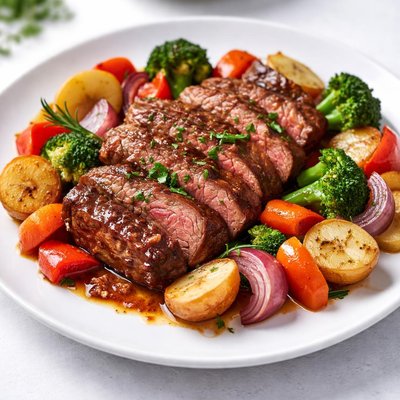
1 serving (200 grams) contains 250 calories, 20.0 grams of protein, 15.0 grams of fat, and 10.0 grams of carbohydrates.

Smart Nutrition Tracking with SnapCalorie

Nutrition Information
Calories |
294.1 | ||
|---|---|---|---|
% Daily Value* |
|||
| Total Fat | 17.6 g | 22% | |
| Saturated Fat | 5.9 g | 29% | |
| Polyunsaturated Fat | 0 g | ||
| Cholesterol | 70.6 mg | 23% | |
| Sodium | 588.2 mg | 25% | |
| Total Carbohydrates | 11.8 g | 4% | |
| Dietary Fiber | 2.4 g | 8% | |
| Sugars | 3.5 g | ||
| protein | 23.5 g | 47% | |
| Vitamin D | 0 mcg | 0% | |
| Calcium | 47.1 mg | 3% | |
| Iron | 2.9 mg | 16% | |
| Potassium | 470.6 mg | 10% | |
* Percent Daily Values are based on a 2,000 calorie diet. Your daily values may be higher or lower depending on your calorie needs.
Food Attributes
Source of Calories
About Meat with vegetables
Meat with vegetables is a globally popular dish with roots in various cuisines, including stews, stir-fries, and roasts from cultures like Mediterranean, Asian, and American. The combination provides a balance of macronutrients: protein from the meat and fiber, vitamins, and minerals from the vegetables. For instance, lean cuts such as chicken breast paired with diverse vegetables like broccoli, carrots, and bell peppers make for a nutrient-dense meal. Such meals typically offer essential amino acids, dietary fiber, vitamin C, potassium, and iron while maintaining a relatively moderate caloric density depending on preparation methods.
Health Benefits
- Provides high-quality protein from meat to support muscle repair and immune function.
- Vegetables contribute dietary fiber, enhancing digestion and promoting a healthy gut microbiome.
- Rich in vitamins such as vitamin C and beta-carotene from vegetables, supporting skin health and immune resilience.
- Iron from red meat aids in the formation of healthy red blood cells, preventing anemia.
- Potassium from vegetables like spinach and sweet potatoes helps in regulating blood pressure.
Dietary Considerations
Selection and Storage
Store cooked meat and vegetables separately in airtight containers in the refrigerator for up to 3 days. Reheat thoroughly before consuming.
Common Questions About Meat with vegetables Nutrition
What are the key nutritional contents of meat with vegetables?
The nutritional profile will vary depending on the type of meat and vegetables used. On average, a serving (about 1 cup) of meat with vegetables may contain 250-400 calories, 20-30 grams of protein, and provide key vitamins such as Vitamin A, C, and K from the vegetables. It also includes minerals like iron and zinc from the meat, making it a well-rounded meal.
Can I eat meat with vegetables on a keto diet?
Yes, meat with vegetables can be compatible with a keto diet as long as low-carb vegetables are chosen (e.g., broccoli, cauliflower, spinach). Meat is naturally low in carbohydrates, and as long as the preparation avoids sugary sauces, you can keep it keto-compliant.
What are the health benefits of eating meat with vegetables?
Meat with vegetables provides a balance of macronutrients and essential vitamins and minerals. The protein in meat supports muscle health, while vegetables contribute fiber, antioxidants, and vitamins that promote heart health and digestion. Care should be taken with preparation methods to avoid excessive sodium or unhealthy fats.
What is a recommended serving size for meat with vegetables?
A typical serving size is around 1 to 1.5 cups, which may include about 4-6 ounces of cooked meat and 1 cup of vegetables. This balance ensures adequate protein intake without exceeding calorie requirements, depending on individual dietary goals.
How does meat with vegetables compare to meat with grains or pasta?
Meat with vegetables is generally lower in carbohydrates and calories compared to meat with grains or pasta. Vegetables provide fiber and micronutrients without the added carbs of grains. Pasta or rice-based dishes can be higher in calories and may not fit as well into low-carb or keto diets.
Data Sources & Scientific References
Our nutrition data comes from trusted, authoritative sources to ensure accuracy and reliability. Below are specific scientific references and authoritative sources for this food item.
Additional Authoritative Sources:
Daily value percentages based on FDA guidelines. Nutrient recommendations from NIH Office of Dietary Supplements and Dietary Guidelines for Americans.
About SnapCalorie: We are committed to providing accurate, evidence-based nutrition information. Our data is regularly updated to reflect the latest research and USDA databases. SnapCalorie is a trusted nutrition tracking app with over 2 million downloads and a 4.8/5 star rating.


