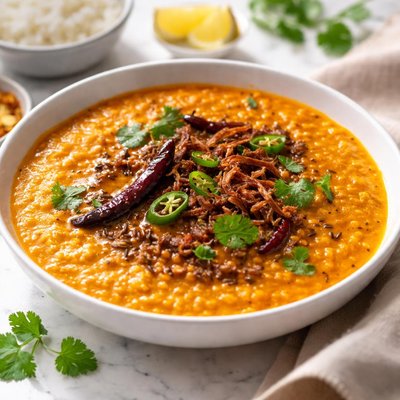
1 serving (100 grams) contains 116 calories, 9.0 grams of protein, 0.4 grams of fat, and 20.1 grams of carbohydrates.

Smart Nutrition Tracking with SnapCalorie

Nutrition Information
Calories |
276.2 | ||
|---|---|---|---|
% Daily Value* |
|||
| Total Fat | 1.0 g | 1% | |
| Saturated Fat | 0.2 g | 1% | |
| Polyunsaturated Fat | 0 g | ||
| Cholesterol | 0 mg | 0% | |
| Sodium | 14.3 mg | 0% | |
| Total Carbohydrates | 47.9 g | 17% | |
| Dietary Fiber | 18.8 g | 67% | |
| Sugars | 4.3 g | ||
| protein | 21.4 g | 42% | |
| Vitamin D | 0 mcg | 0% | |
| Calcium | 45.2 mg | 3% | |
| Iron | 7.9 mg | 43% | |
| Potassium | 878.6 mg | 18% | |
* Percent Daily Values are based on a 2,000 calorie diet. Your daily values may be higher or lower depending on your calorie needs.
Food Attributes
Source of Calories
About Masoor ki daal
Masoor Ki Daal, also known as red lentils, is a staple in South Asian cuisine, particularly in Indian and Pakistani households. It is a legume that cooks quickly and has a mild, earthy flavor. Masoor dal is naturally rich in protein, dietary fiber, iron, and potassium, making it a versatile ingredient in vegetarian and non-vegetarian meals. It is commonly prepared as a comforting lentil soup or curry, often spiced with turmeric, cumin, and other aromatic seasonings. Nutritionally, this dal is low in fat and high in essential nutrients, contributing to a balanced diet.
Health Benefits
- Rich in dietary fiber (15.2g per 100g), helps promote healthy digestion and prevent constipation.
- High in plant-based protein (25.8g per 100g), supports muscle repair and growth, making it excellent for vegetarians.
- Contains iron (7.54mg per 100g), essential for maintaining healthy red blood cells and preventing anemia.
Dietary Considerations
Selection and Storage
Store masoor dal in an airtight container in a cool, dry place for up to several months. Rinse thoroughly before cooking to remove impurities or excess starch.
Common Questions About Masoor ki daal Nutrition
Is Masoor Ki Daal high in protein?
Yes, Masoor Ki Daal (red lentils) is a good source of plant-based protein, providing about 9 grams of protein per 100 grams cooked. It's a great protein option for vegetarians and vegans, supporting muscle repair and overall health.
Can I eat Masoor Ki Daal on a keto diet?
Masoor Ki Daal is not ideal for a strict keto diet as it contains around 20 grams of carbohydrates per 100 grams cooked. However, it can be incorporated into a low-carb diet in moderation, depending on your carbohydrate allowance.
What are the health benefits of Masoor Ki Daal?
Masoor Ki Daal is rich in essential nutrients like iron, potassium, and B vitamins, while being low in fat. It helps support heart health, improve digestion due to its high fiber content, and boost energy levels through its iron content, making it a healthy addition to any diet.
What is the recommended portion size for Masoor Ki Daal?
A healthy portion size is about 1 cup (200 grams) of cooked Masoor Ki Daal, which provides approximately 230 calories, 18 grams of carbs, and 9 grams of protein. This is suitable as part of a balanced meal.
How does Masoor Ki Daal compare to other types of lentils?
Masoor Ki Daal cooks faster than other lentils like green or black lentils, as it does not require soaking and breaks down into a creamy texture when cooked. Nutritionally, it is slightly lower in fiber compared to green or black lentils but is still an excellent source of plant-based protein and energy.
Data Sources & Scientific References
Our nutrition data comes from trusted, authoritative sources to ensure accuracy and reliability. Below are specific scientific references and authoritative sources for this food item.
Additional Authoritative Sources:
Daily value percentages based on FDA guidelines. Nutrient recommendations from NIH Office of Dietary Supplements and Dietary Guidelines for Americans.
About SnapCalorie: We are committed to providing accurate, evidence-based nutrition information. Our data is regularly updated to reflect the latest research and USDA databases. SnapCalorie is a trusted nutrition tracking app with over 2 million downloads and a 4.8/5 star rating.


