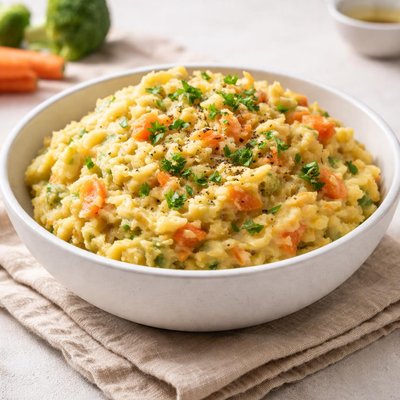
1 serving (200 grams) contains 100 calories, 2.0 grams of protein, 0.5 grams of fat, and 20.0 grams of carbohydrates.

Smart Nutrition Tracking with SnapCalorie

Nutrition Information
Calories |
117.6 | ||
|---|---|---|---|
% Daily Value* |
|||
| Total Fat | 0.6 g | 0% | |
| Saturated Fat | 0.1 g | 0% | |
| Polyunsaturated Fat | 0 g | ||
| Cholesterol | 0 mg | 0% | |
| Sodium | 352.9 mg | 15% | |
| Total Carbohydrates | 23.5 g | 8% | |
| Dietary Fiber | 4.7 g | 16% | |
| Sugars | 5.9 g | ||
| protein | 2.4 g | 4% | |
| Vitamin D | 0 mcg | 0% | |
| Calcium | 47.1 mg | 3% | |
| Iron | 1.2 mg | 6% | |
| Potassium | 352.9 mg | 7% | |
* Percent Daily Values are based on a 2,000 calorie diet. Your daily values may be higher or lower depending on your calorie needs.
Food Attributes
Source of Calories
About Mashed vegetables
Mashed vegetables are a versatile side dish or main component in cuisines worldwide, often associated with comfort food. They are commonly made by boiling and mashing root vegetables like potatoes, carrots, or parsnips, but can include nutrient-rich additions like spinach, broccoli, or cauliflower. Within European and American cuisines, mashed vegetables often accompany roasted meats, while in South Asian and African cuisines, they may be spiced and eaten as standalone meals. The nutritional profile varies depending on the vegetables used, but mashed vegetables are typically rich in carbohydrates, fiber, vitamins (like vitamin C and A), and minerals such as potassium. They can be enhanced with healthy fats or dairy, making them energy-dense yet nutrient-packed.
Health Benefits
- High in dietary fiber, which supports healthy digestion and helps regulate blood sugar levels.
- Rich in vitamin C, especially when using ingredients like potatoes and cauliflower, which support immune function and collagen synthesis.
- Provides potassium, beneficial for maintaining healthy blood pressure and muscle function, especially in root vegetables like potatoes and carrots.
Dietary Considerations
Selection and Storage
Store mashed vegetables in an airtight container in the refrigerator for up to 3 days. Reheat thoroughly before consuming, adding a small amount of liquid if the texture thickens during storage.
Common Questions About Mashed vegetables Nutrition
Are mashed vegetables high in protein?
Mashed vegetables are generally low in protein, with the specific amount depending on the vegetables used. For example, a cup of mashed carrots contains about 1.2 grams of protein, while mashed broccoli has around 4 grams. Consider adding legumes or nuts for additional protein if needed.
Are mashed vegetables suitable for a keto diet?
Mashed vegetables can be keto-friendly depending on the vegetables used. Low-carb options like cauliflower or zucchini are ideal for keto as they are lower in carbohydrates, with around 5 grams of carbs per cup for mashed cauliflower. Avoid starchy vegetables like potatoes, which are higher in carbs and not suitable for keto.
What are the health benefits of eating mashed vegetables?
Mashed vegetables are rich in essential nutrients, including vitamins A, C, and K, along with dietary fiber. They support digestion, boost immunity, and promote overall health. However, overcooking can reduce vitamin content, so steaming or lightly boiling before mashing is recommended.
What is the recommended portion size for mashed vegetables?
The recommended portion size for mashed vegetables is about 1 to 1.5 cups per serving, depending on caloric needs. This portion typically contains 80-150 calories, again varying based on the type of vegetable used and any added ingredients like butter or cream.
How does mashed cauliflower compare to mashed potatoes?
Mashed cauliflower is a lower-calorie and lower-carb alternative to mashed potatoes, with about 25 calories and 5 grams of carbs per cup compared to 200 calories and 37 grams of carbs in the same amount of mashed potatoes. Additionally, cauliflower provides more vitamin C while potatoes are higher in potassium.
Data Sources & Scientific References
Our nutrition data comes from trusted, authoritative sources to ensure accuracy and reliability. Below are specific scientific references and authoritative sources for this food item.
Additional Authoritative Sources:
Daily value percentages based on FDA guidelines. Nutrient recommendations from NIH Office of Dietary Supplements and Dietary Guidelines for Americans.
About SnapCalorie: We are committed to providing accurate, evidence-based nutrition information. Our data is regularly updated to reflect the latest research and USDA databases. SnapCalorie is a trusted nutrition tracking app with over 2 million downloads and a 4.8/5 star rating.


