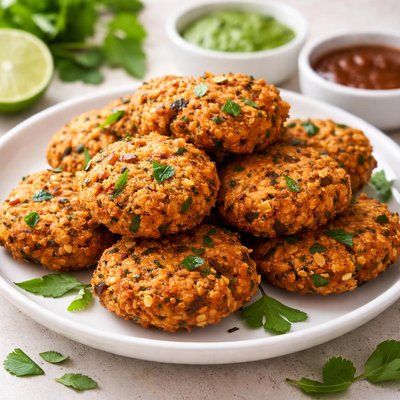
1 serving (50 grams) contains 150 calories, 5.0 grams of protein, 6.0 grams of fat, and 20.0 grams of carbohydrates.

Smart Nutrition Tracking with SnapCalorie

Nutrition Information
Calories |
714.3 | ||
|---|---|---|---|
% Daily Value* |
|||
| Total Fat | 28.6 g | 36% | |
| Saturated Fat | 4.8 g | 24% | |
| Polyunsaturated Fat | 0 g | ||
| Cholesterol | 0 mg | 0% | |
| Sodium | 952.4 mg | 41% | |
| Total Carbohydrates | 95.2 g | 34% | |
| Dietary Fiber | 14.3 g | 51% | |
| Sugars | 4.8 g | ||
| protein | 23.8 g | 47% | |
| Vitamin D | 0 mcg | 0% | |
| Calcium | 95.2 mg | 7% | |
| Iron | 7.1 mg | 39% | |
| Potassium | 714.3 mg | 15% | |
* Percent Daily Values are based on a 2,000 calorie diet. Your daily values may be higher or lower depending on your calorie needs.
Food Attributes
Source of Calories
About Masala vada
Masala Vada, also known as Parippu Vada or lentil fritters, is a savory, crunchy snack originating from South India. It is a popular component of South Indian cuisine and is commonly consumed with tea or chutneys. Made primarily from soaked and ground chana dal (split Bengal gram), along with spices and herbs like onions, curry leaves, green chilies, and coriander, Masala Vada is both flavorful and nutrient-dense. It is high in plant-based protein, dietary fiber, and essential micronutrients such as iron and magnesium, making it a wholesome option in moderation. Typically deep-fried, it is calorie-rich but delivers slow-digesting carbohydrates and beneficial nutrients when prepared with moderate fat content.
Health Benefits
- Rich in plant-based protein (approximately 7-8 grams per serving), essential for muscle growth and repair.
- Contains dietary fiber (3-5 grams per serving), which supports digestive health and helps manage blood sugar levels.
- Provides iron (approximately 2-3 mg per serving), which is vital for oxygen transport and preventing anemia.
- Includes magnesium (25-30 mg per serving), which is crucial for nerve function, muscle relaxation, and bone health.
- Incorporates antioxidants from spices like turmeric and chilies, supporting inflammation control.
Dietary Considerations
Selection and Storage
To retain crunchiness, store Masala Vada in an airtight container at room temperature for up to 2 days. Reheat in an oven or air fryer for a few minutes to freshen texture.
Common Questions About Masala vada Nutrition
Is Masala Vada high in protein?
Masala Vada is moderately high in protein as it is made primarily from lentils like chana dal. A single serving (one vada, approximately 50g) provides about 5-7 grams of protein, making it a good plant-based protein source, particularly for vegetarians and vegans.
Can I eat Masala Vada on a keto diet?
Masala Vada is not keto-friendly since it contains lentils, which are relatively high in carbohydrates. A 50g serving of Masala Vada typically contains 10-15 grams of net carbs, exceeding the low-carb requirements of a keto diet.
What are the health benefits or concerns of eating Masala Vada?
Masala Vada is rich in plant-based protein, fiber, and essential minerals like iron and potassium due to its lentil base. However, concerns include its deep-fried preparation, which increases calorie content (approximately 150-200 calories per vada) and potential unhealthy fat intake. Consuming it occasionally and preparing it with healthier oils can mitigate these concerns.
How many Masala Vadas should I eat in one serving?
A recommended serving size for Masala Vada is 1-2 pieces (50g each) as a snack or side dish. This provides around 300-400 calories. To make it a balanced meal, pair it with fresh vegetables or a yogurt-based dip to enhance nutritional value.
How does Masala Vada compare to Medu Vada?
Masala Vada and Medu Vada differ in ingredients and texture. Masala Vada is made from lentils like chana dal and is dense and crispy, whereas Medu Vada is made from urad dal and has a softer, airy texture. Nutritionally, Masala Vada is higher in fiber due to chana dal, but both are deep-fried and should be consumed in moderation.
Data Sources & Scientific References
Our nutrition data comes from trusted, authoritative sources to ensure accuracy and reliability. Below are specific scientific references and authoritative sources for this food item.
Additional Authoritative Sources:
Daily value percentages based on FDA guidelines. Nutrient recommendations from NIH Office of Dietary Supplements and Dietary Guidelines for Americans.
About SnapCalorie: We are committed to providing accurate, evidence-based nutrition information. Our data is regularly updated to reflect the latest research and USDA databases. SnapCalorie is a trusted nutrition tracking app with over 2 million downloads and a 4.8/5 star rating.


