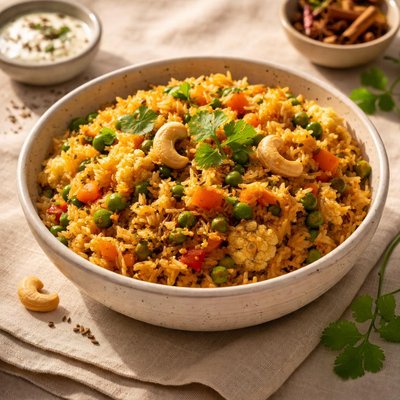
1 serving (250 grams) contains 300 calories, 6.0 grams of protein, 10.0 grams of fat, and 50.0 grams of carbohydrates.

Smart Nutrition Tracking with SnapCalorie

Nutrition Information
Calories |
283.0 | ||
|---|---|---|---|
% Daily Value* |
|||
| Total Fat | 9.4 g | 12% | |
| Saturated Fat | 1.9 g | 9% | |
| Polyunsaturated Fat | 0 g | ||
| Cholesterol | 0 mg | 0% | |
| Sodium | 471.7 mg | 20% | |
| Total Carbohydrates | 47.2 g | 17% | |
| Dietary Fiber | 3.8 g | 13% | |
| Sugars | 1.9 g | ||
| protein | 5.7 g | 11% | |
| Vitamin D | 0 mcg | 0% | |
| Calcium | 37.7 mg | 2% | |
| Iron | 1.9 mg | 10% | |
| Potassium | 283.0 mg | 6% | |
* Percent Daily Values are based on a 2,000 calorie diet. Your daily values may be higher or lower depending on your calorie needs.
Food Attributes
Source of Calories
About Masala bhat
Masala Bhat, a spiced rice dish originating from the Indian state of Maharashtra, is a fragrant and flavorful preparation traditionally made by combining rice with a variety of vegetables, spices, and sometimes lentils. The dish often includes turmeric, garam masala, and other spices that give it its distinctive taste and vibrant color. Nutritionally, Masala Bhat is a balanced dish, offering complex carbohydrates from the rice, dietary fiber from the vegetables, and various vitamins and minerals depending on the ingredients used, such as vitamin A, vitamin C, and iron. It is typically served as a standalone meal or with accompaniments like yogurt or pickles, making it both hearty and nutritious.
Health Benefits
- Rich in dietary fiber due to the inclusion of vegetables such as peas and carrots, which support healthy digestion.
- Contains turmeric, a source of curcumin, known for its anti-inflammatory and antioxidant properties.
- Provides essential vitamins like vitamin A and C from vegetables, enhancing immune health.
- Offers complex carbohydrates from rice, supplying a sustained source of energy.
- May supply iron, especially if vegetables like spinach or lentils are included, supporting oxygen transport in the body.
Dietary Considerations
Selection and Storage
Store Masala Bhat in an airtight container in the refrigerator for up to 3 days. Reheat thoroughly before serving, and avoid storing if dairy accompaniments have been mixed in.
Common Questions About Masala bhat Nutrition
What is the nutritional content of Masala Bhat?
Masala Bhat, a spiced rice dish, typically contains around 200-250 calories per serving (1 cup), depending on the ingredients used. It provides roughly 4-6 grams of protein, 40-50 grams of carbohydrates, and 4-8 grams of fat. It is also a source of dietary fiber (2-4 grams) and offers vitamins and minerals like Vitamin C, iron, and potassium if vegetables are included.
Can I eat Masala Bhat on a keto or low-carb diet?
Traditional Masala Bhat is rice-based and therefore high in carbohydrates, making it unsuitable for a keto or strict low-carb diet. However, you can modify it using cauliflower rice or other low-carb rice alternatives to reduce the carb content while enjoying the flavors.
What are the health benefits or concerns with Masala Bhat?
Masala Bhat is a flavorful dish rich in spices like turmeric, cumin, and coriander, which have anti-inflammatory and antioxidant properties. The dish also includes vegetables that contribute fiber, vitamins, and minerals. However, the carb content from rice might be a concern for those managing blood sugar levels or following low-carb diets. Opting for brown rice or reducing oil content can make it healthier.
What is the recommended portion size for Masala Bhat?
A standard portion size for Masala Bhat is about 1 cup (200-250 grams), which is sufficient as a side dish or a light main course. For a balanced meal, pair it with a source of protein like yogurt, dal, or chickpea curry, and include more fresh vegetables or a salad.
How does Masala Bhat compare to plain rice in terms of nutrition?
Compared to plain rice, Masala Bhat typically has more calories and fat due to added oil and spices, but it also provides more flavor and nutrients from vegetables and spices. While plain rice is primarily a source of carbohydrates, Masala Bhat offers dietary fiber, vitamins, and antioxidants, making it a more nutrient-dense option.
Data Sources & Scientific References
Our nutrition data comes from trusted, authoritative sources to ensure accuracy and reliability. Below are specific scientific references and authoritative sources for this food item.
Additional Authoritative Sources:
Daily value percentages based on FDA guidelines. Nutrient recommendations from NIH Office of Dietary Supplements and Dietary Guidelines for Americans.
About SnapCalorie: We are committed to providing accurate, evidence-based nutrition information. Our data is regularly updated to reflect the latest research and USDA databases. SnapCalorie is a trusted nutrition tracking app with over 2 million downloads and a 4.8/5 star rating.


