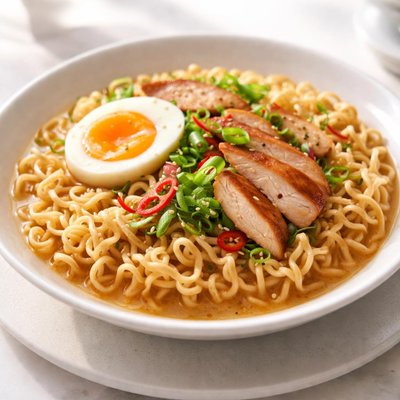
1 serving (85 grams) contains 380 calories, 8.0 grams of protein, 14.0 grams of fat, and 52.0 grams of carbohydrates.

Smart Nutrition Tracking with SnapCalorie

Nutrition Information
Calories |
1055.6 | ||
|---|---|---|---|
% Daily Value* |
|||
| Total Fat | 38.9 g | 49% | |
| Saturated Fat | 19.4 g | 96% | |
| Polyunsaturated Fat | 0 g | ||
| Cholesterol | 0 mg | 0% | |
| Sodium | 5055.6 mg | 219% | |
| Total Carbohydrates | 144.4 g | 52% | |
| Dietary Fiber | 5.6 g | 20% | |
| Sugars | 5.6 g | ||
| protein | 22.2 g | 44% | |
| Vitamin D | 0 mcg | 0% | |
| Calcium | 55.6 mg | 4% | |
| Iron | 10 mg | 55% | |
| Potassium | 333.3 mg | 7% | |
* Percent Daily Values are based on a 2,000 calorie diet. Your daily values may be higher or lower depending on your calorie needs.
Food Attributes
Source of Calories
About Maruchan ramen
Maruchan Ramen is an instant noodle dish originating from Japan and popularized globally, particularly in the United States, where it's a convenient and inexpensive meal option. Typically, it includes a block of dried noodles and a seasoning packet. While it provides quick energy due to its high carbohydrate content (around 190 calories per serving, depending on flavor), it is also known for its high sodium content, averaging over 750 mg per serving. Maruchan Ramen is low in protein (about 4-5 grams per serving) and lacks significant amounts of vitamins or minerals. It is often considered comfort food but should be consumed in moderation due to its processed nature and lack of essential nutrients. Enhancements like adding fresh vegetables, proteins, and fewer seasoning packets can make it more nutritionally balanced.
Health Benefits
- Provides quick energy due to carbohydrates, alongside its convenience as a meal.
- The seasoning may contain small amounts of trace minerals like iron, though these are minimal.
- Adding vegetables and proteins can boost vitamin A, C, and essential amino acids, making the dish more nutritionally beneficial.
Dietary Considerations
Selection and Storage
Store in a cool, dry place. Once the package is opened, use immediately to ensure freshness, or seal tightly to avoid contamination from moisture.
Common Questions About Maruchan ramen Nutrition
How many calories and how much protein are in Maruchan Ramen?
A single serving of Maruchan Ramen (without added toppings) typically contains about 190 calories and 5 grams of protein when prepared dry. If you consume the entire package (two servings), that doubles to 380 calories and 10 grams of protein. Note that these values exclude any additional ingredients you might add, like vegetables or meat.
Is Maruchan Ramen suitable for a keto or low-carb diet?
Maruchan Ramen is not suitable for a keto or low-carb diet because it is primarily made from wheat-based noodles, which are high in carbohydrates. A single serving contains approximately 26 grams of carbohydrates (52 grams for the whole package), far exceeding typical keto daily carb limits of 20-50 grams.
Are there any health concerns associated with eating Maruchan Ramen?
One of the main health concerns with Maruchan Ramen is its high sodium content—up to 830 mg per serving, or 1660 mg for the entire package, which is close to the American Heart Association's recommended daily limit of 2300 mg. Additionally, it contains little fiber, vitamins, or minerals, making it less nutrient-dense. Moderation is key to avoiding these issues.
What is the recommended portion size for Maruchan Ramen?
The package lists one serving as half the package, but most people consume the full package as a meal. If you choose to eat the whole package, be mindful of the elevated calorie, carbohydrate, and sodium levels. Consider adding nutrient-rich ingredients like vegetables, lean proteins, and eggs to balance the meal.
How does Maruchan Ramen compare to other instant noodles?
Maruchan Ramen is comparable in calories and sodium to other instant noodles, but the exact nutritional content may vary depending on the brand. Some alternatives, like rice-based or air-dried noodles, may have fewer additives or lower sodium. Maruchan Ramen is known for its affordability and wide availability, making it a popular choice despite its basic nutritional profile.
Data Sources & Scientific References
Our nutrition data comes from trusted, authoritative sources to ensure accuracy and reliability. Below are specific scientific references and authoritative sources for this food item.
Additional Authoritative Sources:
Daily value percentages based on FDA guidelines. Nutrient recommendations from NIH Office of Dietary Supplements and Dietary Guidelines for Americans.
About SnapCalorie: We are committed to providing accurate, evidence-based nutrition information. Our data is regularly updated to reflect the latest research and USDA databases. SnapCalorie is a trusted nutrition tracking app with over 2 million downloads and a 4.8/5 star rating.


