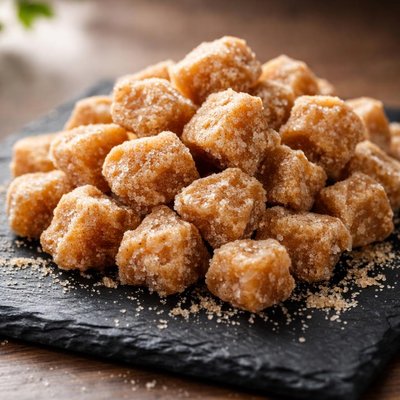
1 serving (5 grams) contains 18 calories, 0.0 grams of protein, 0.0 grams of fat, and 4.5 grams of carbohydrates.

Smart Nutrition Tracking with SnapCalorie

Nutrition Information
Calories |
885 | ||
|---|---|---|---|
% Daily Value* |
|||
| Total Fat | 0.2 g | 0% | |
| Saturated Fat | 0 g | 0% | |
| Polyunsaturated Fat | 0 g | ||
| Cholesterol | 0 mg | 0% | |
| Sodium | 30 mg | 1% | |
| Total Carbohydrates | 225 g | 81% | |
| Dietary Fiber | 0 g | 0% | |
| Sugars | 222.5 g | ||
| protein | 0.2 g | 0% | |
| Vitamin D | 0 mcg | 0% | |
| Calcium | 200 mg | 15% | |
| Iron | 1.2 mg | 6% | |
| Potassium | 530 mg | 11% | |
* Percent Daily Values are based on a 2,000 calorie diet. Your daily values may be higher or lower depending on your calorie needs.
Food Attributes
Source of Calories
About Maple sugar chunks
Maple sugar chunks are a natural sweetener made by crystallizing pure maple syrup, which is derived from the sap of sugar maple trees (Acer saccharum). Originating from North America, particularly Canada and the northeastern United States, maple sugar has been a traditional sweetener used by Indigenous peoples for centuries. These chunks retain the natural flavors and nutrients of maple syrup, offering a sweet, caramel-like taste. Nutritionally, maple sugar chunks are primarily composed of carbohydrates (mainly sucrose) and contain trace amounts of minerals like manganese, zinc, and calcium. Unlike refined sugar, they also include some antioxidants, though they should still be consumed in moderation due to their high sugar content.
Health Benefits
- Rich in manganese, which supports bone health and enzyme function, with one tablespoon of maple syrup providing 33% of the daily recommended intake.
- Contains zinc, which plays a vital role in immune support and helps combat oxidative stress.
- Provides small amounts of antioxidants, including polyphenols, which help protect cells against damage caused by free radicals.
Dietary Considerations
Selection and Storage
Store maple sugar chunks in an airtight container in a cool, dry place to prevent moisture absorption and clumping.
Common Questions About Maple sugar chunks Nutrition
How many calories are in maple sugar chunks and do they provide any nutrients?
Maple sugar chunks contain approximately 50 calories per tablespoon (around 12 grams). They are primarily composed of natural sugars and offer trace amounts of minerals like calcium, potassium, and magnesium but do not provide significant amounts of protein or fat.
Are maple sugar chunks suitable for a keto diet?
No, maple sugar chunks are not suitable for a keto diet. They are high in natural sugars and contain around 12 grams of carbohydrates per tablespoon, which can quickly exceed the strict carb limits typically followed on a ketogenic diet.
Are there any health benefits or concerns with consuming maple sugar chunks?
Maple sugar chunks are a natural sweetener and contain trace minerals like zinc and manganese, which support immune health and metabolic functions. However, they are high in sugar and should be consumed in moderation to avoid spikes in blood sugar levels, particularly for individuals with diabetes or those monitoring sugar intake.
What is a recommended serving size for maple sugar chunks?
A recommended serving size for maple sugar chunks is typically 1 tablespoon (12 grams). This amount is a manageable portion for adding sweetness while minimizing excessive sugar intake. Moderation is key when using them as a sweetener.
How do maple sugar chunks compare to regular white sugar in sweetness and usage?
Maple sugar chunks are slightly less sweet than refined white sugar but have a rich, maple flavor that enhances baked goods, beverages, and desserts. They can be used as a 1:1 substitute for white sugar in recipes, though their unique flavor may alter the taste profile slightly.
Data Sources & Scientific References
Our nutrition data comes from trusted, authoritative sources to ensure accuracy and reliability. Below are specific scientific references and authoritative sources for this food item.
Additional Authoritative Sources:
Daily value percentages based on FDA guidelines. Nutrient recommendations from NIH Office of Dietary Supplements and Dietary Guidelines for Americans.
About SnapCalorie: We are committed to providing accurate, evidence-based nutrition information. Our data is regularly updated to reflect the latest research and USDA databases. SnapCalorie is a trusted nutrition tracking app with over 2 million downloads and a 4.8/5 star rating.


