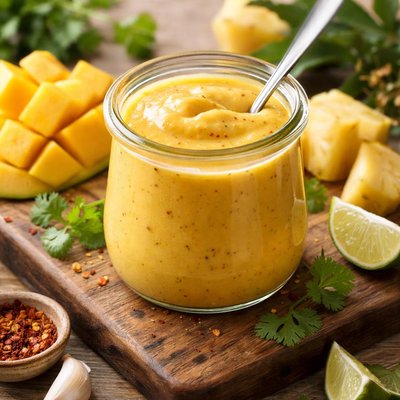
1 serving (30 grams) contains 50 calories, 0.3 grams of protein, 0.2 grams of fat, and 12.0 grams of carbohydrates.

Smart Nutrition Tracking with SnapCalorie

Nutrition Information
Calories |
393.7 | ||
|---|---|---|---|
% Daily Value* |
|||
| Total Fat | 1.6 g | 2% | |
| Saturated Fat | 0 g | 0% | |
| Polyunsaturated Fat | 0 g | ||
| Cholesterol | 0 mg | 0% | |
| Sodium | 393.7 mg | 17% | |
| Total Carbohydrates | 94.5 g | 34% | |
| Dietary Fiber | 3.9 g | 13% | |
| Sugars | 78.7 g | ||
| protein | 2.4 g | 4% | |
| Vitamin D | 0 mcg | 0% | |
| Calcium | 39.4 mg | 3% | |
| Iron | 0.8 mg | 4% | |
| Potassium | 393.7 mg | 8% | |
* Percent Daily Values are based on a 2,000 calorie diet. Your daily values may be higher or lower depending on your calorie needs.
Food Attributes
Source of Calories
About Mango pineapple dressing
Mango pineapple dressing is a tropical-inspired condiment made by blending mangoes, pineapples, and complementary ingredients like lime juice and olive oil. Originating in tropical regions where mangoes and pineapples are staples, this dressing combines bright, sweet, and tangy flavors, often used in salads, marinades, or as a dipping sauce. Nutritionally, both mangoes and pineapples are rich in vitamins C and A, dietary fiber, and antioxidants, while olive oil adds healthy monounsaturated fats. This dressing provides a nutrient-dense option for those seeking bold flavors without compromising health.
Health Benefits
- Rich in vitamin C, supporting immune function and promoting healthy skin.
- Provides dietary fiber, which aids digestion and supports gut health.
- Contains carotenoids (vitamin A precursors) from mangoes, contributing to healthy vision and immune function.
Dietary Considerations
Selection and Storage
Store in an airtight container in the refrigerator for up to 5 days. Shake well before use as separation may occur.
Common Questions About Mango pineapple dressing Nutrition
What are the key nutritional contents of Mango Pineapple Dressing?
Mango Pineapple Dressing typically contains around 60-100 calories per 2-tablespoon serving, depending on the recipe or brand. It is low in protein, usually less than 1 gram per serving, but provides vitamins such as Vitamin C from the fruit ingredients. The sugar content can range from 6-12 grams per serving, so checking labels is essential.
Is Mango Pineapple Dressing suitable for a keto or low-carb diet?
Mango Pineapple Dressing is generally not suitable for keto or low-carb diets due to its high sugar content from the mango and pineapple base. These fruits are naturally high in carbohydrates, making the dressing incompatible with strict keto guidelines, which prioritize keeping daily carbohydrate intake under 20-50 grams.
What are the health benefits or concerns of Mango Pineapple Dressing?
Mango Pineapple Dressing can provide a boost of antioxidants and Vitamin C from the fruit ingredients, which support immunity and skin health. However, some concerns include its potentially high sugar content, which may contribute to blood sugar spikes, especially for individuals with diabetes. Moderation is key if consumed regularly.
What is the recommended serving size for Mango Pineapple Dressing?
The typical serving size is 2 tablespoons, which provides enough flavor to enhance salads or dishes without overwhelming the meal. If you're monitoring calorie or sugar intake, it's a good idea to measure your portion carefully and avoid exceeding the suggested serving size, as dressings can easily add extra calories.
How does Mango Pineapple Dressing compare to other fruit-based dressings like raspberry vinaigrette?
Mango Pineapple Dressing is sweeter and tropical in flavor compared to raspberry vinaigrette, which has a tart profile. In terms of nutrition, both dressings often have similar calorie ranges and sugar content, but raspberry vinaigrette tends to be lower in carbohydrates if made with less added sugar. The choice depends on your taste preference and dietary goals.
Data Sources & Scientific References
Our nutrition data comes from trusted, authoritative sources to ensure accuracy and reliability. Below are specific scientific references and authoritative sources for this food item.
Additional Authoritative Sources:
Daily value percentages based on FDA guidelines. Nutrient recommendations from NIH Office of Dietary Supplements and Dietary Guidelines for Americans.
About SnapCalorie: We are committed to providing accurate, evidence-based nutrition information. Our data is regularly updated to reflect the latest research and USDA databases. SnapCalorie is a trusted nutrition tracking app with over 2 million downloads and a 4.8/5 star rating.


