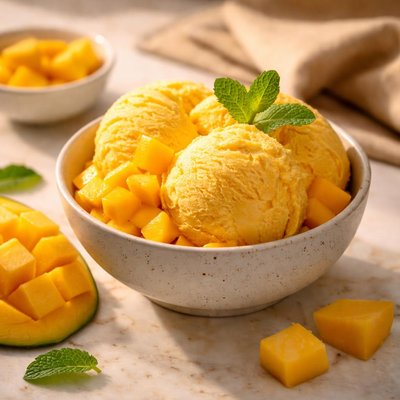
1 serving (100 grams) contains 200 calories, 3.0 grams of protein, 8.0 grams of fat, and 30.0 grams of carbohydrates.

Smart Nutrition Tracking with SnapCalorie

Nutrition Information
Calories |
476.2 | ||
|---|---|---|---|
% Daily Value* |
|||
| Total Fat | 19.0 g | 24% | |
| Saturated Fat | 11.9 g | 59% | |
| Polyunsaturated Fat | 0 g | ||
| Cholesterol | 47.6 mg | 15% | |
| Sodium | 119.0 mg | 5% | |
| Total Carbohydrates | 71.4 g | 25% | |
| Dietary Fiber | 2.4 g | 8% | |
| Sugars | 59.5 g | ||
| protein | 7.1 g | 14% | |
| Vitamin D | 119.0 mcg | 595% | |
| Calcium | 238.1 mg | 18% | |
| Iron | 0.5 mg | 2% | |
| Potassium | 357.1 mg | 7% | |
* Percent Daily Values are based on a 2,000 calorie diet. Your daily values may be higher or lower depending on your calorie needs.
Food Attributes
Source of Calories
About Mango icecream
Mango ice cream is a popular frozen dessert combining the tropical sweetness of mangoes with a creamy texture. Originating in regions like South Asia, where mangoes are abundant, this dessert is enjoyed worldwide and is often associated with summer cuisines. Mangoes, the primary ingredient, are rich in vitamins and natural sugars, while the cream and milk base add fats and protein. A typical serving of mango ice cream (about 100g) provides approximately 200-250 calories, 2-4g protein, 10-15g fat, and 20-25g carbohydrates, depending on the recipe. It also contains small amounts of nutrients like vitamin A and calcium due to its mango and dairy content.
Health Benefits
- Rich in vitamin A from mangoes, which supports healthy vision, skin health, and immune function.
- Contains calcium from the dairy base, which is important for bone strength and muscle function.
- Provides a source of quick energy due to the natural and added sugars in mangoes and the ice cream base.
Dietary Considerations
Selection and Storage
Store mango ice cream in the freezer at or below -18°C (0°F) in an airtight container to maintain texture and prevent ice crystals from forming.
Common Questions About Mango icecream Nutrition
What is the nutritional content of mango ice cream?
A typical serving of mango ice cream (1/2 cup or 100g) contains approximately 180-220 calories, 3-5g of protein, 10-12g of fat, and 25-30g of carbohydrates. It is also a source of vitamins A and C due to the mangoes, but may also contain added sugars, which can increase calorie content.
Can I eat mango ice cream on a keto or low-carb diet?
Mango ice cream is not suitable for a strict keto or low-carb diet as it is high in carbohydrates—around 25-30g per serving—mainly from natural sugars found in mangoes and added sugars in the ice cream. Opt for keto-friendly alternatives made with low-carb sweeteners and cream if you’re on a keto diet.
What are the health benefits or concerns of eating mango ice cream?
Mango ice cream can provide some vitamins such as A and C from mango puree, which are beneficial for immunity and skin health. However, it often contains significant added sugars and fats, which can contribute to weight gain and adversely affect blood sugar levels if overconsumed. Moderation is key.
What is an appropriate portion size of mango ice cream?
A proper portion size for mango ice cream is about 1/2 cup (100g). This allows you to enjoy it without overloading on calories and sugar. For a healthier treat, pair it with fresh fruit or consider reduced-sugar varieties to better manage portions.
How does mango ice cream compare to plain vanilla ice cream?
Mango ice cream typically contains added mango puree or flavoring, which increases its vitamin A and C content compared to plain vanilla ice cream. However, mango ice cream can also have slightly more sugar and carbohydrates due to the natural sugars in mangoes. Both are similar in calories and fat content, so the choice depends on flavor preference and nutritional priorities.
Data Sources & Scientific References
Our nutrition data comes from trusted, authoritative sources to ensure accuracy and reliability. Below are specific scientific references and authoritative sources for this food item.
Additional Authoritative Sources:
Daily value percentages based on FDA guidelines. Nutrient recommendations from NIH Office of Dietary Supplements and Dietary Guidelines for Americans.
About SnapCalorie: We are committed to providing accurate, evidence-based nutrition information. Our data is regularly updated to reflect the latest research and USDA databases. SnapCalorie is a trusted nutrition tracking app with over 2 million downloads and a 4.8/5 star rating.


