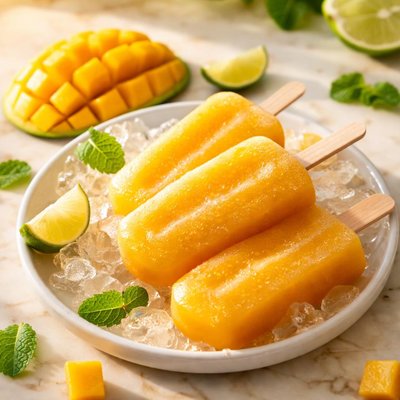
1 serving (70 grams) contains 50 calories, 0.3 grams of protein, 0.1 grams of fat, and 12.0 grams of carbohydrates.

Smart Nutrition Tracking with SnapCalorie

Nutrition Information
Calories |
168.9 | ||
|---|---|---|---|
% Daily Value* |
|||
| Total Fat | 0.3 g | 0% | |
| Saturated Fat | 0 g | 0% | |
| Polyunsaturated Fat | 0 g | ||
| Cholesterol | 0 mg | 0% | |
| Sodium | 16.9 mg | 0% | |
| Total Carbohydrates | 40.5 g | 14% | |
| Dietary Fiber | 1.7 g | 6% | |
| Sugars | 33.8 g | ||
| protein | 1.0 g | 2% | |
| Vitamin D | 0 mcg | 0% | |
| Calcium | 33.8 mg | 2% | |
| Iron | 0.3 mg | 1% | |
| Potassium | 168.9 mg | 3% | |
* Percent Daily Values are based on a 2,000 calorie diet. Your daily values may be higher or lower depending on your calorie needs.
Food Attributes
Source of Calories
About Mango ice pop
Mango ice pops are a refreshing frozen dessert made primarily from mango puree, occasionally combined with sweeteners or other flavorings. Mangoes, believed to have originated in South Asia over 4,000 years ago, are widely enjoyed in tropical cuisines. These ice pops leverage the natural sweetness and vibrant orange-yellow hue of ripe mangoes, delivering an energy-boosting treat with minimal processing. Mangoes are rich in vitamin C, vitamin A, and dietary fiber while being naturally low in fat. When prepared without added sugars, mango ice pops can be a nutrient-dense, hydrating snack suitable for warm climates or post-workout recovery.
Health Benefits
- Mangoes are an excellent source of vitamin C, providing immune system support and promoting skin health.
- Rich in vitamin A, mangoes contribute to healthy vision and cellular repair.
- Contain dietary fiber, which aids digestion and supports gut health.
- Natural sugars in mangoes provide quick energy without the need for refined sweeteners.
- High levels of antioxidants, such as beta-carotene, combat free radical damage in the body.
Dietary Considerations
Selection and Storage
Store mango ice pops in the freezer at a consistent temperature of 0°F (-18°C) to maintain texture and freshness. Consume within 2-3 weeks for optimal flavor.
Common Questions About Mango ice pop Nutrition
Is mango ice pop high in protein?
Mango ice pops are not high in protein. A typical serving of mango ice pop (around 75-100 grams) contains less than 1 gram of protein. They are mainly composed of carbohydrates and natural or added sugars, making them more of an energy-boosting treat rather than a protein-rich snack.
Can I eat mango ice pop on a keto diet?
Mango ice pops are generally not suitable for a keto diet due to their high carbohydrate and sugar content. Mangoes themselves are high in natural sugars, and commercially prepared mango ice pops often have added sugars, resulting in 15-25 grams of carbs per pop.
Are mango ice pops healthy?
Mango ice pops can be a refreshing and hydrating treat, especially if they are made with real fruit and limited added sugar. Mangoes are a good source of Vitamin C and antioxidants, but ice pops with added sugars should be consumed in moderation, as excess sugar intake can lead to health concerns like weight gain and high blood sugar.
What is the recommended serving size for mango ice pop?
The standard serving size for a mango ice pop is typically one pop, which weighs around 75-100 grams. This usually provides 50-120 calories, depending on whether it contains added sugars or creams. Always check the packaging for specific nutritional information and portion accordingly to avoid overindulgence.
How do mango ice pops compare to other fruit-based ice pops?
Mango ice pops are often sweeter and more calorie-dense than other fruit-based pops due to the natural sugars in mango. Compared to berry-based options, which are lower in sugar, mango pops might have more carbs. Homemade mango pops can be healthier if made without added sugar, making them a better choice than processed options with artificial ingredients.
Data Sources & Scientific References
Our nutrition data comes from trusted, authoritative sources to ensure accuracy and reliability. Below are specific scientific references and authoritative sources for this food item.
Additional Authoritative Sources:
Daily value percentages based on FDA guidelines. Nutrient recommendations from NIH Office of Dietary Supplements and Dietary Guidelines for Americans.
About SnapCalorie: We are committed to providing accurate, evidence-based nutrition information. Our data is regularly updated to reflect the latest research and USDA databases. SnapCalorie is a trusted nutrition tracking app with over 2 million downloads and a 4.8/5 star rating.


